For a long time I never ate raw tomatoes, then in my late 20s I got quite partial to the little cherry tomatoes and nice ripe vine tomatoes in salads. I Rome I got slightly obessesd with the very sweet mini plum tomatoes. Even now I suually offer the tomato bits in restaurant salads to Dr B. What I really take exception to though is tomatoes in sandwiches. On planes and trains, in cafés and bars I order a sandwich and then spend time opening it up and removing the (what I consider to be) utterly horrible slices of tomato, the sliced version of the fruit just gives the bread and everything in the sarnie a sort of yucky texture and flavour. Out vile slice!
Given this, it was quite funny that I should be invited to post occasionally on a blog called BLT. In this case though it's not bacon lettuce and tomato but Bible Literature and Translation and it's certainly not just a sandwich.
Two folk whose blogs I admire and have been following for several years - J.K. Gayle and Suzanne McCarthy - blog there alongside Theophrastus and Craig R. Smith. These folk are all seriously knowledgeable about biblical translation, which I am not. One of the reasons I read Suzanne and Kurk is because I learn so much. Anyway the blog is about community building as well as exchange of ideas and information about the Bible, translating and literature. They would like me to add my voice which I am happy to do, though it won't be often unfortunately as I shall have to start blogging or doing some web based work in French in coming months, improve my typo 3 skills and more besides.
Anyway I have two initial posts in gestation for BLT and neither of them is about tomatoes you'll be pleased to hear. Writing this is my way of saying, please be a bit patient guys your Paris correspondent will be joining you soon! I was just not in any fit state over the past few days to do blogging of any kind, let alone try to learn Wordpress. So the best I can do is dedicate my first post from Paris to BLT.
I have however arrived in Paris, despite antibiotics and general sinusitus induced lethargy I managed to pack a suitcase and get myself here. Work begins tomorrow, wonder if there will be sandwiches for lunch?
Monday, 3 October 2011
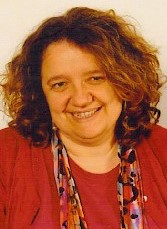
This is what happens when you spend your life taking tomatoes out of sandwiches - you get asked to join a blog called BLT!
Monday, 5 September 2011
Transgressive fragments: crusts of exile, hope and unity ... a sermon
Transgressive fragments: crusts of exile, hope and unity
Sermon preached on 5 September 2011 at the Ecumenical Centre, Geneva
Texts:
Exodus 12:39; Matthew 13:33
(This text is unabridged and rather longer than the preached version!)
Two philosophical introductions
Three fragments
and something that may be a sermon ...
“I chose to work on the writing of Paul Ricoeur because of his insistence on rediscovering a joyful ecumenism” said Beate Bengard at a lunchtime conversation hosted by the LWF’s department of Theology and Studies just two weeks ago. I was moved by her passion at Ricoeur’s thought, perhaps all the more so since I had just bought a book of the final fragments of his writings called “Lebendig bis in den Tod” - to live right up to and right in to death, would be possible translations, but perhaps a freer and better translation would take up Christian Aid’s slogan of “we believe in life before death”.
While listening to Beate I thought of the work of another philosopher and theologian, the Canadian, Grace Jantzen, who was a Quaker. In her work she pushed for a thorough-going non-violent philosophy of religion, based on natality rather than on mortality. Unlike Ricoeur she did not have the privilege of living into old age. Her series on Death and the Displacement of Beauty in Western Philosophy remained unfinished following her untimely, early death. Yet her work and witness remain natal.
So these ideas of joy and giving birth to a new creative future frame some of the background to what I try to share this morning, perhaps particularly as we move this week towards the 10th anniversary of the 9/11 attacks.
Three fragments
In a concentration camp a father stands wailing next to the body of his dead son. He came quickly when they told him, now he screams in frustration because someone else managed to take his dead son's bread ration before he could. Dehumanized by a desperate system he grieves not for his son but for missing an extra ration of bread. Kyrie eleieson
The 14th century was a time of famine in southern England. Historical documents show that when the famine was at its worst the landlords made more profit. It's a story that may sound all too familiar given speculation on food prices in our own time.
During that famine the abbot of St Alban's Abbey - no doubt worried because he was losing his part of the tythe - ordered that the small milling stones, the quirn stones, be removed from everyone's house. He then built a patio with them. While the peasants could no longer mill small amounts of grain for personal consumption at least the Abbot had a patio.
The church's preferential option for the poor came along only a few centuries later.
More recently Globethics published a book entitled "Corruption free churches are possible"… kyrie eleison
An overweight middle aged woman refugee sits in the office of a British MP, she comes back day after day until he agrees to sign the papers allowing her brother right of entry to the UK. She knows her English isn't very good, she even understands that this is "not quite the done thing", she also knows she has nothing to lose. Her only child, a daughter, had died suddenly at the age of 13 just a year earlier. Helene Hurwitz-Stranz was a determined and tenacious woman. Her brother, his wife and their two teenage children arrived in Britain in April 1939, today would have been her brother's, my grandfather's, 121st birthday. Even with feisty defenders millions like him then were not so fortunate, neither are millions today. He was a fragment. Justice and dignity just a matter of arbitrary luck. Today the UK government claims as a virtue the need to balance net immigration. Kyrie eleison.
So now perhaps for an attempt at a sermon.
Just occasionally on hot summer nights when we sleep with the windows open I am woken by an exquisite and enticing fragrance. It's not often that a smell wakes you and makes you want to get out of bed in the morning but this does. It is the smell of the baguettes baking and the croissants crisping up from our local boulangerie. And it is glorious! (Though rather dangerous for the hips!)
This morning the fragment from the gospels that we reflect on is about the stage in breadmaking that precedes the wondrous smell of baking. It's a beautiful, if for us perhaps rather old-fashioned image, not of freeze dried or industrial yeast but of natural leaven raising large quantities of flour. Leaven works more slowly than yeast or baking powder but it transforms the flavour of the loaf more thoroughly, some say it even makes the flour more digestible. The best French bakers use "levain" - leaven or sourdough for their bread and not yeast or "levure", real baguette à l’ancienne should be crisp but slightly sour on the inside.
The parable gives us an image where the kingdom of God is growing in hidden yet glorious ways, we are offered a vision of God's promise where gentleness, joy, reconciliation and respect, justice and stewardship, care and peace are the sourdough kingdom values, raising the dough with authenticity and integrity.
For those of us working in ecumenical affairs this gospel fragment offers perhaps also a glimpse of oneness in the future potential loaf, we could all share in together. A wonderful vision of the oikoumene.
And well I could end there, but I'm sorry to disappoint you, we have a little way to go yet ...
As is so often the case with the parables of Jesus the riddler there is something more complex, cryptic, playful and challenging going on than might at first seem to be the case.
The word krypto is even there in the Greek – even if modern English translations lose that sense – the woman hides the leaven in the flour. Is God’s kingdom about subterfuge, about transgression and by a woman? Is that the only way the kingdom will grow? Is Jesus simply saying: open your eyes to signs of the kingdom taking place in the everyday life of the homes around you. The kingdom is just like bread rising and that happens every day…
The bread of the Exodus, the bread of liberation, had no leaven in it. Today a Jewish household once a year will clear out all traces of old yeast and leaven, a ritual and practical break with the past.
Setting out into the desert and dependence on God's grace meant leaving the leaven of servitude and slavery behind and living with the unleavened, tooth-breaking bread of exile and with the manna which the early morning dew provided.
Perhaps it’s no surprise then that amongst those desert wanderers and their descendents there were so many murmurings and yearnings about returning to the real food, the fleshpots of Egypt.
Over the centuries the spiritual unleavened bread representing liberation came to be prized above the everyday leavened bread, leaven is even judged as corrupt in parts of the biblical literature. There are warnings in the gospels and in Paul’s letters about the false or corrupt leaven of some teachers.
Yet as I return to Jesus’ clever and ambiguous parable I am struck by how it is the leavening, rising dough which symbolises God’s commonwealth. The dough rising speaks so much of hope, of the voiceless being heard, of the integration of the marginalised of the overcoming of oppression and the end of violence. The dough rising speaks of something hidden, marvellous and yet uncontrollable. This is what the kingdom is likened to - not to the baked bread.
As soon as the dough is baked – and those delicious smells come from the bakery - it becomes more fragmentary, less complete. Of course the bread actually feeds and nourishes but the rising dough is the subversive promise of all that potential feeding and sharing … all that might be possible.
Sometimes, very often even, I feel caught between promise and practicalities between the demands of the gospel and what I am able to do.
The French will vote with their feet, or tastebuds when it comes to buying baguette, preferring the bread of one boulangerie over that of another, though globalisation and the supermarkets are even eating away at this traditional discernment! I know I need to discern between the leaven of integrity and the leaven of corruption in my own life, in the life of the world. I know too that, however promising and full of possibility the rising dough may seem, the eschatological sourdough needs to be baked, the flavour of it needs to become real on peoples tongues.
And of course as soon as the hope filled dough is baked it becomes a fragment, bread that needs not to be hidden but to be shared, bringing straightforward nourishment, satisfaction and perhaps fellowship, justice or even life. Fragments of the flat liberating bread of exile, of mouldy prison rations or of fine brioche from the tables of the rich all have the potential to carry such hope.
Christ the leaven of our life offers the promise of liberation from cruelty and slavery of all kinds – the cruelty of famine, the slavery of materialism, or of abuse of power. That liberation is offered for both the oppressor and the oppressed.
The wholeness, vitality and natality of the rising dough, calls us to hold on to hope for all that is natal and joyful and hopeful as we try to bear witness and to live in such a way as to reconcile the fragments.
Perhaps the hidden leaven of God's kingdom will help us to develop an ecumenism of fragments which overcomes fragmentation; an ecumenism which believes in the sourdough values of the commonwealth, a bread which takes longer to rise, lasts longer and tastes better. A bread of true joy and not of manufactured bland niceness. The bread of tomorrow which feeds us today; its taste and texture speak to our hearts of life before death and of being one, if not at our divided earthly altars then surely at heavenly ones.
Jesus will not always put the fragments back together for us but he will say:
This is my body, broken, for you
This is my body, in fragments, for you
May the scales fall from our eyes and may all that is hidden and authentic within us bear the fruit of peace, joy and love which the Spirit wills for humankind and for the whole inhabited earth. Let us concentrate on that which creates and engenders.
Amen
Copyright (c) Jane Stranz/WCC
Thursday, 14 July 2011
"Ze Bible" - a great new French Bible for young people

Friday, 8 July 2011
What greatness have you come to earth to accomplish? Reflections on Hebron, the pain of dialogue and how we live ...
Gradually what I interpreted yesterday morning is shaking down, getting decanted and I can begin to remember a bit more of it. One of the ideas that Rabbi Marc Raphael Guedj ended up talking about yesterday morning was weakness and strength, what is the greatness that we are called to. He got on to this subject following a question from a Palestinian participant about the spiritual importance in Judaism of Hebron. It was a genuine question in the respectful setting of dialogue, but the background was of course the present day situation in Hebron.
Guedj explained that Hebron is the place where according to tradition Abraham, Isaac and Jacob are buried. It is seen as the cave that Abraham chose to bury Sara. At one point as Guedj was saying this he said "you know myths are facts - just because they are myths doesn't mean they are not facts. We live with the reality of the resonance of old myths right up into our present time." So Hebron has this particular resonance and mythic religious quality in Judaism. And of course in Islam it has a different mythic resonance.
Guedj went on to explain that there is even a tradition in Hassidic Judaism that Adam and Eve themselves are buried in the same Hebron cave. It's therefore symbolic almost as the birthplace, the cradle of humanity.
Yet today this deeply symbolic place is fought and struggled over. A place of mystical meaning is a place of violence and contestation.
This then led to quite a spiritual reflection from two Jewish Hassidic masters, the first from Rav Ahkenazi who said "Show me what you celebrate and I will show you your weakness". The second came from Rav Zadok of Lublin who encouraged his followers to think about the greatness each of us is called to, and to consider that the greatness we are called to accomplish is in some way to repair our weakness, the weakness within us ...
Guedj then brought these two ideas together - more carefully than I am able to in my half remembered interpreters brain - in thinking about Hebron. He said, perhaps the greatness I am called to is to be present in that situation in Hebron, to repair that weakness which Judaism celebrates, to be present in the present day reality and facts of the celerbated myth. Seeing Hebron not only as the tomb of the Patriarchs but also as the cradle of humanity helps to enter into the dialectical counterpoint of weakness, greatness and celebration.
So what do I celebrate? What is my weakness? And you?
Sunday, 29 May 2011
Resurrection chaos with the peaceful Ichthys
 I realise that I have said very little about the worship at the IEPC and wanted to try and correct that at least a bit. It was deeply satisfying, deceptively simple and uplifting in a sort of slow burn way. I really like worship like this, meaningful yet very joyful. Messages both implicit and explicit.
I shared an appartment at the halls of residence with the female members of the worship committee and I know how hard they worked, putting together at least three services every day, often re-writing at the last minute and dealing with lots of last minute hiccoughs. We had very early morning starts for the musical and practical rehearsals. They were putting in 12-14 hour days in very difficult circumstances.
At the final sending service they had really wanted us to gather at the beach but for all kinds of practical reasons this wasn't possible, too far, too late in the day. Yet in many ways we were at the beach.
Each of us received a large paper fish. As part of the reflection we were invited to write on the fish. This followed on from a wonderful multilingual reading of John 21, the miraculous fish catch and Christ's resurrection breakfast with his friends on the beach. The fish were then gathered into a wodnerful net which was hauled forward to the altar. In the choir we had to keep on singing and singing as people kept on wanting to write more and more, or make sure that their fish had an eye on it, of proper scales or a smiley face.
Then instead of sharing the peace in a traditional way we drew the shape of the fish, the ichthys, on the palm of our neighbours' hands. It tickled a bit and made us smile but it was a great idea and just really worked well.
I was moved by the idea of the fish being the love banquet, the true eucharist and reason to give thanks. So closing prayers did take us symbolically to the beach, to that liminal place of resurrection where the fishy fruit of the chaotic ocean meets the bread of the civilised land. It made me think about embracing the chaos being part of the resurrection message, only if we dare to do that will the miraculous catch of just peace be possible.
And of course we've also been singing all through the convocation, mostly things not know to me beforehand, including this ... not quite about the beach but still about bread and fish.
“On the green, green grass they gathered long ago.
To hear what the Master said.
What they had they shared some fishes and some loaves.
And they served until all were fed.
Until all are fed we cry out.
Until all on earth have bread.
Like the One who loves us each & every one...
We serve until all are fed."
Monday, 18 April 2011
What do you hold in your hands at the beginning of Holy Week - nails or palm branches?
 For the beginning of Holy Week the service this morning in the ecumenical centre was called "From hosanna to crucify him".
In the meditation I asked - what do you have in your hands? Palm leaves, palm crosses, branches to greet the coming king? Or nails to crucify him?
There is such hope among the crowd as they strew their garments and give Christ the red carpet treatment - Hosanna is a cry of wanting to be saved, save us, be our saviour ...
Do the same ones just a few days later scream crucify him?
This movement from the jubilant expectant hopeful crowd to the murderous mob is one of the aspects of the passion story I find most difficult to bear and contemplate, am I too so unable to remain faithful even for a few days?
As I reflected this morning I realised that I hold both nails and celebratory branches in my hands - the capacity to be part of the murderous mob and the hopeful crowd.
And when the resurrection comes it is not in the first place to crowds but to individuals, small groups of doubting, stunned, hopeless believers. Hosanna ...
After asking my question about the nails and the palms I read this wonderful poem which my colleagues Manoj Kurian wrote in 2008. And we kept silent as the sun streamed into the chapel before singing "Jesus Christ is waiting ..."
Are we part of the crowd or are we among the witnesses?
Are we part of the crowd ?
Swayed by the influential and the appealing?
Making convenient compromises,
Preserving and expanding our power and status;
Oblivious of the Messiah among the vulnerable and the poor;
Broadening the highways of our selfish desire;
Obstructing the narrow paths;
That lead to the reign of God.
Are we among the witnesses?
Striving consistently to know God;
In creation, community, in the other and in oneself;
Reflecting truth in our own lives and all that we do.
To recognize the crucified Christ amongst us;
To be with and work with the suffering and the tortured;
For the liberation of all creation;
From the shackles of greed and exclusion.
Striving consistently to see the risen Lord;
In creation, community, in the other and in oneself;
Working for liberation in all we endeavor.
Humbly persisting to be transformed, to transform the world.
In victory and in failure;
In joy and in pain;
In solidarity and in betrayal;
Are we among the witnesses or are we with the crowd?
copyright: Manoj Kurian / WCC
Sunday, 17 April 2011
Palm Sunday service on "ecoute Dieu nous parle"
 It's not every Sunday that you go to church and are welcomed by a photographer. This morning outside the Temple de Divonne, Jean-Jacques Bauswein took everyone's portrait photo before we went into church. And church was packed - by the time we got there - not quite late but very nearly - there were only seats left right at the every front! The service for Palm Sunday was prepared by the people who teach the young people and children. We were surrounded by the large posters of the EELF and ERF "à visage découvert" evangelisation campaign. Each of these is a picture of the face of a member of one of the Lutheran parishes in Paris together with the Bible verse they have chosen. The photos are also used on postcards and on a calendar. At the end of the service the wholoe congregation left the church in silence and went to the Alain Blancy parish hall to find printouts of our photos and to choose a Bible verse to put beneath our photos. Then we all stuck our photos on the large panel on the wall. Our choice of Bible text revealing a little bit more about ourselves than just our faces. I was impressed by how both adults and children managed to keep silent as we chose our verses and crowded around the tables in the parish room. You can find out more about the campaign here and here.
The Lutherans and the Reformed in France are on the way to becoming a united church in 2013. Although there are legal texts and votes that need to take place, the essence of the union is to bear witness to Jesus Christ today. This creative campaign is part of that. What is great about it is that it builds confidence and offers people reticent about talking about faith simple ways of affirming what is important for them. I'm proud of my church.
Monday, 11 April 2011
Of tears, laughter and flowers ...


 It is desperately hard to explain the personal pain one feels to someone else, and in some ways it is quite pointless yet of course entirely necessary. You can tell that one part of my reaction to the pain I myself feel comes from that British stiff upper lip school that doesn't let much hang out. The other part of me though speaks freely, perhaps too freely about how I feel. I can see how my pain shocks people, makes them step back and really - whatever their origins - hope that you will be well-mannered enough not to mention such distress again over the post lunch coffee. Hmmm ...
Today someone really saw my distress and didn't avoid it, he put his hands on my shoulders and showed compassion, he wasn't frightened by my pain. As that happened, I thought, thank God. It was quite a relief.
And then, as is the way of life, my stiff upper lip kicked in again and I decided I wouldn't write too much more about that side of things. Let's just say it's been a day when tears have threatened to dominate - even while I've been preparing budgets. It's a very strange state of affairs but oddly I've begun to realise too that just like when I have a cold I blow my nose, now too so long as I have enough hankies available, I can continue even if the computer screen looks a little blurry now and then.
Meanwhile, I also today heard a good and for me moving and invigorating sermon from my colleague Deenabandhu Manchala. Given that yesterday morning in church we had experienced one of the worst ever sermons, this morning really was a blessing. Bandhu spoke about how joy and the capacity to rejoice are signs both of resilience and of resistance. He preached on the text from Philipians 4.4 "Rejoice in the Lord always and again I say rejoice"
To be able to rejoice, to smile and be hopeful amidst fear, loss and adversity is a gift, a sign of resilience and of profound inner spiritual strength. It asserts that the spirit of life has the final word over the forces of death.Listening to Bandhu preaching about the power and resources of joy I felt myself smiling and I also felt something of the Easter promise burning through into our Lenten reflections. I have often preached on "Easter laughter" but I had never take Philippians as my text. Lost in the pointless pain of depression it is easy, far too easy to forget joy and laughter, and their restorative resurrection values. I have been fortunate that throughout my own pain I have continued to be able to laugh and be joyful at least to some extent.
We can only rejoice and be happy when we have no fear. When violence is caused by the fear of the powerful, let us not preach non-violence to the victims, but in obedience to God, let us preach non-violence to the structures and cultures and to the agents of death and destruction. Let us call them to repentance, telling them to ‘rejoice in the Lord’, and not to fear and act violently, to submit themselves to God's sovereignty and peace. Let us therefore attempt to bring hope in the lives of the threatened through a discipleship of resistance, and transformation. Let us strive for justice and wait for peace to sprout and flourish.Meanwhile we had some surprise visitors on Saturday afternoon who brought us flowers from the mountain top. It was an act of spontaneous pleasure and joy at having found such a perfect meadow on their part and we were the first people they knew on their way home. It was a lovely moment to see them standing there at the door, holding out the pretty posy pictured here, and to know with a smile on my face and a slightly sinking heart, that I had 10 minutes earlier decided to put off tidying the house for a little while longer ... aie! However, many who have experienced the untidy houses I have lived in may think that my levels of embarassment have perhaps not quite reached the required level for ensuring a tidy place!
The flowers from the mountain top will have faded and wilted by the end of the week but their meaning for me, the memory of their fragility and the smiles with which they were offered will remain. "Say it with flowers" the adverts used to say ... yet there was much that was unspoken in this small bunch of colour we received and which I placed in our favourite jug. So the yellow daffodils and the purple vetch speak for all that cannot be, for those things which cannot be said, for the deisre for joy even when this seems far off, for the promise that fear will truly be overcome.
For such small fragile yet powerful signs I give profound thanks.
Tuesday, 29 March 2011
Water the source of life – and not of violence - reflection by Priscille Djomhoue

- Women carrying water, Nile, Egypt. Photo: Walwyn/Flickr
Over on Seven Weeks for Water Professor Priscille Djomhoue reflects on the resonances between women's lives in the Bible and present day Africa. She also tells stories of women and girls suffering terrible violence and vulnerability because of lack of access to decent water and sanitation. Yet she asserts clearly "Water is the source of life, not of violence".
Here are two tasters from her meditation:
in many developing countries, not everyone has access to drinking water. In towns and in rural areas water is worth its weight in gold. People often have to travel long distances to find a supply of water in a river or a spring, and then carry it on their heads or their backs, exposing them to the risks of malformation of the spine or other back troubles. In many town areas, as is often the case in Cameroon, water has to be bought from a neighbour who has been able to have a well dug or who has mains water. That is not a new situation, since in the Bible, water was often such a scarce commodity that mention is made of people paying for it (Num. 20:17-19; Lam. 5:4).
In Africa, many women are denied their rights and do not have the money to buy water from their neighbours. This situation makes them vulnerable when an urgent need for water arises. In September 2009 in Yaoundé, in an area called Mendong, two young girls under the age of 12 were regularly sexually abused by the man in charge of the well where they often had to go to fetch water for their mothers. The police took up the matter, but it was too late. The physical and psychological damage done to them was immense.
Tuesday, 15 March 2011
Revenge, justice and nature bites back ...
I believe in justice and in judgement, I believe in righteousness.
I also believe in mercy and love and care and gentleness.
I do not however believe in retribution. Oh yes of course I do sometimes feel Schadenfreude - and rather enjoy it - but somehow deep down "An eye for an eye and a tooth for a tooth" leaves a world unable to see or to eat.
Many moons ago someone I did not much like experienced a difficult personal crisis. I often think about that event when I hear or read the phrase "When bad things happen to good people". I had not particularly wished that individual well and I felt very challenged by what happened to them. So how do we cope, pray, react when bad things happen to bad people, or just to people we do not much like?
Perhaps in the end it is just about trying to follow the line set by Desmond Tutu that we are all "Made for Goodness" - we need to believe this about others but we also need to believe it about ourselves. We too are made for goodness.
The earthquake and ensuing Tsunami in Japan are almost beyond our ability to find a framework for understanding. I do not think that it is nature's revenge to create nuclear pollution - neither nature nor God chose to build nuclear power plants in the country that is one of the most earthquake prone in the world. "Rational" scientists and politicians doubtless chose to do that The "rational" electorate no doubt wanted relatively cheap and "clean" electricity.
I cannot be pleased at the prospect of nuclear pollution. If it serves perhaps as a wake up call (did Chernobyl?) then I wonder for quite how long it may be effective.
At the moment the people of Japan need not theories of retribution but clear solidarity and practical compassion. Later, when there is time for calmer analysis, I would hope that the (sometimes) corrupt way that decision-making and political power operated might also give way to forms which involve all the people much more. In the aftermath of disaster it is not only the physical that needs to be rebuilt, political cultures and structures also need to be rebuilt. In the process it is good to be guided by Tutu's phrase and believe that all of us are made for goodness. Perhaps though it's also a good idea to also keep the phrase from Matthew's gospel in mind , to "be as wise as serpents and as harmless as doves".
Bread not stone, stone not bread ... the Bible speaks to itself and challenges us
Yesterday morning Peter Prove preached a thought provoking sermon. I suggested two texts from Matthew's gospel as we were preparing the service - Christ's first temptation in Matthew 4 to turn stone into bread and then the passage later in Matthew 7 where Christ says which of you would give your child a stone when asked for bread?
What fascinated me about the way that Peter reflected on these passages is how brilliantly the Bible speaks to itself, and how challenging it is to have as inspiration a book of life which says seemingly contradictory things. What was particularly strange for me is that I had chosen these passages because they seemed to me to be part of the same continuum and ongoing discussion. I had never really thought about the passages as opposing one another. In his sermon Peter linked the two sayings:
In the first reading, Jesus – famished after 40 days and 40 nights of fasting – is tempted by the devil: "If you are the Son of God, command these stones to become loaves of bread." But even in the extremity of his physical hunger, Jesus rebuffs this temptation with the words from Scripture: “One does not live by bread alone, but by every word that comes from the mouth of God." But of course Jesus’ point is not – and cannot be – that food is not necessary.The Ecumenical Advocacy Alliance ,which Peter is director of, is running a Lenten campaign on food justice as part of its Fast for Life and Food for Life campaigns. I was struck by the idea about where is it in our world today, in our individual lives that we are trying to turn stones into bread? Treating people and the earth in a way that does not listen to God's word of life, that does not proceed from God's lips? Yesterday morning Peter posed the question like this:
His words in the second reading strike a different note. “Is there anyone among you who, if your child asks for bread, will give a stone? Or if the child asks for a fish, will give a snake? If you then, who are evil, know how to give good gifts to your children, how much more will your Father in heaven give good things to those who ask him!”
Bread and fish. Not stones or snakes…
In what ways are we today tempted to unlearn this lesson, and to try to turn stones into bread? Could it be that our artificial fertilizers, nutritional supplements, genetically-modified organisms and other technological fixes all in some way represent our prideful response to the tempter’s ruse? And that in our headlong rush towards agrofuel at the expense of food production, we are succumbing to the opposite but equal temptation – to turn bread into stone?Sixteen years ago I preached with a view in the Temple in Divonne les Bains. I turned up with a stone in my hand to begin my sermon (on the woman taken in adultery ...), later I placed the stone on communion table next to the bread and wine. "Bread not stone" has long, long been one of my favourite refrains - even before I had read Elisabeth Schüssler Fiorenza - yet thinking once more about these texts makes me wonder whether my focus on bread not stone made me less able to see where sometimes the most life-giving thing is to trust in the word rather than break your teeth on stone.
I'll post a link to Peter's sermon once it goes online, you can find EAA's daily devotions for Lent here, and for now I'll end with his words:
In this Lenten season, what fast shall we choose? And what shall we offer the hungry
children: bread, or stones?
Monday, 7 March 2011
Adamah - the land we come from
The first biblical reflection on Seven Weeks for Water this year comes from Ani Ghazaryan who has been working with the WCC as an intern for the past year. Ani is working on a doctorate in biblical studies at the University of Lausanne but has been working with the climate and economic justice teams at the WCC. She reflects on the link between land and water, water and justice, land and justice.
At the same time the Ecumenical Advocacy Alliance has also made a great campaigning contribution to Seven Weeks this year and is encouraging people to sign a letter to the food and Agricutlure Organization (FAO) in support of the food and water rights of vulnerable populations. So do sign the letter and also look at the resources EAA are putting together as part of their fast for life campaign.
Sign up here to get the Seven Weeks for Water updates.
Meanwhile here's a taste of Ani's reflection:
Despite the deep relationship of humankind to the earth, today, humankind overexploits the land and water for our own interests, forgetting that we were called to take care of the Earth, God’s creation. Our greediness is such that we covet ever more without thinking about the Earth and the needs of vulnerable people.
The Tenth commandment of God commends us to not covet our neighbour’s property (Exodus 20:17). However, today many companies and governments invest in land resources for large-scale industrial agriculture in very poor countries – in a way which often affects the livelihoods of local communities, such as peasant farmers, pastoralists, or Indigenous Peoples. For these people the link to the land, including its rivers, lakes, and springs, is strong and vital.
How can we ignore the fact that millions of people are already suffering and dying because of the greediness of others? How should we address issues which are linked to the unjust sharing of land and water, such as land and water “grabbing”? How is it possible to come from the land, to be adamah and then to become a land grabber? To deprive people of the land from which they come - and to which we all will return eventually?
Sunday, 6 March 2011
Seven Weeks for Water is back and it's making a splash for just peace!

River transport in a quilombo, Brazil. © Carlos Penteado/Comissão Pró-Indio
Don't miss any of the Seven Weeks for Water in 2011, subscribe now to the email notifications. You can already download the World Water Day tool kit with ideas and resources for activities around World Water Day on 22nd March, or the order of Communion for Maundy Thursday.
The importance of access to water was recently affirmed by the Central Committee of the World Council of Churches (WCC). The WCC governing body issued a statement during its meeting in February calling for the implementation of the right to safe and clean drinking water and sanitation as a human right.
Biblical reflections are being posted week by week on www.oikoumene.org/7-weeks-for-water along with complementary links and ideas for activities for individuals and congregations. Among them are reflections on Exodus and conflicts around water and oil by the Rev. Canon Dr Ezekiel Babatunde, director of the Institute of Church and Society of the Christian Council of Nigeria, on water conflict in the Holy Land by Fr Afrayem Elorshalimy from the Coptic Orthodox Church and on the role of faith for communities who defend their means of subsistence by José Pilar Alvarez from the Lutheran Church of Guatemala.Monday, 3 January 2011
Bertolt Brecht's answer was "the Bible"
 In the Western liturgical calendar the 12 days of Christmas are drawing to a close and my wonderful "Anderer Advent" calendar is also about to end. Today's photo is of a pile of books and the initial quote comes from Bertolt Brecht who apparently when asked which book impressed him most replied "You will laugh: the Bible". Eva Zeller then uses Brecht's words as the begininng for each stanza of a poem celebrating the Bible. (I suspect I must try toget a copy of her Auf dem Wasser gehen - walking on water)
Meanwhile one translation of the book of books is being celebrated in particular in this new year that has just begun. 2011 marks the 400th anniversary of the publication of the King James Bible, a translation which has had enormous and lasting impact on the English language. There are many, many events, programmes and websites dedicated to the anniversary - here you can even vote for your favourite English translation of the Bible. Meanwhile before going to bed tonight I shall listen to the first of three Radio 4 programmes on the anniversary recorded at Hampton Court Palace. More about this as the year progresses.
One of the things I was surprised to discover through involvement in ecumenism is that the language of the King James Bible and of the Book of Common Prayer influenced the English language versions of some of the Russian Orthodox liturgies. Metropolitan Anthony Bloom was apparently very impressed with the KJV and preferred to use that translation - it was the approved Bible translation of the Church of England when Bloom arrived in Britain in the early 1950s.
In international meetings I try to make sure we don't use the KJV for public readings in English - the cadences are difficult enough for a mother tongue English speaker to get their tongue around these days. I enjoy reading aloud from it myself if I've had time to prepare but I am just young enough (and my Church of England friends might add - and enough of a heretic!) for it not to have been the English version of the Bible I grew up with - the first Bible I read was (oh double horror of horrors) a silver jubliee edition of the Good News Bible. Years later I was delighted to be able to meet Annie Valloton who did the illustrations and could hold scores of school age children spell-bound as she drew and told the stories of the Book of Books. The French Bible en Français Courant stands the test of time rather better than the GNB.
So which book most impresses you, and do you, like Brecht, assume that others will laugh if you say the Bible?
Tuesday, 28 December 2010
Of Holy Innocents
 Depending on which branch of Christianity you belong to yesterday, today or tomorrow marks the feast of Holy Innocents. It seems strange somehow to call something so horribly violent as Herod's brutal massacre of the boy children around Bethlehem a "feastday".
Often the date goes almost unnoticed, lost in the lurch from Christmas to New Year, forgotten in the rush to post Christmas sales and the return to work.
As I re-read the story in Matthew's gospel I've been reflecting on the disproportionate violence that the birth of the vulnerable baby provokes. I also wonder how many other times God tries to break into human history and yet is brutally stopped by human jealousy. Today children in so many places are massacred - through poverty, war, abandonment and the awful personal and thoughtless violence of those closest to them ... Herod today can take many forms and does not necessarily rule from a palace.
Often at Epiphany I have preached on how the Magi were not so wise and learned after all. They did not understand Herod's power or obsessions, their learned naivity leads to the massacre and the wailing of the parents ... the vulnerable prince of peace born into violence.
"Warned in a dream" the Magi return by a different route, this gives the newborn Christ and his family vital time to flee from the jealous political power that wants him dead ... and I wonder does God also weep at the spilt blood of the innocent children, does God rejoice that God's own son is saved, are not all children, children of God?
T.S. Elliot in his wonderful poem The Journey of the Magi has the Magi learning and reflecting on their homeward journey, precisely on this life and death paradox in the experience of the birth in Bethlehem. The child born in that place was destined to die and only thus to reign over a kingdom of peace. The gift of myrrh speaks powerfully of the perfumed spices that the women will carry to the tomb after the resurrection ...were we lead all that way for
Birth or Death? There was a Birth, certainly,
We had evidence and no doubt. I have seen birth and death,
But had thought they were different; this Birth was
Hard and bitter agony for us, like Death, our death.
Meanwhile, Patrick Comerford, whom I was privileged to meet on my recent trip to Ireland, has written as ever learnedly about Holy Innocent's day here. Here's a taster, but do read his whole post, and the ones that will follow for the remaining 12 days of Christmas:
Oscar Schindler famously said: “Whoever saves the life of one saves the entire world.” He was referring to a well-known teaching in the Talmud: “Whoever destroys a soul, it is considered as if he destroyed an entire world. And whoever saves a life, it is considered as if he saved an entire world” (Jerusalem Talmud, Sanhedrin 4: 8, 37a) ...
This is an appropriate day to remember those children whose innocence has been destroyed by people working in the Church.


 Posts