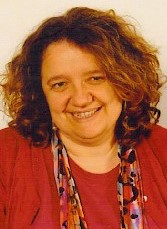
These pictures of just one of the local wisterias in flower were taken on Easter Sunday as we walked down from the temple. There is an even more impressive wisteria growing across the driveway in the house just opposite this one. Back home in the rue de Versoix, our neighbour planted a wisteria which is finally flowering this year and has already reached 15 foot up to his kitchen window.
So sad I cannot post the scent of these glorious blossoms via my blog. Once though, many years ago, I did preach a rather good ecumenical sermon about the glorious honey made from the lilac, wisteria and blackthorn flowers intermingled in an Oxford college garden - the sermon however was preached in a French roman Catholic church!
For now I just concentrate on the wonderful dancing beauty of these ephemeral blooms and I hope that something in this Eastertide will be blooming and perfuming your lives with hope, meaning and glory.
Tuesday, 26 April 2011
Word of the day la Glycine - Wisteria blossoms in Ferney Voltaire - the locals certainly know how to "cultiver leur jardin"
Monday, 22 November 2010
Dealers in purple - a sermon
Well here is my sermon from this morning. I think I shall call it "dealers in purple". I enjoyed praeching this morning, despite my sinusitis. Sometimes things just work and this simple service marking the UN's day for the elimination of violence against women on November 25 worked well by re-using material from earlier in teh year but framing it differently
Psalm 1
Acts 16 11-15
Blessed are those who build community for they will be blessed with the future
So, Brothers and sisters, women and men
How are you feeling this morning?
Are you feeling happy - thank God it's Monday!
Like those who meditate God's law in Psalm 1 do you feel like a tree planted by a stream of water?
Perhaps not (particularly given how very cold it is in the chapel this morning)
Perhaps you are feeling fatigued
even at the beginning of the week
perhaps compassion fatigue has set in
or commitment fatigue
perhaps you are wary and weary of new campaigns and challenges.
More than 20 years ago in one of the most privileged environments in the world I experienced the awful complacency and cynicism compassion fatigue can create
I was studying theology at the University of Oxford and all students for church ministry that year were invited to an all day ecumenical seminar organized by Christian Aid (I’ll spare you the details of how much of an ecumenical achievement it was to simply get all of the denominations to agree to such a day.) We gathered for prayers, there were lectures and workshops on various issues linked to development and advocacy. All of the workshops were able to take place with one exception. Almost noone had signed up for the workshop on women and poverty - I still remember Michael Taylor then director of Christian Aid, challenging us pretty forcefully about both our understanding and our commitment. He faced us with our own smugness and complacency about political correctness. Across the world then as today, the poorest of the poor are women. Of course this doesn’t mean that there are not men living in abject poverty – unfortunately there are of course millions of men and boys suffering from the iniquities of poverty, injustice and war. For every unjustly poor man there is an even poorer woman.
A Monday morning meditation is not the place to remind you of the statistics, you can easily look them up on google yourselves. But it is not a coincidence that some of the key areas for achieving the millennium development goals have to do with women’s health and the access of girls to education.
Later this week the UN will mark once more the International Day for the Elimination of Violence against women. A reminder of one of the additional burdens women across the world bear.
However, before I continue in this perhaps rather ranting tone, I think I should remind myself of a couple of lines by one of my favourite poets and also invite all of us not to a rant but to a celebration:
The German poet Berthold Brecht wrote
"Even anger against injustice makes the voice grow harsh.
Alas we who wished to lay the foundations of kindness could not ourselves be kind."
Today I really don’t want my voice to grow harsh – not only because I’m nearly losing it thanks to my sinusitis. Today I want to point to the possibility and the reality of what we achieve as a community of women and men together. I don’t want to focus yet again on women as victims. I want much more to encourage us to commit to what we can do together as women and men.
Particularly this week when the World Communion of Reformed Churches and the World Council of Churches will mark the publication of a new book “In God’s Image From Hegemony to Partnership – a church manual promoting positive masculinities”
So with Fulata (on Friday) we looked for a positive female biblical role model who could speak to the community of women and men and we decided to choose the story of Lydia for this morning’s meditation.
The first person on the continent of Europe to become a Christian, to hear and believe in the good news is a woman – without her many of us here might never have become followers of Jesus Christ. She gave generations afterwards a future.
Lydia invites those with the message she believes in into her home, they are persuaded by her invitation.
She allows them close to her
She shares with them, together community is built
The evangelisers will move on
But one evangeliser will also stay put, in her own community, living out her baptism in her own place, converting those she comes into contact with through family life and business
Truly she is blessed with the future.
There was of course another reason Fulata and I chose Lydia
She was a dealer in purple
Purple - the colour of the women’s movement,
the colour of nobility and royalty and riches
Was she a well off business woman or a poor worker selling on the dye she worked long hours to make? Scholars differ
When I think back to that ecumenical day in Oxford and particularly to the female colleagues I trained alongside from the Church of England, I admit to feeling a little sad and angry.
Not one of those women training with me can yet become a bishop and exercise the leadership of oversight in their church. When we were training together we still didn’t know whether they would be allowed to even become priests.
None of them can officially deal in purple yet … some have already retired before this will be possible for them.
(Perhaps I should add that I come from a church that doesn’t deal in purple for either men or women, those who exercise oversight have in recent decades included women. We did though ordain the first woman to the Christian ministry in Britain in 1917 – a year before women in that country had the vote. And just over two years ago we appointed the UK’s first woman church leader at the national level.)
All of us need to overcome fatigue and reinvigorate our commitment. One of the ways I do that is by reading detective fiction, issues seems to get resolved more finally than in some theological circles. I tend to feel that much of the best detective fiction is written by women. I was though surprised when re-reading one of my favourite authors Sara Paretsky - to find detective fiction also offering me encouragement and not just escapism:
"you must live in hope, the hope that your work can make a difference in the world."
Let us never fall into complacent fatigue
But let us never forget to celebrate what we are able to do together as women and men, men and women.
As I was thinking about some symbolic action we could all participate in together in this morning's service I realised that a really important practical thing we can commit to together would be to stand together as women and men for climate justice.
Annegret and I have prepared some of the posters and at the end of the service I invite you to hold the posters and take one another's photos with you mobile phones and cameras and then upload them to the campaign part of the WCC website as part of the photo petition. (or on facebook)
The posters read:
We Care for Creation
Climate Justice Now!
And this is my favourite, I think they used to say love your neighbour even when he plays trombone but this one says: Love your neighbour: Fight climate change
It is only by being together as the community of women and men who follow Jesus Christ that we will be able to combat climate change and so much else besides.
I pray that we may continue to build and celebrate that community.
In that way, bishops or not, we shall all exercise oversight and be dealers in purple, bearing witness to our baptism.
Blessed are those who build community
For they are blessed with the future
Amen
Monday, 13 September 2010
A tough day for theology ...
My wonderful colleague Theodore Gill preached a bravura sermon again this morning - we must send him away for long weekends the beautiful Swiss scenery more often I sense ... it was an enlivening and thoughtfull way to begin our week:A tough day for Theology. Much better P.R. for Science, which
apparently has now solved the riddle of Creation without an assist from a
Creator.
But I can’t help wondering whether the headline “Theology is
unnecessary, says Hawking” will go down in the annals of journalism with “The
end of history, says Fukuyama”.
You remember “the end of history”, just after the Berlin Wall came
down? But then, there was September 11, 2001 … And I also wondered: Whatever
became of humility? And whatever became of Thomas Kuhn?
Theo moved from reflecting on Toblerone to thinking about paradigm shifts and kept on repeating but whatever became of humility?
Is “Theology” necessary? I don’t know. I really don’t. I suppose it
depends on your goal.
But I do know that repentance is necessary. Humility is necessary.
Careful – “care-full” – thought is necessary.
And… Beauty is to be desired, and affirmed, wherever we find
it.You can find the full text here.
Sunday, 12 September 2010
Preaching on the roesti graben!
Yesterday afternoon in perfect weather I took the train up to the "Jura bernois" near St Imier. I stayed overnight with Hansuli and Rose and preached this morning at the lovely Mennonite chapel in La Chaux D'Abel.
I realised how little I actually know Switzerland and particularly this part where German and French merge - often known as the Roestigraben - the fried potato ditch. However it's less of a ditch and more a sort of moveable feast as land and house prices mean that people move outside their linguistic areas. Most people over 40 in this religious community speak both languages. Gradually more services are being held in French in the Mennonite communities of the region. Very interesting to chart the linguistic changes for minority communities who have also suffered historic persecution.
Anyway, the service today - a celebration of Hansuli and Rose's commitment to one another and life together - gave me much to think about. We stood with them in a circle - praying for them and for the world. We celebrated love and joy and a sense of belonging in time and space. It was good for me to preach in French again rather than in English and fascinating to hear the beauty of Swiss German even if I don't always understand it. Plattdeutsch or dutch are easier for me, my ear just doesn't get the southern German dialects so well ... interesting that the Bible passages were mainly read in hochdeutsch.
Discovering this until now hidden away region made me realise just what riches Switzerland has - we ate beef, honey, butter, cheese and vegetables from the local villages. Local food is good, in fact it is utterly delicious!
More than a 100 people were fed in the garden this afternoon - there was the occasional queue for food or the toilet, but no sense of hectic. A sense of wider family, of village and local life, and a deep and real openness to a much bigger and wider world beyond, not simply as a place for tourism but as a place for engagement, commitment and challenge.
It was "wohltuend" to be with good people having a gentle and joyful time.
I preached on joy as being "imprenable et essetielle", probably I need to listen to and understand my own message at some point. For now I give thanks for a beautiful and memorable 24 hours in my life.
Monday, 19 July 2010
There are moments when I despise myself for being poetic rather than prophetic
This is a hard post to write.
Today I preached quite a good sermon but I'm not sure I preached the gospel.
I've just re-read my sermon and Julia Esquivel's phrase about the threat of resurrection has been going through my mind. I said reassuring things that could be taken one way or another - well the sermon was about ambiguity so this is perhaps not surprising! Have I preached when I only receive positive comments from the faithful?
In part of what she writes in Bread of Tomorrow Janet Morley says some critical things about how theology in rich countries tends towards poetry rather than the concrete and actual - particularly concerning the resurrection.
I am not sure that I threatened anyone with resurrection this morning, certainly I avoided the actual and I suppose I played the game of being well-behaved and writing something "pretty" or "impressive" and hoped somehow that people would read between the lines.
I think once, quite a long time ago, my preaching used to be more earthy and perhaps also more earthed.
This morning instead of choosing the "beautiful and powerful yet ambiguous" beatitudes I should have dared to choose to preach on Matthew 18:23-35, but I didn't. So here it is - I can't offer you the sermon I didn't preach but the text is pretty powerful in its own right. I can dream about what I might have said ... what I should have said. It would not have been poetic.
The Parable of the Unforgiving Servant
‘For this reason the kingdom of heaven may be compared to a king who wished to settle accounts with his slaves. 24 When he began the reckoning, one who owed him ten thousand talents was brought to him; 25 and, as he could not pay, his lord ordered him to be sold, together with his wife and children and all his possessions, and payment to be made. So the slave fell on his knees before him, saying, “Have patience with me, and I will pay you everything.” 27And out of pity for him, the lord of that slave released him and forgave him the debt. But that same slave, as he went out, came upon one of his fellow-slaves who owed him a hundred denarii; and seizing him by the throat, he said, “Pay what you owe.” 29 Then his fellow-slave fell down and pleaded with him, “Have patience with me, and I will pay you.” 30 But he refused; then he went and threw him into prison until he should pay the debt. normal; When his fellow-slaves saw what had happened, they were greatly distressed, and they went and reported to their lord all that had taken place. 32 Then his lord summoned him and said to him, “You wicked slave! I forgave you all that debt because you pleaded with me. 33 Should you not have had mercy on your fellow-slave, as I had mercy on you?”
And in anger his lord handed him over to be tortured until he should pay his entire debt. So my heavenly Father will also do to every one of you, if you do not forgive your brother or sister from your heart.
A sermon about ambiguity and the beatitudes
An attempt at living with ambiguity – sermon by Jane Stranz
Text: Matthew 5 1-12
At times of particular personal distress
At times when I seek structure and discipline
At times when I want the comfort of the familiar
I read the Beatitudes
I find there neither easy consolation nor cheap grace
No hard and fast truth
But I do find simple yet complex spiritual poetry
And the ambiguous outline of the faith I seek to profess
Here are words which move me powerfully
Yet I would not claim to fully comprehend them, to understand their secret
A triumph of liminal, ambiguous faith
Or perhaps not even a triumph at all
but just strength in weakness and contradiction
So this morning as I invite you to reflect on the messy, complex contradictory nature of life
And think about how you find meaning, consolation, structure and comfort in the face of all of that
And to do that I invite you to come with me to the beach - after all it's holiday time and I realised that it’s the perfect place to go to experience ambiguity and liminality
At the beach that which is seemingly hard - the rock - meets that which is seemingly soft - the water
There we discover the power of the soft sea
Turning rock to sand
The permanence of cliffs which fall into the ocean
Even the tides are not at the same time every day
Don’t go to the beach if you want things to stay put
The open sky changes colour and contour
The wind bites or kisses our faces
The beach is a raw place, almost like a desert
It’s a place of shifting sands, dunes and landscapes, of permanent impermanence
Yet it is also a deeply fertile place
Since the dawn of humanity coastlines have been places where people have settled to harvest what the land and ocean produce together.
In our modern time the beach is also a place of recreation and relaxation
Of barbecues and volley ball
In many monastic communities and in many part of what we call the modern new monasticism
It is in the middle of the day, at the heart of work and life that the beatitudes are prayed
An affirmation that spiritual truth needs to be sought not in cathedrals of purity but in the ambiguous and sometimes terrible grind of daily life.
The beatitudes are not a prayer for fundamentalist people of faith
They are a call to people to live out their faith
One of the versions of the Beatitudes that I particularly enjoy reading is the French translation by André Chouraqui who is Jewish – instead of Blessed he translates the Greek Makarios as “En marche”.
It took Archbishop Elias Chacour – a Palestinian Christian – to explain to me that Chouraqui’s Jewish translation into French is actually closer to the Aramaic, Hebrew term "ashreï" that Jesus would have used rather than the Greek "makarioï" which in French or English is often rendered as happy or blessed. But "ashreï" has rather the meaning get up or get going, debout or en marche in French.
Ah … the ambiguity of a Palestinian Christian understanding a French Jewish translation of the Bible more deeply than so many others…
The Beatitudes particularly at this reflective holiday time can help us develop an engaged spirituality of the threshold, of the in-between, of the ambiguous
An engaged spirituality of infinite patience which tries to learn to live with incoherence.
Theologians haves different ways of talking about living in this ambiguous place of the threshold
Jürgen Ebach – whose name I only realize now is actually an anagram of beach – calls one of his books:
Remembered future and a hoped for past
„Erinnerte Zukunft and erhoffte Vergangeheit“
The threshold is the ambiguous place we look back from and forwards from
The past will always be part of the future and strangely the future is also part of the past
As we seek to practise an engaged spirituality of the threshold
the Beatitudes help us to “set out” into the ambiguity of life, to be blessed and become blessed
As we reflect on the threshold and the beach
It is not all about finding resources from within ourselves
We are not alone
Christ himself is waiting for us at the beach – even if it is a lakeside rather than an ocean beach - inviting us to a barbecue of bread and fish. Accompanying us into the further ambiguity of our lives.
After all, who is the Risen One other than ambiguous, unambiguous truth and compassion?
Blessed are those who dare to live the ambiguity of faith
Blessed are those who realize that to trust means to risk
Blessed are those who fail and yet still seek to go forwards.
And I end these half thought out reflections on ambiguity with part of a poem by the Irish Roman Catholic theologian, John O’Donohue
The Inner History of a Day (excerpt)
We seldom notice how each day is holy place
Where the eucharist of the ordinary happens,
Transforming our broken fragments
Into an eternal continuity that keeps us.
Somewhere in us a dignity presides
That is more gracious than the smallness
That fuels us with fear and force,
A dignity that trusts the form a day takes.
So at the end of this day, we give thanks
For being betrothed to the unknown
And for the secret work
Through which the mind of the day
And the wisdom of the soul become one
copyright (c) Jane Stranz/WCC
Wednesday, 9 June 2010
Greed - "Havesycke" the sickness of having - do you mean me?
The WCC's general secretary preached an interesting homily on sharing at St Mary's Episcopalian Cathedral on Sunday morning, the full text is here.
Ever since I've been thinking about how easy it is to not feel personally challenged by what we hear from the pulpit, perhaps I should change that first person plural to a first person singular - how easy it is for me to not feel challenged by what I hear ...
Yet as a rich woman with a very a large waistline and even larger hips any sermon on greed and sharing ought surely to strike a note with me somewhere. Yet it's so easy to think it must be about someone else, but it is also about me, very much also about me. Because I simply take, eat, stock, buy, pile up, want, "need", have more and more - not only does my body expand, but sometimes I am also less and less able to see and name my own greed and what drives it. Interestingly I only began to have these thoughts as I reflected on the sermon while getting into a taxi outside the church to get back to the press room - and realised quite what I had managed to both eat and drink in the space since listening to words about sharing rather than accumulating. So much for the spirituality of resistance - only the mind and not the body Rev. Ms. Stranz? Hmmm ...
Olav Fykse Tveit was preaching on Luke 12: 13-21 - the landowner who decides to tear down all his barns because the harvest is so good he can then stockpile even more:
There is a saying in my country that you do not know your family until you have to divide the family inheritance with them. The sharp analysis in this saying corresponds very well to the parable of Jesus, told to people who were not able to divide their inheritance fairly. The deep need and desire to accumulate, to make the barns bigger, to acquire more and more, much more than you need, is in the end so very - human. We see it everywhere, in all places in the world. You have a good word for this in English: Greed. In Norwegian we have another word: “Havesyke” – literally: the sickness of having ever more. And we see more and more ugly examples of this, the more money and riches that we see.
As I reflected on my own personal participation in society's "sickness of having" - with my usual guilt around food and eating I realised that the first food I had eaten in response to the sermon had been the bread and wine of the eucharist - symbols and realities speaking of liberation, forgiveness, love and the transformed values of God's reign. So can the bread and wine of Christ's supper give me a taste for overcoming my guilt about food and teach me to go on sharing and do it better? Of course, of course communion should simply "be" and not be instrumentalised in this way, but any thinking about greed and food has to think about the ritual meal of the church too.
Towards the end of his sermon Tveit said this, which offers some succour to the greedy, yet reiterrates the challenge to share and to be rich towards God:
To witness to Christ is to preach the Gospel of forgiveness of sins, even of greed, and, therefore also to address greed as an obstacle to justice, to peace and therefore an obstacle to being one. There are differences in this world that God does not want. There are more and bigger barns – literally speaking – than are needed, and can ever be needed.
Monday, 7 June 2010
An ecumenical incident on the way to church
This morning the WCC general secretary was preaching in St Mary's Episcopal cathedral in Edinburgh as part of the final day celebration of the Edinburgh 2010 event. Having misunderstood, my taxi driver drove me off to the Roman Catholic St Mary's Cathedral leading to a bit of a scramble to "get me to the church on time". I did make it on time, in the end. I can't really blame the cab driver, Edinburgh is a city of churches, every street corner seems to have several, each one more imposing and Victorian than the last. Anyway I'm glad I doubted the driver's first ecumenical choice and made him have another go!
Once I finally got there, it was fun to be in a cathedral church with all the ceremony of Anglican eucharist. I realised how well I know the words to the service still today, even though it was not the service I was brought up with, in some ways the words of the anglican service are the language of imperialism for some of us from a free church background in England. However north of the border in Scotland it is the Church of Scotland that is the majority church. I felt more at home after saying the Lord's Prayer in French, it helped my at least triple cognitive dissonance. It also helped that the final hymn was one I had for my ordination.
After the service there was a strange moment when I got a taste of my youth - that taste was the taste of post church instant coffee sipped from a plastic cup. I honestly haven't had any for years - yet this was the taste of meeting my husband to be (over post church coffee) and just the smell of it took me back to youth fellowship and many things I have left behind a long time ago. Episcopalian or Presbyterian the flavour of British post-church coffee seems to be unique in the world. I came out thankful that the coffee had been followed by a glass of wine and a sandwich at an ad hoc picnic in the resurrection chapel to meet the preacher. I was longing for an espresso by the time I set off for the press room though, real coffee ...
Tuesday, 25 May 2010
The tempest of the Spirit invites us to the feast of communication
This morning Dr B preached and rather good it was too. He developed the theme of Pentecost as an ecumenical feast of communication.
God's Spirit breaks down the barriers between nations, the barriers of culture, and the barriers of language. Being drawn together, being one, does not mean being identical. It means transcending the barriers that separate us, holding together our diversity in the power of the "breath of God's voice". This is a pronounced and profound experience of communication.The service also included an absolutely inspired and spirited reading of Acts 2 by our colleague Segma Asfaw from Ethiopia who read in English, French and Amharic. It was deeply moving.
The idea for Stephen preaching had only come about over supper last week as I said there was still no preacher for Pentecost week. "I'll do it" he said. He was lively, convincing and good. He also uses his hands in a very French sort of way these days.
God's Ruach is not something supernatural or immaterial but is "a tempest, a storm, a force in body and soul, humanity and nature". Ruach, says Moltmann, is the "breath of God's voice". (1) So, Pentecost is about communication of all the senses. It is this breath of God's voice that enables God's deeds of power to be heard by each in their own language. Pentecost is the great feast of communication.You will note that Dr B's sermons have something that mine do not, namely footnotes. I've always accused him of being the real theologian in the household. I'm just the pastor. Anyway it was good for me to listen to him being passionate about faith and a biblical text. I realised that I hadn't heard him preach for about 27 years - Emmanuel URC Cambridge was the last time I think, scene of us meeting over coffee. Meanwhile he's had to sit through countless sermons of mine in three languages. Last time he preached in Geneva I was travelling to Brazil.
Anyway here's a final taste from this morning, you can find the full text here and the liturgy here.
Communication is also to communicate, to share together in the Eucharist, the Lord's Supper, united in the oikoumene in space and in time, transcending the divisions of the world. Here we are called together by the love that unites that which has been divided. At this meal, even the inadequate disciples are accepted. This is the meal of the suffering Lord who is in solidarity with the oppressed, and the meal of the one who has risen, who sends us to renewed action (4). Yet it is also here, that our own divisions in the oikoumene become most apparent and most painful. Our communication together at the Lord's Supper is incomplete, is only a partial sign of the unity to which the breath of God's voice has called us.
Sunday, 25 April 2010
Colocaterre for all of us as colocataires
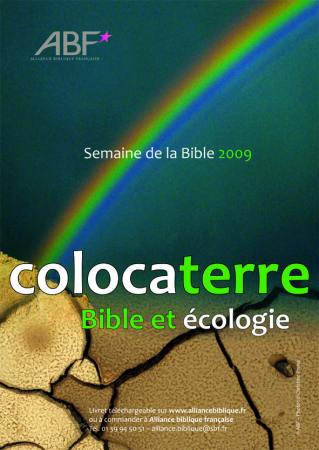 I made it to church here in Ferney this morning which was good. It helped me reconnect with folk in the parish and was good for the soul. Bernard preached on the Alliance biblique theme for last year of "colocaterre". It's a terrible pun but quite clever - "colocataires" are people who share the rent or the tenancy lease on a property. Colocaterre means we need to think about how we live together on planet earth (the pronunciation is identical, French is dreadful for homophones).
When I came home from the service I realised I missed a reading from the New testament. We had readings on the jubilee from Leviticus - making it clear that the earth belongs to noone - and Psalm 8 was also read as part of a celebration of creation.
I suppose what I felt was missing was resurrection hope in the face of the degradation of creation, particularly as we were still singing Easter responses. It's interesting that I didn't really notice this lack until I came home, a long time after the post worship coffee and chat.
So how do we live together as fellow tenants on planet earth? At the end of his sermon Bernard challenged us to think about what we might be willing to give up so that there could be more consistency between what we say and what we do on the issue of ecology. It all fitted in quite well for me as earlier in the week I finished the editing and preparation of texts for the next issue of Ecuemnical Review which is all about churches caring for creation and climate justice.
Tuesday, 30 March 2010
I am useless - but this is a joyful post!
I have been thinking about how utterly useless I am over recent days. Because I am an ordinary self-doubting human being (and female to boot) this happens regularly (at 15 minute intervals most days!). However, on Wednesday evening last week I realised that I had overstepped the limits of normal uselessness (or should that be usual uselessness?) and become not just virtually or practically useless but actually useless. As things go this is hardly progress ...
After a difficult day I came home to my husband who said "there's been a phone call from Lyon for you." I went pale and felt rather sick ... I knew what was coming.
About six months ago I agreed to take a service in Lyon - didn't write it on the calendar, there'd be time to talk about arrangements later. Then of course Stephen's illness happened and I've sort of lost three months ... until the phone call I hadn't realised just how much this was the case.
So I had to face up to saying no sorry I can't do this, to letting people down, to feeling horribly guilty, to asking colleagues to step in for me, to trying to find a way of getting up at 5.0am on the morning that the clocks went forwards and getting to Lyon and blah and blah and more encounters with my virtual, practical and actual uselessness.
I hate forgetting things and letting people down and I've had some unpleasant hours over the weekend worrying about it, thinking about a last minute sermon, then just accepting that I wouldn't be going and worrying about whether they had found someone as I hadn't heard anything back from them.
A Monday night phone call from Lyon brought me solace - it had all been fine, they'd found someone easily, but my contact person had been away for the weekend!
So this has been an interesting exercise in realising my own limits and being a little less disorganised; in asserting my own needs to spend time with my husband; in recognising I am not at all indispensible. Sometimes I really must let go of things rather than trying to do more.
And you know what, something strange happened on Sunday evening - even before the phone call from Lyon - I felt as if a weight was lifting, a much bigger weight than that of my uselessness. Perhaps it was the weight of my striving and desire to be effective and efficient, perhaps it was the weight of being perfect or always saying yes. Anyway I realised that I am simply a brilliantly useless human being, just like everyone else: virtually, practically, actually and brilliantly useless.
Psalm 139 would put it rather differently, saying "I am fearfully and wonderfully made".
So I am frustratingly, brilliantly and joyfully useless. And that's good because as the weight lifted I had my first decent night's sleep in about three weeks. Wonderful.
Monday, 1 February 2010
Mother tongue - Foreign Land
Have posted my sermon to the docs section. you can find it here.
It begins with a room with a view and continues to reflect on language, foreignness and cognitive dissonance. doesn't sound all that enticing really does it? Ah well, I'll have to try better next time!
Saturday, 30 January 2010
Prayers for Britain and Ireland
Over this weekend I'm trying to dream up a sermon with the title "Mother tongue - foreign land". The excuse for these musings is that the Ecumenical Prayer Cycle invites the world to pray for the countries of Britain and Ireland from tomorrow.
Someone else was originally due to lead worship in the ecumenical centre next week but that fell through, so I found myself with the task of reflecting on my home country, a place I haven't lived in for a nearly a generation. I'll see how it comes along. One of the problems with it is that I recently received or perceived the beginnng to a sermon fully formed, I was really excited by it at the time. Now though I'm having to let go of that idea in order to try to say something perhaps less beautifully perfect but more real. No idea how it will turn out. I want to try and play with the idea of how my home country is totally familiar and yet very much a foreign land to me and use that as a springboard to think more about changing faith, church and ecumenical landscapes ... all set somehow between Babel and Pentecost, coping with life's mess and structure.
Yesterday at lunchtime a few of us reheared the hymns I've chosen - all rather unknown and a little difficult. It made me smile but also surprised me that the tunes and words evoked hobbits and elves for one of my colleagues! Anyway although we shall not have any Scottish or Welsh music, we will have a poem by a Welsh poet (Rowan Williams) and morning prayers throughout the week will be led by a colleague from Scotland and based on the Iona Community's morning prayers. You can find the order of service here.
Wednesday, 14 October 2009
In the company of strangers ...
Susan Durber preached a thought-provoking and very profound sermon at the closing prayers of the Faith and Order plenary yesterday evening. It's always a challenge to preach at the end of a theological consultation, but this sermon really took up and echoed the issues that had been discussed but in a different tone. It drew everything together wonderfully. Here's an extract from the beginning:
It is firmly in the tradition of our faith, and it is firmly rooted in our experience, that Christ comes to us in the company of strangers.
But, central though this insight is, we keep forgetting it. And we cling very hard instead to our friends, to those who are like us and whom we like, in the hope that we will find Christ there. In an uncertain world, and in places and communities where diversity can seem sometimes not to be aesthetic decoration, but rather hovering threat, we cling to those we know and love well, instead of being turned towards those who are strange to us and to whom we are strange. It doesn’t take a genius to work out that this can’t be good for us. It can’t be good for ecumenism, for the mission of the church, for inter-faith dialogue or for the peace of the world, or indeed for any kind of human flourishing. But the truth keeps returning to us - in the way of things, or perhaps the ways of God.
Saturday, 18 April 2009
Translating and poetry
 A former colleague had on her door the phrase "Übersetzen ist wie dichten aber schwerer" - Translating is like writing poetry but harder.
I've been reading a review of new translations of the Greek poet C.P. Cavafy's Collected Poems and The Unfinished Poems.
The review is written by James Longenbach - himself also a poet. He ends by saying "Mendelsohn’s Cavafy is itself a work of art". This reminded me of the wonderful chapter on reading in translation in Alberto Manguel's glorious book A History of Reading. In it Manguel shows (in English) how a translation of a French poem by Rilke is in many ways greater poetry than the original.
Longenbach does not make quite the same claim for Daniel Mendelsohn's translation of Cavafy, though the review is certianly very positive. I was particulary intertested in the extract below, where Longenbach reflects on the influence of English on Cavafy's Greek poetry as well as the different registers between Latinate and Germanic language
Mendelsohn makes me wonder if it wasn’t the deliciously mongrel nature of English, which Cavafy spoke and wrote perfectly, that first provoked him to forge his own hybridized idiom. The fact that the few poems Cavafy wrote in English contain phrases like “penetrating eye” and “transcendent star” (the Latinate word wedged against the Germanic) suggests that the poet’s ear for English was at least as acute as his translator’s.
In recent years as I have begun to preach more in English again I've noticed how much French thought patterns influence the way I write and think in English. Losing one's mother tongue is a constant problem for translators. However there is little chance that I will ever be translating poetry, not something I reckon to be up to. My second cousin Renate Orth-Gutmann, who translates David Lodge, Roddy Doyle and Barbara Vine often works on translating the poems with her husband. Fortunately the academic texts I mainly work on usually rather require I send my husband off to hunt down a foot note!
Sunday, 5 April 2009
My favourite parable
I have been reading some of the aricles on inclusive language that Thinking Anglican has linked to from a day conference organised in February by Inclusive Church and WATCH (Women and the Church). I've particularly enjoyed reading Lucy Winkett's contribution - as much for the great quotes about liturgy and language as for what she says about inclusive language. This evening reading the quote below touched me.
The parable of the lost coin is probably my favourite, if I could choose it for my funeral I would. I have often chosen it for funerals in particularly distressing circumstances. Somehow the God in this parable works for me - it's an intuitive rather than a rational thing. It's also a parable I have loved since childhood (long before even I was a feminist!) I can remember acting it out in Sunday
School and along with one or two other Bible stories it really stayed with me.
I would hate to claim to be a "more mature" theologian today but the image of a God who sweeps hard in the packed earth and dust to search us out speaks powerfully to me and moves me deeply. I also think of the three funerals I took and preached on this text, three sudden deaths leaving the families reeling with shock ... three children left without a parent, parents left without their teenage daughter, a father carrying his son's ashes the long walk to the cemetry ...
Here is what Lucy Winkett says:
If we address God as our father, yes, we are following Jesus' example - but this Jesus also told a beautiful story about God searching for us and rejoicing when we are found - a woman sweeping a house looking for a lost coin. Who is that searching woman if not God?
God is a woman who searches for us and she finds us, she calls her friends and is utterly delighted.
Liturgy, informality and remembering water
I could tell this morning at Oullins that I wasn't in Switzerland. We didn't start the service on time - in a Geneva Protestant Church this would not go down well, it's quite a big difference when you cross the border.(Think Swiss watches and clocks and you begin to understand why!)
Sometimes we talk about the "liturgy after the liturgy" but this morning we had a great lunch after the service but before the service we also had a sort of "gathering before the liturgy". It was spring time, the sunshine was out, the garden was in flower, people were having fun chatting and meeting up, and it was difficult to get people to move in to the worship space. In the end we managed to gather in the worship space and the worship flowed between formality and informality. Holding that together is quite a challenge for a visiting worship leader but it was fun remembering water in the Bible with them and reflecting on Jesus washing his disciples feet.
When I first started working in the French Reformed Church I sometimes used to feel frustrated at the inability of anything to actually start - not entirely suprising given that I trained at the more high church end of the low church spectrum. I used to feel the need to shape things and get things going - these days I just try to make sure that the notices don't last twice as long as the sermon!
Nowadays I understand better that the informality comes from the community gathering, the chatter and noise is part of the holy preparation and I imagine that in Jesus' time it was not so different. The synagogues and sycamore trees were almost certainly informal community times and not ritualistic well-behaved occasions ressembling middle class dinner parties with people being on their best behaviour.
In Switzerland where Protestants don't feel in a minority they seem to like things to be on time and not last too long. In France Protestants are in the minority and tend to be willing to take a bit more time.
I'm still not sure what Calvin would make of any of this - nor how any of our churches today would cope with his style of preaching and leading worship! Back in the 1600s Sunday worship was not supposed to be the perfect 55 minute pearl of poetic perfection which "busy" professionals seem to impose as a norm on the Genevan church.
Wednesday, 21 January 2009
From desperate preacher to Disclosing new worlds
When I was in pastoral ministry I would regularly lurk and occasionally comment on websites with discussion forums on the lectionary readings for that week. I particularly liked Frank Schaefer's Desperate Preacher site - those were the days when the whole site was free, but even today the weekly lectionary discussion forums can be joined without any fee and they are a good place for solitary pastors and preachers to go to feel more connected, less lonely and less desperate too! I keep meaning to try and set up something like this in French but I supose I won't get around to it, though Frank Schaefer is originally German and set up the site in English. Over the years I have really appreciated Chris Haslam's excellent week by week introduction to the lectionary texts, especially as that site also used to have material in French and still has material in Portuguese. I particularly like the "clippings" sections, bits of interesting commentary information that have been clipped from the main commentary.
Now I'm not so much in the weekly disicpline of sermon writing I don't visit these sites quite so often but I still enjoy Theolog a blog of the Christian Century and reading sermons written by others, Margot Kässmann's make for good reading - though most of them are in German.
Lawrence Moore who is director of the United Reformed Church's Windermere Centre hosts an interesting site called Disclosing New Worlds which is building into a good resource for preachers. The site follows the revised common lectionary through the church year and has good photos and art work. It also has other essays including one by Matthew Paris on Africa needs God and another by Lance Stone on The Preaching Task - Picking a Fight with the Text. Go and have a look around.
Meanwhile I've been enjoying Prayer for a serene Realist by Iwan Russell Jones on Ship of Fools about Barrack Obama and Reinhard Niebuhr. It's an essay not a sermon but in this historic week it's all grist to the preaching mill. Here's the opening paragraph:
As Barack Obama enters the White House, it is already clear that few more thoughtful and intellectual men have been elected President. In this essay to celebrate the inauguration, Iwan Russell Jones traces the connections between Obama and the theologian Reinhold Niebuhr, and asks whether we are about to see a fresh chapter in the troubled relationship between politics and religion in America.
Sunday, 21 September 2008
Rowan Williams preaches on John Milton
It is rather wonderful when an Archbishop who is himself a poet preaches for the 400th anniversary of another poet's birth. His beautifully crafted sermon for John Milton's anniversary is about politics, witness, passion and, of course, poetics. I only wish I could have actually been there rather than catching up on it over the weekend - I know that Annie wanted to be there too, as her choir were singing at St Giles' Cripplegate for the service. You can find the full text of Rowan Williams' sermon here but I include the beginning and end as an encouragement to read the rest. Do also visit the Darkness Visible site put together to create an interactive space for the study and appreciation of Paradise Lost by members of Christ's College Cambridge. I wonder whether I will manage to re-read Paradise Lost during this anniversary year?
Now this as a taster from Rowan Williams:
To begin with a resoundingly obvious remark: Milton believed profoundly in words. He worked out of a pervasive confidence that his language could sound the depths of truth and communicate them in such a way as to change human hearts. In his long writing life, he found very diverse ways of expressing this: beginning with the musical, extravagant idioms of the earliest poems with their rich classical allusiveness and dancing rhythms, he goes on to establish himself as a prose polemicist of immense - sometimes scurrilous - vigour, and writes what is probably the greatest apologia in any European language for free debate in the public
arena. He becomes a servant of the revolutionary government, using his skills for the wholesale reformation of a society (and incidentally laying himself open to many of the charges he had so unforgettably formulated in his own polemics against censorship). And then, already shaken by personal and political disaster and by his irreversible blindness, he embarks on the most ambitious project of all, 'to justify the ways of God to man': in a startlingly different poetic style, severe, insistent, but with even more metaphorical abundance than before, he dramatises the fall of the angels, the inner counsels of the Trinity and the first disobedience of the human heart
...
The poet cannot finally avoid the summons from confident speech to the brokenness and harsh linguistic economy of witness; the disciple cannot avoid the summons from heroism to silent fidelity, knowing only that this has been God's way of transforming the world. 'If we have died with Christ, we believe that we will also live with him'. Milton, poet and disciple, faces this as reluctantly as any great or heroic figure ever did. Yet face it he does – patchily and reluctantly, but truthfully; and so must we.
Tuesday, 16 September 2008
Foolish wisdom - feasting and fasting
Rudolf Renfer who is director of human resources at the Lutheran World Federation prepared a very thoughtful liturgy on wisdom for our prayers on Monday morning this week. He based his thoughts on Matthew 11.16–19
“But to what shall I compare this generation? It is like children sitting in the market places and calling to their playmates,
‘We piped to you, and you did not dance; we wailed, and you did not mourn.’
For John came neither eating nor drinking, and they say, ‘He has a demon’; the Son of man came eating and drinking, and they say, ‘Behold, a glutton and a drunkard, a friend of tax collectors and sinners!’ Yet wisdom is justified by her deeds.”
Here are some short extracts from Rudolf's sermon:
You can find the full sermon text here and the liturgy and Bible readings here.


 Posts