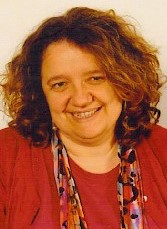
It had not been easy to find a date to go out for a drink together, and I was quite surprised that I was expected at the ecumenical centre reception for 17.00, I even got an sms reminder. Wow we must be having some serious fun ahead of us starting this early. In honour of a night on the town I even put on some mascara - with hindsight this was perhaps not a good idea!
I met with Maike and she took me not out to the bar but into the chapel - that place of course for the real gluttons and wine bibbers! In the side chapel were quite a number of my colleagues gathered very quietly and Maike explained that they simply wanted to say thank you by organising Holden Evening Prayer in such a way that all I had to do was to be there.
I was very moved - hence the problems with the recently applied mascara and the depserate search for a hankie in my bag (I've learnt from facebook they had even discussed this eventuality before my arriving - this of course is what friends are for).
A group of my friends had been preparing for a long time, rehearsing the piano and flute and solo parts since August, tonight was the first time they sang and played together. It was a very beautiful moment, and the liturgy should be beautiful but not perfect. I thought back to Stephen and Sara Padre, Itonde Kakoma, Luke Smetters, Colin Williams, Annie Osbourne, Michael Wallace and many others who have introduced and sung Holden with us since 2004. It is so good to know that the singing will go on, especially as more musicians know the parts. It reminded me of all of those times when I have come to the end of very busy days in the office and felt that perhaps the most important thing I had done was pray with others.
Tonight was truly "leitourgia" - the work and praise of the people, many were involved in reading the wonderful selection of Bible verses chosen by Ruthann, in the music, in the preparation. I know how much coordination that takes so I felt very blessed.
The liturgy is the space that frames our grief, joy, distress and doubt. This was the space where I could finally allow some tears to fall in public as I grieve at leaving a job I love, recognising my failures, seeing too some achievements and simply accepting that moving on is painful at this time. Tonight my tears were for the first time about leaving these wonderful people and this wonderful space, rather than tears about that which is broken in the present and the past. No more struggling is needed. Singing and praying to God held all of us in that moment together in love.
This was the second time this year I have received a sign of pure grace. It is quite hard to receive such creative, simple generosity. But I realised that grace has that capacity to transform and heal. The thirty minutes of tonight's service was a special gift to me, nourishing me with joy despite the tears.
Thank you all very, very much.
And so to Paris where I hope to occasionally say the Beatitudes with others at midday according to the tradition of les veilleurs.
But for now simply gratitude.
Tuesday, 27 September 2011
Beauty, surprises and the generous liturgy of friendship and prayer ...
Sunday, 29 May 2011
Resurrection chaos with the peaceful Ichthys
 I realise that I have said very little about the worship at the IEPC and wanted to try and correct that at least a bit. It was deeply satisfying, deceptively simple and uplifting in a sort of slow burn way. I really like worship like this, meaningful yet very joyful. Messages both implicit and explicit.
I shared an appartment at the halls of residence with the female members of the worship committee and I know how hard they worked, putting together at least three services every day, often re-writing at the last minute and dealing with lots of last minute hiccoughs. We had very early morning starts for the musical and practical rehearsals. They were putting in 12-14 hour days in very difficult circumstances.
At the final sending service they had really wanted us to gather at the beach but for all kinds of practical reasons this wasn't possible, too far, too late in the day. Yet in many ways we were at the beach.
Each of us received a large paper fish. As part of the reflection we were invited to write on the fish. This followed on from a wonderful multilingual reading of John 21, the miraculous fish catch and Christ's resurrection breakfast with his friends on the beach. The fish were then gathered into a wodnerful net which was hauled forward to the altar. In the choir we had to keep on singing and singing as people kept on wanting to write more and more, or make sure that their fish had an eye on it, of proper scales or a smiley face.
Then instead of sharing the peace in a traditional way we drew the shape of the fish, the ichthys, on the palm of our neighbours' hands. It tickled a bit and made us smile but it was a great idea and just really worked well.
I was moved by the idea of the fish being the love banquet, the true eucharist and reason to give thanks. So closing prayers did take us symbolically to the beach, to that liminal place of resurrection where the fishy fruit of the chaotic ocean meets the bread of the civilised land. It made me think about embracing the chaos being part of the resurrection message, only if we dare to do that will the miraculous catch of just peace be possible.
And of course we've also been singing all through the convocation, mostly things not know to me beforehand, including this ... not quite about the beach but still about bread and fish.
“On the green, green grass they gathered long ago.
To hear what the Master said.
What they had they shared some fishes and some loaves.
And they served until all were fed.
Until all are fed we cry out.
Until all on earth have bread.
Like the One who loves us each & every one...
We serve until all are fed."
Sunday, 22 May 2011
World Sunday for Peace - what is the right hand of God doing in your land?
 Today is World Sunday for Peace. Across the world's churches people have been invited to pray for peace, to plant a tree, to use the prayer for peace written by the host churches of the Peace Convocation. Here in Kingston, participants were invited to a wonderful service of praise and celebration in the main tent led by the Jamaican churches and the churches of the Caribbean. We had wonderful choirs, great readings, heartfelt and meaningful prayers, a fabulous steel band with brilliant drumming, dancing and music. We ended with wonderfully rousing singing of the hymn known as the Caribbean anthem "The Right hand of God" - the final verse goes:
The right hand of God is planting in our land
Planting seeds of freedom, hope and love
In these many peopled lands, let his children all join hands
And be one with the right hand of God.
Afterwards the blessing affirmation read:
"And instead of the cacophony of war we will compose a symphony of peace; instead of a world of chaos and confusion, we will create a new order of harmony and solidarity."
And that harmony of blended trained voices, enthusiastic steel drummers and cries of "Amen" accompanied us as we set out into a more gently paced day. A day of rest and enjoyment, time to get to know our host churches, discover some local specialities - (the hot chocolate rum was delicious, thank you!) and even for some to go to the beach. A reminder that #justpeace is not only about striving, writing reports or always "doing" more and more, it is also about making time for one another, letting things settle down and allowing things to emerge. Justpeace may often have to be struggled for but it cannot be achieved by force.
So what might the right hand of God be pointing to for justpeace in your country, in your context, in your life? What seeds of peace and justice are being planted, do we open our eyes to see what is already growing?
The prayer for peace written by the Caribbean churches and shared today with the world's churches begins:
God of peace and possibility, Creator, Redeemer and Sanctifier: We approach you to ask once again for your mercy, forgiveness and a fresh start. We ask you to help us give peace a chance, in this world.
Even as World Sunday for Peace closes may our prayers for justpeace continue.
Here are the links to the different language versions.
Saturday, 21 May 2011
Tears - we shall not hang our harps on the willows
 The opening worship for the IEPC included a prayer of lament, during the words of the prayer we hummed the tune to from the rivers of Babylon and then in the silence in between one of the young people from Jamaica bent down to a bowl of water and rose, wringing out tears of injustice and suffering. It was moving and powerful. As we moved from the lament further into the liturgy, our humming became singing - "By the rivers of babylon, where we sat down, and we wept when we remembered ..."
As we reflect on and work for just peace there is enormous pain but there is also hope. We will not hang our harps on the willows, we will continue to hum and sing the song, both of pain and of hope.
Monday, 25 April 2011
Easter bunnies on the communion table ...


The service yesterday morning in Ferney was really good, great music, a very mixed congregation with lots of children, a good sermon grappling with resurrection in a time of bad news, reference in the notices to the upcoming Peace Convocation in Jamaica, coffee and Champagne served after the service ... and bunny rabbits and orchids on the communion table. I just had to get a picture ...
Thursday, 21 April 2011
Fragments for Maundy Thursday
We weave together on this day
Perfume and water
Wine and bread
Tales of liberation
Meals of hope and a story of deep, deep betrayal
We know that death will follow the bread and the wine
And yet they still speak of hope
Of a red sea crossed
Of an older covenant fulfilled and a new one to be fulfilled in our wtiness
And then a Brazilian Friend on Facebook translated the beginning to my homily ...
Fragmentos de uma Quinta-feira Santa.
Tecemos juntos neste dia
Perfume e água
Vinho e pão
... Contos de libertação
......Refeições de esperança e de uma história de profunda, profunda, traição
Sabemos que a morte seguirá o pão eo vinho
E ainda assim eles nos falam de esperança
De um mar vermelho atravessado
De uma antiga aliança cumprida e uma nova para ser cumprida em nosso testemunho ...
Monday, 28 March 2011
Believing in the little things - a lenten liturgy of fragments and cherry blossom
 This morning we tweeted as part of worship - you can read our tweets at http://twitter.com/oikoumene. It was an interesting experiment, we did low tech tweeting with pencil and paper and I typed the tweets into the site in themed groups in free moments during the day.
Tweets are of course just little things, fragments of communication, yet even in just 140 keystrokes you can say something meaningful, you can link to a photo or audio file, to an article or video. You can try to "hook" people, you can make statements and of course you can also preach and pray using the medium.
Today I tried to get people to tweet in four ways - first a tweet of confession of brokenness, after that a tweet of hope for just peace after hearing the assurance of forgiveness and listening to Isaiah 52, then a tweeted biblical reflection on Matthew 6 25-33 - the lilies of the field; and finally prayer tweets of intercession for peace and justice.
We had a group of people from the Danish churches so many of today's tweets were in Danish, others were in German, French, Swahili and Tagalog (I think ...) so I had an interesting time typing them up - especially as Twitter was painfully slow this afternoon.
I did not preach but as an invitation to the biblical reflection I took with me a small branch of a pink flowering prunus. The gospel reading we listened to - in French - was of the lilies of the field. Yesterday I read this moving and beautifully written article by Joji Sakurai on cherry blossom and transience as a source of strength. She wrote:
For the Japanese, it will be a particularly poignant sight. Even in normal times, the flowers are a cause for rejoicing tinged with sadness, because they fall at the moment of their greatest beauty. They are the embodiment of a notion that is central to Japanese culture — "hakanasa," a hard-to-translate word that conveys the fragility, or evanescence, of life.I was moved to learn that the cherry blossom is also the symbol of valour for the Samurai. this prompted me to think about how we so often have such grandiose plans for our projects - our peace-making and events too. Our work for a just peace today needs somehow to be like cherry blossom willing to bloom beautifully and then let go. Just-peace can never be about something set in stone. I believe in the little fragile things, in the arpilleras of the stitching peace exhibition, in the petals that gently fall and look like snow, in folk who find time to have a meal with one another and in the transience rather than in the permanence of our witness, in the God of small things. Like the cherry blossom, Christ too was at his most evanescent just before his life ended - how else can you read and understand his passionate words and actions, his foot washing in John's gospel, if it is not in some way about a vital fragile blossoming: "That all may be one".
If the blossom does not fall there will of course be no fruit. Only sacrifice bears fruit.
Here are two tweets written by someone at this morning's service, they sum up fragmentally but succinctly some of what I'm trying to say.
I grew up in blossom country in the Vale of Evesham, and thinking about the cherry blossom reminded me of A. E. Houseman's Loveliest of trees the cherry now ... which has its own strong intimations of mortality and celebration of nature. I like the idea of spring and winter almost being one in terms of the beauty, how the snow reminds of the springtime blossom. How sad that when I was studying it at school I never quite reached such gentle understanding of it. Now I can see how this deep human understanding of passing seasons and transience links east and west, north and south.
#IEPC Is 52:7 Mt 6:25 Transient lives contributing to the justice mercy & peace on earth
#IEPC Is 52:7 Mt 6:25 Transient blooms that bring everlasting beautiful memories
This evening coming home on the bus I realised that I shall never really be a systematic theologian but always a fragmentic theologian. Outside the main entrance to the Ecumenical Centre a prunus is in flower next to the white cross outside the chapel, it always makes me smile to see that in springtime, even on a wet grey morning like today. And seeing it reminded me of this which we sang in the chapel at the end of last winter, when spring was merely a vague promise, but nevertheless on the way:
“O make our barren trees to grow, our hands to blossom,
and let our lives bring forth such fruit that heals our neighbours’ grief and pain.”
It's by a Norwegian artist and hymn writer called Svein Ellingsen.
Poetry about blossom, thinking about the transience of blossom gives me strength, reminds me of the orchard in the garden at home and pure pleasure at beauty. It also offers a slightly subversive paradigm to my understanding, one that is glorious, mystical and filled with both pain and perfume. It is good to be a fragmentic theologian, a source of tearful strength.
Wednesday, 29 December 2010
Radio services and the grace of other people's liturgies ...
Regular readers of this blog (if there are any left after the hiatus of recent weeks) will have gathered that the Stranzblog household is in a state of flux at the moment, heading towards much that is unknown in the New Year. I'm not going to write too much about that here, gradually things will become clearer I hope.
I have spent Christmas very quietly moving from the sofa to the kitchen and to bed - inbetween dosing myself with antibiotics and coughing. It's been almost the first time ever that I haven't been able to go to Church over Christmas and I've missed that. However, I've been blessed to be able to listen to the radio and really appreciated two broadcast services the first from St Martin in the Fields on Christmas Day and the second on St Stephen's Day from Prague - it linked Wenceslas, St Vaclav, the velvet revolution and much more besides. If you follow the link you can read some good blogposts about the making of the Prague programme.
Both services were meditative, meaningful and joyful without being preachy, they were locally rooted and thoroughly international which touched me. You can download transcripts.
Here's a longer extract from Petra Elsmore's meditation:
Stephen couldn’t keep his mouth shut. His speech to the Council goes on and on – covering two pages in my Bible. And towards the end, it becomes a bit of a rant – “You stiff necked people,” he says. “Are your ears full of wax? You worship the law, not the living God”…Enraged, they take up stones and the first Christian martyr is killed.
His words might seem to us now to be inflammatory perhaps. Luke’s story leaves us with an uncomfortable feeling when seen from this side of the Holocaust. But Stephen’s extreme language was born of an extreme time – here was a new branch of the faith struggling to discover its own identity and rebelling against its parent… perhaps it’s helpful to see Stephen’s anger in that light.
Like so many Martyrs, Stephen’s trouble was that he made a nuisance of himself – he spoke out rather than keeping silent. Stephen, like Jesus, like so many who have been killed for their faith since then, died not for the beliefs in his head, but for the actions and the words which flowed from those beliefs. His passion for Christ led him in the end to share his master’s fate.
Here in the Czech Republic, during the days of communism, speaking out could get you locked up in prison, you could lose your job, you could be placed under heavy surveillance and constantly intimidated…. But courageous individuals spoke out again and again throughout those difficult years… people who paid the ultimate price because something in them just had to protest against the injustice and inhumanity of those in power. It takes extraordinary courage to be the one person in 10,000 who is willing to put their head above the parapet and take a stand. In the Czech Republic, often the individuals who did so were artists, writers, performers, poets and musicians. Vratislav Brabenec, a member of the underground band “The Plastic People of the Universe” said "We weren't political, man. We were just trying to be poetical." Asked why the band would not accept government control, he answered: "That's freedom, man, I'd die for that."
Faced with injustice, most people keep their heads down and prefer not to get involved. We like a quiet life, we worry about our reputations, we conform to comfortable social norms. Speaking out always carries a price. And in the West or even in post-communist Czech Republic, it may seem that there is little to protest about… but when we open our eyes to those at the margins of society and to those who struggle to feed their children in a wealthy society, we might think again.
The root meaning of the word ‘martyr’ is to be a witness. Are we willing to take a stand like Stephen, when our faith and sense of justice demands we act or speak and make a nuisance of ourselves for what we believe in?
Thursday, 25 November 2010
Women at the table ...
I have just returned from the installation of Rev. Martin Junge as general secretary of the Lutheran World Federation. It was a lovely service, with glorious music led by Rev. Terry Macarthur, who is so full of enthusiasm and creativitiy.
One lovely moment I particularly liked was towards the beginning of the service when we sang Tenemos Esperanza. Martin left his place on the front row and came and joined us in the choir, accompanying us on his guitar and leading the singing of the tango rhythym and words in Spanish. It was good moment of the leader being one of the people, it symbolised something but it was also very authentic.
The other moment that moved me was having two women celebrating communion. There were so many women clergy and women bishops processing in alongside male colleagues. It was a colourful and heart-warming sight.
Having two women at the altar was also a real choice. On the United Nations Day for the Elimination of violence against women I was proud of Protestant churches who know that sometimes it is important to set up signs. This was one for me at least. So many photos of church events only have men on them, this said to me gently but surely, we are willing to share power, to give up power to try to begin being more fully a community of women and men together.
Earlier in the week I had listened to what I consider to be complete nonsense on the radio from some male clergy in the Church of England who were putting forward the argument that having women bishops or women clergy discouraged men from going to church. Oh dear they obviously haven't realised how much their own leadership seems for several hundred years to have discouraged men from coming to church - or maybe they haven't noticed.
Anyway this ought to be about celebration. A good, tuneful and colourful service to which some serious thought about signs and inclusiveness had been given. I felt nourished and blessed... and I so enjoyed singing such great music.
Martin also preached a great sermon which you can read here.
Oh yes and I tweeted the whole thing at http://twitter.com/oikoumene
Sorry about my dreadful typing!
Monday, 15 November 2010
Reconciled diversity begins at home as we try to pick up crumbs ...
 This morning the World YWCA and YMCA led the service in the chapel as they began their international week of prayer.
The service was drawn up by Terry MacArthur and Luzmarina Campos Garcia, you can find it at the end of the Week of Prayer booklets after the daily meditations. The service was a simple liturgical reflection on women building a safer world and used the encounter between Jesus and the Canaanite woman to focus our thoughts and prayers. She who says to Jesus but even the crumbs you might give to the puppies would be ok for me ... was it Chutzpah or humility?
Ana Vilanueva from the World YWCA danced both for mercy and with joy as we listened to music and readings from the gospel story. We received small pieces of brioche - as it came into my hand I realised I had not eaten breakfast - and we reflected on our lives in fragments, in crumbs - the bits and pieces nature of things. Later as we ate the bread we recognised the responsibility to transform even the tiniest crumb into hope.
And as I thought about the fragments and pieces of my life I realised that reconciled diversity - something we talk about so much in the ecumenical movement - it begins with me. With my ability to live with the inconsistent and jarring and lovely and loving and petty and good and laughing and weeping and clever and stupid and preachy and gentle parts of myself - and with all those pieces others are busy reconciling in their own lives...
Here is part of the text on crumbs from this morning:
Crumbs. We have so many in our lives. A crumb is a fragment of bread. A dispensable small thing that we easily throw to the dogs or in the garbage.
Have you ever felt like a crumb? Have your people felt like a crumb?
Despised, betrayed, dispensable? Have you ever treated somebody else like a crumb?
(The woman holding the crumb, takes it with the other hand and eats it) But we are not crumbs. We fight, shout, pray, get educated, hold together in the face of pain and suffering.
And we want more than crumbs. At this moment, while the crumbs come to you, you are invited to name the ways you have been overcoming fear, despair, exclusion, oppression, pain. Hold the crumb in your hands.
(after people get the crumbs)
Crumb, a dispensable small thing that in the mouth of a wise woman became an irrefutable argument changing Jesus’ way of thinking and acting. We continue being called to transform crumbs into bread, pain into company, exclusion into inclusion, oppression into liberation, despair into hope.
We are invited to eat the crumb we have in our hands as an affirmation of faith that our crumbs are being transformed into bread.
Monday, 11 October 2010
Worship for the churches week of action on food


At the Ecumenical Centre this morning colleagues from the Ecumenical Advocacy Alliance had prepared worship for the beginning of the Churches week of action on food. Lusmarina Campos Garcia led the service and provided a powerful mime and dance on hunger and the longing for food which reflected both the liturgy and the call to hope that change for food justice is possible. John Baxter Brown and Fulata Mbana Moyo led a reflection on Isaiah 65 and the promise of a new heaven and a new earth.
Hungry God,
hungry for justice,
hungry for a world spending on hungry children as it spends on football games,
hungry that your promise of blessing the hungry be fulfilled,
draw us into your hunger
so we discover the life you offer when we give ourselves away,
and others do not have their lives taken away by the greedy and corrupt.
Give us the courage to risk a new hunger to do your will through Jesus Christ. Amen.
Find the full liturgy here and here.
We also signed the petition to the FAO to ask them to take action against land grabbing which is affecting the ability of many of the poorest people in Africa to grow their own food.
For someone who has just returned from a holiday of feasting on wonderful local food in the south of France this was a sobering service and a timely one.
Monday, 6 September 2010
"Are you joking God?"
A year ago our friend and colleague Suzanne died, she took her own life in moment of despair.
This morning we sang and prayed, lit candles and picked up grain seeds of hope. A colleague from Aotearoa sang a wonderful lament in Maori, other colleagues played flute and piano, read despite tears and emotions.
Nyambura Njoroge preached an extraordinary sermon from the heart. She had suggested preaching and chose powerful texts from Numbers and 2 Corinthians as her starting point. She spoke of a meeting of bishops in Africa of the despair some of them expressed about working for the kingdom of God. In particular she spoke of her own son's suicide, of Suzanne, of her daughter's depression. Facing such suffering she said made her ask "Are you joking God?"
Gently, calmly, without notes but with humour and with a conviction that comes from faith and hope, she preached for herself and for us. Despair cannot have the last word, we have to learn to speak the truth to power - that truth has to be addressed to ourselves before we address that truth to others. I wish I had recorded Nyambura preaching but I'm glad there were so many of us there to hear God's word of hope and resurrection preached slowly, passionately and from the heart.
You can find our liturgy here. You'll see that we sang Shine Jesus Shine - this was Suzanne's last joke against me - I always stopped her from putting it onto the service sheets, it is one of my least favourite hymns. This morning as we began our serivce with it I really enjoyed it. Hope can tranform us.
We ended by saying "live love laugh" together before receiving the blessing. These were the words on a necklace that Suzanne had given to her sister a few years ago.
So we try to carry hope forwards.
Tuesday, 1 June 2010
Celebration of the body and of bread in song, dance and word
I rarely attend worship that so lifts the spirit that I don't notice time passing - one of the problems of being a liturgist is that you can get hyper critical and miss that main point of the liturgy is not that it be perfect but that it allow for earth to be open to heaven and be touched by the things of heaven.
On Trinity Sunday the ecumenical chapel hosted the biannual confirmation service for the ecumenical community of disabled people and their families. The service was full of joy, of authenticity, of faith and reality. It was great, it was really well planned and it was messy. Two hours passed and we didn't even notice. Five clergy presided, from the Protestant and Roman Catholic churches in Geneva. Certainly one highlight for me was experiencing Laurence Mottier, the female chaplain, standing behind the altar flanked by her male colleagues breaking the bread at the moment of fraction. Because of ecumenical sensitivities every sentence of the eucharist had obviously been very carefully thought through and planned, yet it simply flowed and was extremely natural and wonderful.
Focusing on the gospel of the prodigal son we had brilliant drama, readings in various langauges and one of the best sermons on ecumenism I've heard in a long time. It was of course all in French but I will post to the docs section in coming days. The Protestant pastor and the Roman Catholic priest each took it in turns to play the older or younger son in the parable of the Prodigal son, speaking about their respective churches. It was very thought provoking and inspiring.
Many of the confirmation candidates had communications problems but all clearly said "yes I want to be Jesus' friend". There was an extraordinary moment at the end of the service when those who were celebrating their confirmation danced with the clergy around the altar. Hard even for an old cynic like me not to shed tears.
I'll try to post some photos and further reflections on the service in coming days. It will remain one of the highlights of my year.
Wednesday, 31 March 2010
'God must be in the detail, not the devil!' - a guest blog
 Dr. B writes, "Happiness writes white. It does not show up on the page" - this quotation from Henri de Montherlant opens a book that arrived today from an order earlier this month from Amazon: Notes on Book Design by Derek Birdsall.People of my generation, even if they have not heard of Derek Birdsall, will probably have come across his work, as he designed covers for Penguin Books from 1960 to 1972. It was splendid to leaf through his notes on designing books, with examples of his works over the past five decades or so. One of the most interesting sections, however, is his illustrated account of designing "Common Worship: Services and Prayers for the Church of England", the new liturgy book introduced at a service at Westminster Abbey in November 2000. Birdsall was commissioned only in October 1999, so he was working on a tight schedule, and he relates a fascinating account of the decisions he made on typeface, margins and layout.
As a clear distinction was required between the words spoken by the priest, the congregation, and the instructions, the ideal typeface would have equally clear distinction between the roman, the bold and the italic. Early research showed Gill Sans to be by far the clearest ...He also explains how "Common Worship" came to be the size it is - it had to be long enough for the Nicene Creed to fit on one page (as below), but the most important thing, a priest said during informal "market" research by Birdsall's collaborator John Morgan in a local church, "was to be able to hold the book in one hand and a baby in the other".
(Morgan has posted a PDF about the design process of "Common Worship" here, which shows the care that went into the process - the proofs were sent out to 14 proof-readers - and there was wide consultation for which one response was, "God must be in the detail, not the devil. This is surely true of typography, as much as theology or anything else.")
Almost at the last minute, Birdsall was inspired to form a cross from the book's title, and he also insisted on the use of the word "All" (which the selection panel was ready to drop) before the words in bold for the congregation: "Setting 'All' out in the margin and in red further clarifies the structure, is comforting to those people not familiar with Church services, and adds sparkle to the page."
 Birdsall's notes on design also contain reflections on the craft of the designer, for which the last words (on the back cover) are from Logan Pearsall Smith: "The test of a vocation is the love of the drudgery it involves."
Monday, 29 March 2010
Are Christians making any difference?
We are praying this week for the peoples and churches in Brunei, Singapore and Malaysia. As Holy Week begins our colleague Dr Manoj Kurian prepared a liturgy for which he wrote music for a Malaysian version of the Orthodox acclamation of the gospel - using the in recent times much contested word "Allah" to refer to the trinitarian Christian God.
In his sermon on the suffering servant from Isaiah Manoj asked us whether the more than two billion Christians in today's world were making any real difference. "We conform so often to what Christ was against rather than try to find new ways to transform society". Just like the people who celebrated Christ's triumphal entry into Jerusalem on Palm Sunday, we need to ask ourselves what kind of Messiah we are expecting, just a new king who'll sort out all our problems or someone working to a different set of rules, a new system of renewed relationships as opposed to the systems of the world that push the poor to the margins.
Manoj went on to plead that to follow the way of Christ the suffering servant we we should see our service as part of our worship and see God in each other.
So are we Christians making a difference or would the world be just the same without us?
Tuesday, 9 March 2010
Holy water starts to get wet, wet, wet ...
Over on Seven Weeks for Water things are getting wet. This week Chip Andrus encourages us to think wet and live wet as we consider the true and deeper meaning of our baptism.
The Church consists of people born of water and the Spirit in baptism. Baptism is a journey only completed in death and therefore we are called to “live wet” or practice the faith we covenanted to live with God and one another throughout our lives.I was baptised as a small baby by a minister who spoke Welsh as well as English. He spent most of his working life as a teacher and helped out in the local congregation when there was no minister. Shortly before his death he also officiated at the legal part of our marriage.
When we intentionally make connections between all water and the water of baptism, we can then find the sacredness of every encounter with this basic element of life and death. On the other hand we may find the defilement of God’s sacredness when water is polluted, deprived to humans, used as a means of wealth, or used for torture.
Chip Andrus' piece has helped me during this Lenten time to think about what it means for me to be a baptised Christian - am I really following Christ into the deepest depths and the strongest promise of living wet?
Monday, 8 March 2010
Food for thought and food for life on International Women's Day
 Our liturgy for international women's day this morning focused on daily bread and included recipes from the LWF's splendid Food for Life cookbook.
It was fun to have recipes as part of the liturgy, I wouldn't quite say that it had our mouths watering but it certainly gave our praying a more sensual quality, the prosaic words conjured up smells and flavours as well as the healing qualities of some food.
Fulata Mbano Moyo gave a very personal reflection entitled: Desperation created by systems of inequality as enemy to women’s dignity.
She spoke of her own experience losing and mourning her husband over a decade ago to look at how sytems of economic injustice and privation mean that when tragedy strikes it can often be the double tragedy for women of the loss of a loved-one and the loss of their livelihood. speaking of her own desperation she looked at the stories of two deperate women in the Bible. In 2Kings 4 the desperate widow in advised by Elisha to fill her own and her neighbours empty vessels with oil thus preventing the sale of her children into slavery. In Matthew 15 the Canaanite woman is desperate for her daughter, willing to humiliate herself like a puppy and be content even with mere crumbs from the master's table.
If you love somebody and that somebody is in ill-health, you are more prone to being desperate for the restoration of their health. The woman we meet in Matthew 15: 21-28, loved her daughter deeply and desperately sought her restoration to health –“rescue from the torment of the demon”. She would try anything that would bring that restoration. The question of dignity and respect was not a priority at this point. Observance of the rules for example keeping away from other ethnic groups as a “Canaanite” (a derogatory term) was not an option for her. If being compared to a dog ( an insult) would bring healing to her daughter –“even dogs eat crumbs that fall from their master’s table.” Despite her own desperation, she still strategically challenged Jesus' own human bias and insensitivity – and he said “woman great is your faith”.
As we prayed for women and men throughout the world, as we sang John Bell's amazing hymn "there is a line of women, extending back to Eve" in celebration of biblical women, as we shared the blessing by holding out one hand upwards and the other downwards, we "went out with songs of resurrection" ... with much food for thought. And in the main lobby the men were serving coffee and juice and croissants, real food, real breakfast greeted us. Food for life.
There is a line of women, extending back to Eve
Whose role in shaping history God only could conceive
And though, through endless ages, their witness was repressed
God valued and encouraged then through whom the world was blessed.
Thursday, 4 March 2010
Holy Water celebrates the feast of the Theophany
Over on the Ecumenical Water Network Elias Abramides has been writing about Holy Water and the Feast of the Theophany.
I wrote about our own blessing of the waters service at the Ecumenical Centre earlier this year. It is a moving service and can have great meaning, not only for those from the Orthodox tradition. You can find see some images and commentaries about how the Feast of the Theophany is marked on the Keeping the Faith site.The ceremony of the Holy Water is conducted inside the church but if possible, across the world, it mostly takes place near open bodies of water: a river, a lake or by the sea. As a sign of blessing just as Christ blessed the waters of the Jordan, Holy Water is poured into a body of water (a lake, river, pond or stream) and a cross is plunged into the water (being retrieved later by divers who in this way are blessed).
Holy Water blessed at the Feast of Theophany is given to the faithful to drink for health, and for the blessing of the body. In the weeks following Theophany, the clergy may visit the home of the faithful and conduct a ceremony of blessing using the Holy Water that was blessed at Theophany.
One of the things I am enjoying particularly about Seven Weeks for Water this year is plunging into the holy waters of traditions different to my own, having my horizons opened to other spiritualites and also learning more about water and its liturgical uses.
Tuesday, 23 February 2010
The Ecumenical Movement of the Cross
This evening the chapel at the Ecumenical Centre in Geneva hosted the service for the official installation of Olav Fykse Tveit as general secretary of the WCC. We had two wonderully talented and energetic musicians from Denmark leading our music and singing - Peter and Betty Arendt. There were songs from around the world particularly from Norway and a very lovely solo of a song from China about the coming of the springtime of faith sung by Betty. As it is Lent we are not singing Alleluia but sang instead the glorious anthem "El mensaje que hoy proclamamos" to proclaim the gospel.
Our new general secretary preached a profound and very spiritual sermon on the ecumenical movement of the cross, illustrating this by pointing to the various very beautiful and powerful crosses which are found in the chapel and grounds of the Centre.
Here are some extracts from the beginning and the end. Full text here. Full liturgy here.
The cross is and will forever be the sign of the church. This is the symbol that we have together, the symbol of what we have together, the symbol of what the churches have to give to the world. From the beginning to the end.
How shall we, then, best give shape to the ecumenical movement of the cross in our time? And how can the ecumenical movement be a movement of the cross – the tree of life? Perhaps we should emphasize what some of the early teachers of the church tell us: when Christ stretches out his arms at the cross, he is stretching out to the whole world, embracing everybody. One example is the colourful and powerful Latin-American cross in front of this pulpit, with images of daily life and a woman stretching out her arms to everybody and to God, in worship. Reminded of what the cross is, we see that the exclusiveness of the cross is precisely that it is inclusive.
The gift of the cross binds us together. Our open arms can be a sign of the ecumenical movement of the cross, showing that we need one another, that we want to share God’s gifts in this beloved world with all.
Monday, 15 February 2010
Violence against women is not only a women's issue, men have to take on this issue if change is to happen and the violence is to stop
There were moving moments at the service this morning to launch "Cries of Anguish; Stories of Hope" the Lenten campaign to end violence against women. We stood to listen to the gospel story of the woman taken in adultery, read in Spanish. As we stood and listened and read the story or remembered it in our own languages we held in our hands the stones given to each person as they arrived. This proclamation of the gospel led in to a time of confession 'and we were invited to lay down the stones at the foot of the Coventry cross during the prayers and singing. All this happened naturally and in an organic way that I hadn't quite imagined as I wrote the liturgy. Somehow the liturgy, the work of the people, preached the gospel and it is special when that happens.
Nyambura Njoroge shared reflections on violence, suicide and transformation, encouraging all of us to dare to follow models for transforming attitudes to violence agaisnt women offered through the Tamar Campaign and also through the challenging masculinities project in Africa.
WCC general secertary Olav Fykse Tveit introduced the service with a powerful statement saying that, "ecumenism is about being one, not only on doctrinal issues and questions of faith but also in the face of all that destroys human dignity. This sometimes requires facing painful and very uncomfortable realities, which include violence, and violence against women in particular"
"We cannot remain silent about this reality but we need to bear witness to what 'being one' can do to help transform relationships between men and women. This is quite obviously a particular responsibility of men. Here we have to be quite clear. Therefore, if we do not address this message to men and work together as men and women, there will be no transformation," stated Tveit, who quoted from a Norwegian Joint Muslim Christian statement – "Say No to Violence" – issued last November: "As Christians and Muslims we see women and men as equal and nobody has the right to use violence against the other. Violence in the family and in close relationships are criminal acts and against the convictions of our beliefs. We believe that there is inspiration and guidance in our religions for life in love and mutual respect."
At the end of the service I was pleased that many people said, next time we must involve more men in services like this, we cannot let this be seen as only a women's issue. Meanwhile there are still mainly women supporting the campaign on Facebook. It takes time to change attitudes.
All of us of us are waiting for transformation.
You can find the liturgy here.

 Posts