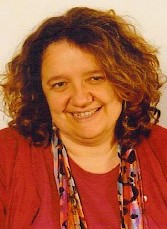
Great news that Bishop Nick Baines, whose blog I much appreciate, is to be one of two bishops "tweeting his blessings" this Lent.
You can follow the Christain Aid Count your Blessings journey on Twitter by going to www.twitter.com/christian_aid
I'm hoping to be starting some tweeting for peace myself in coming weeks so this helps to motivate me.
Meanwhile I promise something like normal blogging service may resume soon.
Tuesday, 25 January 2011
To tweet for more solidarity
Friday, 29 October 2010
Psalms for Haiti 30 September Cathédrale St Pierre Genève 18.00

All are warmly invited to 'Psalms for Haiti', an ecumenical celebration of music and meditation.
When: 30 October 2010 (TOMORROW) at 18h00
Where: St Pierre Cathedral in Geneva's old town
The event will commemorate those who died in January’s earthquake. Choral music and accompanying words of reflection will facilitate a spiritual exploration of some of the best- and least-known Biblical psalms.
While entrance is free, a retiring collection will raise funds for the reconstruction of Port-au-Prince’s Episcopal Cathedral complex. Personal testimonies and a multi-media display will provide information about the wide range of social and educational projects run by the Cathedral - both before and after the earthquake.
If you can't attend but still wish to donate to the reconstruction efforts, the Swiss postal account of ARCH (Association anglicane pour la reconstruction de la Cathédrale épiscopalienne de la Sainte Trinité en Haïti) is:
12-862280-5
When: 30 October 2010 (TOMORROW) at 18h00
Where: St Pierre Cathedral in Geneva's old town
The event will commemorate those who died in January’s earthquake. Choral music and accompanying words of reflection will facilitate a spiritual exploration of some of the best- and least-known Biblical psalms.
While entrance is free, a retiring collection will raise funds for the reconstruction of Port-au-Prince’s Episcopal Cathedral complex. Personal testimonies and a multi-media display will provide information about the wide range of social and educational projects run by the Cathedral - both before and after the earthquake.
If you can't attend but still wish to donate to the reconstruction efforts, the Swiss postal account of ARCH (Association anglicane pour la reconstruction de la Cathédrale épiscopalienne de la Sainte Trinité en Haïti) is:
12-862280-5
Saturday, 6 February 2010
Success, failure and raclette at KT
This afternoon we took the young people from KT to the Red cross and red crescent museum in Geneva. I'm always amazed at how few of the local French school children visit this museum which is close by but in another country. Each time I go there the exhibits speak powerfully as do the volunteer guides, who talk with passion and conviction about the Red Cross movement and its history.
2010 marks 100 years since Henri Dunant, the founder, died and there will be several events marking that later in the year. Our guide today underlined how Dunant could in many ways be judged not to have been a success in his own time. His business ventures and attempts at banking failed, he had to go into exile, yet he was awarded the very first Nobel Peace prize.
Later after we returned to Ferney and drank tea we reflected with the young people on their dreams, what happiness meant for them, what success might mean. This led us to talk about God's unconditional love for us, to think about our future in different ways. Much of what was shared was moving and simply truthful. I like working with adolescents. Then I dared to get them to express some of what they had experienced in prayers for those suffering from war, disaster and poverty and then also for themselves, this was an important exercise in taking our own needs and desires seriously and offering them to God. Sounds a bit pious and frontal maybe but it somehow just seemed to flow and not be forced at all. I'll post their prayers to the KT blog tomorrow.
Then their parents and brothers and sisters arrived and the apéro hour began as we prepared raclette and people got to know one another. It was great to see these young teenagers interacting with their families, teasing and being teased, caring for their younger brothers and sisters. It was also an important exercise in community building and fun on a Saturday evening. The French are brilliant at turning a simple meal into a feast with minimum fuss and people seemed genuinely interested in getting to know one another. Even in the digital age you can't beat ordinary human interaction. Needless to say the raclette was fabulous, but then it's one of those meals that can't really go wrong.
Friday, 15 January 2010
Sweeping in the dust, praying and acting for solidarity with Haiti
WCC, LWF, ACT and YWCA staff gathered to pray. People from Haiti living in Geneva joined us, many of them still waiting for news of their own loved ones, some already having received the worst news of all. The situation on the ground in Haiti for the agencies was outlined by colleagues from ACT before we began our prayers.
A powerful and moving time linking our work with the reason we undertake it. Diakonia - service bears witness to Christ and the God of all compassion.
As we lit candles and even beforehand, tears fell, names were read out ... we sang and we kept silence, and we prayed ...
You can find our prayers here. I've posted the full text of my sermon below rather than to the docs section.
Sermon on Luke 15.8-9 - following the earthquake in Haiti
Preached in the Ecumenical Centre Geneva, Friday January 15th 2010 at Midday.
Understanding disaster is impossible
God may just about manage such understanding but for we human beings even attempting to understand leads us to be caught in a strange place between rage, distress and grief, a place where there are few words, a lot of doubt and an emptiness of feeling, a lostness.
There is no easy way through these powerful feelings.
As we face the disaster of the earthquake in Haiti, as we ask "why oh Lord?" our lamentations and questions have as much to do with the pre-existing abject poverty of so many of the people of Haiti as they have to do with the reasons for natural disaster. Haiti was in need of an earthquake of justice and mercy. Not this. The poorest are always disproportionately affected by natural disasters. So much precious, beautiful human life and intelligence lost in the dust and rubble - so much risk of disease as the living receive basic treatment outdoors next to the dead. So much to do … so much chaos…
And just how long do we continue to hope for news of our family and loved ones, our colleagues, our fellow aid workers? Even as we give thanks that some of our precious colleagues have been found in the hotel rubble, we know also of tragic news.
How many 100s, 1000s, 10,000s 100,000s?
Each precious and loved by someone and by God.
Lost.
Understanding disaster is impossible
Yet God does just about manage such understanding.
And God’s understanding begins with a broom and a lamp.
Jesus offers us a powerful image in Luke's gospel of God bringing light and sweeping in the dust, searching and searching until that which is lost is found. It is a beautiful picture, a feminine picture, speaking of the compassion and effort of a loving God for those who are lost in whatever way - those of us lost in fear and grief for news of loved ones; those lost in the dust of resignation, rage or distress; those lost in real dust and rubble; those lost in a nearly destroyed civil society.
This parable of grace can speak to all of us faced with lostness, it speaks of a God taking very practical action - a broom, a light, some hard work - to restore and redeem that which is lost. Very ordinary and necessary practical work, work often done by the least valued in our societies migrant workers, women - even in this house. God's hands get dirty in this painstaking work. This dusty work speaks to us as we seek to support and mobilise the practical action and commitment of our churches and their aid agencies in Haiti. It speaks also of the work that lies in the years ahead to rebuild Haiti in so many ways.
Understanding disaster is impossible
Yet God calls us to take up broom and lamp and bear witness to the love and compassion of Christ in all situations.
In a world facing so many disasters, both natural and human in origin, let us pray that God will continue to come in grace with lamp and broom to redeem our lostness and grief, and search out the lost coin of global and local solidarity.
Sunday, 3 January 2010
Raw prayers of grief and beginning the the year
Over on Novice blogger Janet has posted a raw prayer called dying day. On Christmas morning an asthma attack caused a 17 old's death. Raw praying in the cold, in the wet, in the sunshine, in the wind; thus begins a New Year for so many.
Tomorrow will be my dying day:
the day before yesterday was yours.
You didn’t buy a ticket,
you didn’t book a place
and yet there you were
suddenly at the front of the queue.
Wednesday, 6 May 2009
Brotherhood at feminist theology with a God who breaks the rules of primogeniture
We had a brilliant time at our feminist theology group last night with professor Lévi Ngangura who is dean of the faculty of theology at Goma in Congo. Levi has been on two months study leave at the Institut Protestant de Théologie in Montpellier and was in Geneva to speak to our group which he was part of while studying for his doctorate in Geneva. His book on Esau and Jacob is due to published by Labor et Fides later this year. La fraternité de Jacob et d'Esaü (Gn 25-36) Quel frère aîné pour Jacob? Lévi Ngangura Manyanya, Préface d'Albert de Pury.
Lévi began his presentation of the story of Jacob and Esau by talking about the situation around Goma in the months before Christmas last year, as conflict led to the town's population being cut off from the source of staple foods in the surrounding rural areas. He began by talking about Goma and the terrible situation that people in Congo have lived through in the past 15 years as a way of countering the silence and international indifference th that seems to accompany the fact that in those 15 years more than 5 million people have lost their lives in conflict.
In many ways it was also living as a theologian and pastor in this context that pushed him to research the relationship between Jacob and Esau. His guiding question was "how do we manage conflict in a way that it doesn't turn to into a bloodbath?" What models of being "brotherly" does the Bible offer and in particular what can be learned from what takes place between Esau and Jacob?(Anglophone readers should note that "fraternité" means of course brotherhood but if you look up "sisterhood" in an English-French dictionary you will also find the word "fraternité"!)
Lévi entitled last night's reflection "Jacob wins the whole blessing, yet Esau does not lose anything - respect and separation, a different model of the experience of being brothers". In one of his opening convictions he pointed to the way that the Hebrew term 'âh for brother or 'âhôt for sister is not only used to refer to blood relations but also for the relationship between members of the same community. One of the key questions is the juxtaposition between "having" a brother or sister and "being" a brother or sister - not just to our blood relatives but also within the wider community.
As we studied the text in depth and got into our usual questions and answers it was interesting to see how Rebecca began by having a rather bad press amongst many of the women present - the machinating mother manipulating events. Yet as our quite heated discussions continued we came to see how much Rebecca loses, she has to send away the son she would seem to prefer - perhaps in order to protect both of her sons from one another. After she encourages Jacob to steal his brother's blessing will she ever be able to reestablish a relationship with her son Esau? Interestingly Levi kept on defending Rebecca while many of we women were rather down on and judgemental of her, another interesting dynamic that the story gives rise to!
Throughout these stories in the Hebrew scriptures God does not act in the way society expects, God breaks many of society's laws and expectations. The law of primogeniture is broken by choosing not the manly hunter but the more home-loving Jacob. Yet it is this choice that also sends the home-lover out into the wilderness to seek his future elsewhere. Don't expect getting a blessing to give you what you want or expect!
We ended with Lévi telling us about that 10% of the people training for ministry in Goma are women, but that the churches still have problems calling women to positions of pastoral charge. It is much more usual for women to work in church run health or social work institutions.
Anne Coïdan ended our evening by saying how much we wanted to ask for God's blessing on Levi, his family, church and continuing research. A sisterly blessing for our brother.
Friday, 6 February 2009
MS research and justice in health research
I've learned today about new research potentially linking MS to vitamin D deficiency. Delighted as I am that progress is being made in research and prevention of the disease I suffer from, this news set me thinking. Part of our management course today was to reflect on how justice and peace issues are dealt with in the agendas of our different organisations and churches. After the flowering of interest and commitment to these issues in the 1970s and 1980s the way that institutions talk about them now is rather more low key.
Yet justice touches almost every single area of our existence - none more so than health. Tomorrow we will for instance apply what we have learned so far in our leadership training to the single issue of water. Water is essential for life and for good health. Yet access to clean drinking water, to water to irrigate crops, to sanitation is often restricted. Politics and profit begin to matter more than people.
Yesterday I read about our friend Pauline Mackay starting her new job at Church World Service in New Zealand. I was shocked to read that ninety percent of the world's health research is on diseases affecting 10% of the world's population. Huge sums are put into research into MS and I am truly very grateful - my expensive drug, for which there is as yet no fairly traded version, keeps me healthier than if it didn't exist. Meanwhile diseases affecting huge numbers of the world's population remain in the research twilight zone. No money to be made out of selling drugs to poor people, they don't have insurance so their illnesses will go almost unnoticed. Another case of market forces being deadly ...
Wednesday, 17 December 2008
Advent singing for an open table
Many of the best loved French Advent songs come from Roman Catholic song writers. One of my favourites is "laisserons-nous à notre table..." by Michel Scouarnec and Jo Akepsimas.
Is there space at our table for the stranger? Do we have time to danse with the foreigner at our parties? Do our words leave space to listen to the stranger?
The French is of course much more poetic than this early morning approximative translation. It struck me today that the hymn is an Advent meditation on the beatitudes and a call to more solidarity as we prepare to celebrate the feast of the incarnation.
Laisserons-nous à notre fête un pas de danse à l’étranger ?
Trouvera-t-il, quand il viendra, des mains tendues pour l’inviter ?
Wednesday, 3 December 2008
Impossible Advent
I've been meditating this quote below from Ann Pettifor on Simon Barrow's blog
“We’ve lost the ability to hold our breath. Everything is instantly available, regardless of longer-term costs, and the damage we do to ourselves and our planet is immense. So we get into debt, we produce more emissions and become unhappy if we are not immediately gratified.”
In the northern hemisphere Advent coincides with busy end of year deadlines, not an easy time to delay gratification. Looking at what it is that truly nourishes us can actually be quite scary - it calls into question values we take for granted, like having money, spending money and time on things rather than on people.
This evening I've been thinking about a wonderful lady in my parish who for years cared for a husband with Alzheimer's. She gave modest amounts to the church but gave away more than 20% of her teacher's pension to a variety of French and overseas charities. She also gave generously of her time to help immigrant children with their schoolwork and adults with writing official letters. Any of her aquaintances having problems making ends meet at the end of the month knew that she'd always provide them with a square meal.
Church wasn't really her thing, although she read her Bible and prayed daily. For me she embodies straightforward, joyful, open minded Christian witness. Her witness also shows me that Advent values are possible. It's not just about giving it's about caring.
This statement on the sidebar of Advocacy International's website also inspired me to think there are small places where Advent is possible:
Ours is a dynamic, professional, hard-working team with big achievements to their credit. But they're human too: approachable, keen and above all, committed.
Sunday, 30 November 2008
Celebrating 50 years of Bread for the World with the 'Drummers of Burundi'

The German development agency Brot für die Welt (Bread for the World) has celebrated 50 years in Berlin. The first advent collection called Bread for the World was initially seen as a one off for a famine in India- but it raised 14.5 millions Marks in West Germany and 4 million Marks in East Germany. At an event in Berlin which ended with drumming from the Drummers of Burundi, the general secretary of the All Africa Conference of Churches, Mvume Dandala, spoke for the 'worldwide ecumenical fellowship' and urged agencies in the North to support the peoples of the South in their struggle for justice.
Friday, 28 November 2008
The Maria Christina Gomez cross
 The wonderful thing about showing people around the ecumenical centre is that I get to learn new things. Yesterday Ana Vilanueva from the World YWCA told the group of women I was showing around about the cross pictured here and I realised that the true story of Maria Christina Gomez made the rather general "this is a cross from El Slavador with a woman on it..." seem pretty tame.
Ana was with the delegation from the WCC which recieved the cross in the early 1990s and she also spoke movingly of the incredible solidarity work that women from the churches around the world had understaken at the time to make sure that women in prison in El Salvador not be forgotten.
Her telling the story made me realise how very poor our oral traditions ar in the West we forget to even pass on some of the most passionate stories. Interestingly it's a story about women too that has been forgotten, a relatively recent one at that.
I'll add more to this post in coming days but here's an extract from Wikipedia:
María Cristina Gómez (c.1938 - 5 April, 1989) was a Baptist primary school teacher and community leader in El Salvador who was abducted on April 5, 1989 and subsequently murdered.
A member of Emmanuel Baptist church in San Salvador, Gómez was a national leader both of Baptist women and in the teachers' union.[1] She was a founder of the National Coordination of Salvadoran Women (CONAMUS), an organization of women founded in 1986. Since then, CONAMUS has addressed the issues which directly affect poor women in El Salvador, including domestic violence and rape, economic survival, lack of political participation, and social inequality. In 1989 CONAMUS opened a clinic to respond to women who were victims of domestic violence and rape.
According to witnesses, heavily armed men dressed in civilian clothing forced Gómez into a car when she returned from the John F. Kennedy School in Ilopango. An hour later, she was pushed alive from a car, in front of hundreds of witnesses near a cemetery in Antigua Cuscatian, on the outskirts of San Salvador. Four shots were fired at her and she died immediately.
On examination, her body showed signs of torture and burns most likely caused by chemicals such as acid. The murdered teacher had been taken from an area that was the operational base for the Salvadoran Air Force. General Juan Rafael Bustillo, the then head of the Salvadoran Air Force, has been implicated in the murder. The National Association of Salvadoran Educators (ANDES) has stated that Bustillo had publicly threatened Gomez on previous occasions.
Full article here.
Saturday, 22 November 2008
More on money
I woke up this morning with rather surprising thoughts going through my head about why, even in the current financial crisis, unbridled free-market capitalism is so rarely identified and criticised as an ideology. Perhaps we all feel we have a stake in it, and are too busy buying things and thinking about buying things to be creative enough to come up with alternatives. Of course saying "we" in that way is actually ridiculous - there are milions, billions even, who pay for this system with lives lived in unremitting and degrading poverty.
Then I came across this post by Scott Stephens on Faith and Theology. Scott ends his post with these challenging questions and convictions:
While we hope and pray that those in positions of influence will find a just and effective response to the current credit contraction, should we not also reflect on our own indulgence in the greed and uncontrolled lifestyles that have brought us to this point? Shouldn’t we hope that out of this comes a rediscovery of a keen sense of the common good, and of new forms of community that nurture the virtues that have long since seemed to disappear from our society?
The onus, then, is on the church – not merely to pray in some benign way that God would mollify the effects of this financial crisis, but really to constitute that alternate form of community. To give the formation of Christian virtue and Christlike generosity priority over misguided “stewardship” (which so often is ecclesiastical code for white-knuckled miserliness). To have the courage to tell our congregations that participation in the Body of Christ means wanting less, using less, wasting less, so that we can distribute more. To embrace those sacramental resources that have been entrusted to us to keep us faithful to our calling, and which themselves enact a radically different kind of economics to that of corpulent capitalism.
There are also some good insights in the comments on the post which are also well worth reading. Here are extracts from just two.
This from Drew Tatusko's comment:
I am reading Brink Lindsey's book The Age of Abundance. There the primary argument focuses around the shift in free market economies from producing subsistence needs to producing desire. When we live in a corporate culture that produces desire, it creates inequities and political fractures that are ideological in nature.
And this from Kim Fabricius:
We are theologically spoiled for choice for reasons to reject capitalism as incompatible with Christian faith. D. Stephen Long summarises three of them: "Gutiérrez's opposition to capitalism rests on a social-scientific analysis of reality. Milbank anathematizes capitalist exchanges because of the heretical positions that give rise to them and which they perpetuate. MacIntyre opposes capitalism because of its historical performance when measured against the norms of faithful practice." Drew refers to Lindsey's (presumably) Augustinian critique of capitalism as an engine of the libido dominandi (I haven't read the book). McCabe enlists the support of Aquinas in pillorying capitalism's intrinsic indifference to the common good. As a pacifist, I'd put it like this: capitalism is the continuation of war by other means.
So why not add your reflections and creative ideas. Has the ideology of capitalism really been broken by the cross of Christ, is a new theology of money and economics beginning to emerge, who controls that theological debate, what space do we allow for theological models from the developing world?
Friday, 12 September 2008
Zimbabwe - thoughts, prayers and solidarity still needed
 I've just posted a statement by WSCF welcoming the setting up of the new inclusive government.
You can also find details here of issues that aid agencies are facing now that the ban on NGOs has been lifted.
There are also reports that a march for peace organised this weekend by the Zimbabwe Christian Alliance has not been allowed to go ahead. the email I received said this:
"Police in Masvingo, a Southern Eastern town of Zimbabwe have withdrawn approval that had been initially granted for a Zimbabwe Christian Alliance Peace March ...
The Peace March would have started at Mucheke Township on Saturday morning under Police escort and gone through the tourist town, which is home to the Great Zimbabwe Ruins. It would have culminated in an event at the Masvingo Civic Centre where political parties would have recommitted themselves to peace. Solidarity messages would then have been read from civic society groups and a huge turnout was expected as women from the Churches had confirmed their participation."
Thursday, 21 August 2008
Misha Glenny writes about Georgia and Russia
There's a good but sobering article about Georgia and Russia by Misha Glenny in last week's New Statesman and some follow up this week from Matt Siegel and some eyewitness accounts reported by Svetlana Graudt of the conflict and its aftermath - if it is indeed over.
Glenny starts his piece with these questions:
"What Russia and America are really doing in Georgia and who set the trap? Vladimir Putin and his thuggish FSB pals or Dick Cheney and his equally unflappable neocon friends? Georgia's decision to seize large parts of Tskhinvali, the capital of the breakaway region of South Ossetia, on the evening of 7 August was a disastrous political miscalculation, even in an era that is increasingly defined by spectacularly poor judgement."
Wednesday, 20 August 2008
More on Zimbabwe
You can find an interview with human rights activist Marlon Zakeyo on World Radio Switzerland. Marlon is currently working with WSCF on Zimbabwe advocacy issues and describes how the impact of the violence is still fresh for many in Zimbabwe.
I have also posted a summary of a report by Women of Zimbabwe Arise (WOZA) to the docs section. You can download the whole report here.
"The research explored two broad categories of trauma:
●“displacement” experiences - a concept first developed first in relation to the psychological and emotional plight of refugees fleeing war zones. It details events such as loss of home, failing to access food and medical care, being lost, being caught up in fighting and similar experiences.
● The second source of trauma is “organized violence and torture” (OVT), including events of torture per se as well as assaults, cruel inhuman and degrading treatment, and verbal threats, insults and taunts."
There is also and ENI story here about Zimbabwe bishops calling for settlement not to be rushed.
"The Zimbabwe Catholic Bishops' Conference has called on negotiating parties in their country not to rush into a government of national Unity, but to urgently dismantle instruments of violence, reject impunity and usher in a new political culture in which accountability, inclusiveness, transparency, healing and reconciliation are paramount.
"The crisis in Zimbabwe is one that was caused by exclusion from power and from the people's right to participate in the processes that affect their lives and from the benefits of growth and development," said the bishops, in a statement made available on 15 August.
"We therefore think that the negotiators should not rush into establishing a government
of national unity," said the bishops. Rather, they should agree on a transitional arrangement, which in 18 months or so, will lead to the construction of a new Constitution which will then be the basis for fresh elections that are free and fair. "
Saturday, 9 August 2008
Keep praying for Zimbabwe
Marlon Zakeyo a lawyer working on human rights issues in Zimbabwe with WSCF has written a very good piece you can read on the Change Zimbabwe site. There's also a link here to a video made by the Zimbabwe solidarity peace trust. the essential thing at themoment if to campaign for real change for the people of Zimbabwe and not to accept total impunity for the sake of political power.
Marlon has written this:
But as rumours of an imminent announcement of a deal between the rival parties mount, one cannot help but imagine that Gift Tandare’s widow and thousands of other survivors and families of murdered and disappeared activists must be feeling really lonely, isolated and betrayed right now.
If rumours filtering in from Pretoria are to be believed, Robert Mugabe will be allowed a gradual and honourable exit and a blanket amnesty for all pre-election violence will be declared, presumably by Prime Minister Tsvangirai.
The chiefs of the Joint Operational Command are also reportedly trying to cut immunity deals for themselves in Pretoria. So are we turning full circle here? All the way back to 1980, 1987 and 2002. Collective amnesia. Turning the other cheek, allowing impunity and moving on for the sake of ‘peace’?
Read the full article here.
Saturday, 2 August 2008
International Aids Conference in Mexico


TheInternational Aids Conference begins tomorrow in Mexico and has been preceded by Faith in Action Now! - an ecumenical conference on Aids.
Colleagues from the Ecumenical Advocacy Alliance are in Mexico and their website has a useful guide to the conference and a word of welcome from the local church host committee.
There is an interfaith chaplains' programme and also an exhibition.
The faith-based response to HIV and AIDS has become more visible and integrated because of the increased engagement and coordination of faith-based representatives over the past three International AIDS Conferences. The Ecumenical Advocacy Alliance, with many partners, spearheads planning for faith-based participation at the International AIDS Conferences. All are invited to join in these activities.
Thursday, 17 July 2008
South African churches express overwhelming support for targeted economic sanctions against Zimbabwe
 ENI is reporting that
"Delegates from churches in Zimbabwe, South Africa and other southern African countries meeting in Johannesburg have expressed "overwhelming support" for targeted economic sanctions against Zimbabwe.
A statement from the South African Council of Churches, which was co-hosting the 13-17 July meeting, described targeted economic sanctions "as a practical strategy to loosen former President Robert Mugabe's 'illegitimate' grip on power and to promote a negotiated political settlement".
A statement from the South African Council of Churches, which was co-hosting the 13-17 July meeting, described targeted economic sanctions "as a practical strategy to loosen former President Robert Mugabe's 'illegitimate' grip on power and to promote a negotiated political settlement".
You can read the full SACC statement here and also a report on Roderick Hewitt's sermon I mentioned yesterday.
Keep praying for the people of Zimbabwe. Overcome fear by faith.
Wednesday, 25 June 2008
Football, women and Justice
As Euro 2008 moves to the semi finals remember its not all about football ... sadly.
Here is the very powerful video from the campaign to stop the trafficking of women and children.
With thanks to SpinDoktor for the html code for the above.
Monday, 23 June 2008
Blood not paint ...
They held up a stone.
I said, "Stone."
Smiling they said, "Stone."
They showed me a tree.
I said, "Tree."
Smiling they said, "Tree."
They shed a man's blood.
I said, "Blood."
Smiling they said, "Paint."
They shed a man's blood.
I said, "Blood."
Smiling they said, "Paint."
copyright (c) Dannie Abse, Adapted from the Hebrew of Amir Gilboa, 1982
Subscribe to:
Posts (Atom)


 Posts
Posts