Needless to say these ramblings are personal reflections and do not in any way represent official policy of the Fédération Protestante de France, my employer, nor of the churches I'm a minister of, the United Reformed Church and the Eglise Réformée de France.
In 2011, the Seven Weeks for Water will focus on “Water, conflict and just peace”, examining the links between access to water, water struggles, and building just peace. >> More
2008 was the international year of languages, the international year of the potato and the year for the protection of the frog. 2009 is the international year of reconciliaiton, the international year of astronomy, the Calvin year, the St Paul year and no doubt much more besides. Enjoy it all. 2010 was the UN year of biodiversity and the year of the 100th anniversary of the Edinburgh mission conference 2011 is the international year of forests - protect the trees and plant some folks!
I'm at the German Protestant Kirchentag in Hamburg. It is as always, brilliant, stimulating, prayerful.
And this is the way it goes, I receive insight from others ... Dr B attends a Bible study given by Margot Kässmann on the parable of the unjust judge and the widow in Luke 18. Later he tells me about it, brings me the text, telling me not only about the Dorothee Sölle poetry Kässmann interwove into the study, but also talking about the example of Elisabeth Schmitz, who during the years of National Socialism tried repeatedly to convince Karl Barth and others leading the Confessing Church of the need to take up the cause of non-arians in Germany. In 1935 she wrote and published a pamphlet anonymouslyZur Lage der deutschen Nichtarier. It was a lucid and sadly prophetic description of what was likely to happen to Jews and others under the National Socilist regime. She sent it to many of the leaders in the Confessing Church. You can read more about her in the German entry on wikipedia and I've quoted in full the passage from Kässmann's Bible study which mentions her at the end of this post.
What moved and shocked me was this - I should know about Elisabeth Schmitz. Decades ago I wrote a dissertation about the Confessing Church and Anti-Semitism. I got a special mention from the jury for what I wrote. Of course that is because at that time my academic adjudicators were as ignorant as I was, few people had heard of Elisabeth Schmitz, copies of what she wrote were just coming to light but were being wrongly attributed to another feisty women of that generation, Marga Meusel. When Schmitz died in 1977, just seven people attended her funeral ...
The witness of so many feisty women and men is lost.
I'm not going to say more, there is no moral to draw from this story, but I am thankful for the researcher's who have brought her writing and action back to us. That speaks to me of resurrection.
Here is the quote from Kässmann's Bible Study yesterday. Perhaps I should add that Bible study in this Kirchentag context was for 7,000 people.
Vor 80 Jahren ergriffen die Nationalsozialisten unter Adolf Hitler die Macht in Deutschland. Eine beispiellose Vernichtung aller Errungenschaften von Humanität und Aufklärung, von Menschenrechten und Religionsfreiheit sollte folgen. Wenige gab es, die das früh erkannten. Ein Beispiel ist für mich Elisabeth Schmitz.
Von 1933 bis 1936 korrespondierte sie mit Karl Barth und versuchte, ihn zu einer Stellungnahme zur so genannten „Judenfrage“ zu bewegen, was dieser aber ablehnte. Im September 1935 verfasste sie ein Memorandum, in dem sie forderte, dass die Bekennende Kirche sich für die entrechteten Juden einsetzen sollte. Sie schrieb unter anderem: „In einer kleinen Stadt werden den jüdischen Kindern von den anderen immer wieder die Hefte zerrissen, wird ihnen das Frühstücksbrot weggenommen und in den Schmutz getreten! Es sind christliche Kinder, die das tun, und christliche Eltern, Lehrer und Pfarrer, die das geschehen lassen!“
Sie wollte den Text auf der dritten Synode der Bekennenden Kirche 1935 vorlegen, aber die Synode beschäftige sich nicht mit der „Judenfrage“. Als Elisabeth Schmitz 1977 verstarb, waren sieben
Menschen bei ihrer Beerdigung ...
Offenbar hat auch diese Frau genervt. Die Kirchen als Institutionen haben in der Zeit des Nationalsozialismus versagt, als es darum ging, die Verfolgten, zuallererst die Juden, aber ebenso Kommunisten, Homosexuelle, Zwangsarbeiter, Zeugen Jehovas und viele andere zu schützen. Selbst die Bekennende Kirche. In ökumenischer Gemeinsamkeit aber haben viele Christinnen und Christen Widerstand geleistet gegen Willkür und Unrecht. Das ist ermutigend. Nicht nachlassen. Weiter beten! Und weiter denken!
Transgressive fragments: crusts of exile, hope and unity
Sermon preached on 5 September 2011 at the Ecumenical Centre, Geneva
Texts:
Exodus 12:39; Matthew 13:33
(This text is unabridged and rather longer than the preached version!)
Two philosophical introductions
Three fragments
and something that may be a sermon ...
“I chose to work on the writing of Paul Ricoeur because of his insistence on rediscovering a joyful ecumenism” said Beate Bengard at a lunchtime conversation hosted by the LWF’s department of Theology and Studies just two weeks ago. I was moved by her passion at Ricoeur’s thought, perhaps all the more so since I had just bought a book of the final fragments of his writings called “Lebendig bis in den Tod” - to live right up to and right in to death, would be possible translations, but perhaps a freer and better translation would take up Christian Aid’s slogan of “we believe in life before death”.
While listening to Beate I thought of the work of another philosopher and theologian, the Canadian, Grace Jantzen, who was a Quaker. In her work she pushed for a thorough-going non-violent philosophy of religion, based on natality rather than on mortality. Unlike Ricoeur she did not have the privilege of living into old age. Her series on Death and the Displacement of Beauty in Western Philosophy remained unfinished following her untimely, early death. Yet her work and witness remain natal.
So these ideas of joy and giving birth to a new creative future frame some of the background to what I try to share this morning, perhaps particularly as we move this week towards the 10th anniversary of the 9/11 attacks.
Three fragments
In a concentration camp a father stands wailing next to the body of his dead son. He came quickly when they told him, now he screams in frustration because someone else managed to take his dead son's bread ration before he could. Dehumanized by a desperate system he grieves not for his son but for missing an extra ration of bread. Kyrie eleieson
The 14th century was a time of famine in southern England. Historical documents show that when the famine was at its worst the landlords made more profit. It's a story that may sound all too familiar given speculation on food prices in our own time.
During that famine the abbot of St Alban's Abbey - no doubt worried because he was losing his part of the tythe - ordered that the small milling stones, the quirn stones, be removed from everyone's house. He then built a patio with them. While the peasants could no longer mill small amounts of grain for personal consumption at least the Abbot had a patio.
The church's preferential option for the poor came along only a few centuries later.
More recently Globethics published a book entitled "Corruption free churches are possible"… kyrie eleison
An overweight middle aged woman refugee sits in the office of a British MP, she comes back day after day until he agrees to sign the papers allowing her brother right of entry to the UK. She knows her English isn't very good, she even understands that this is "not quite the done thing", she also knows she has nothing to lose. Her only child, a daughter, had died suddenly at the age of 13 just a year earlier. Helene Hurwitz-Stranz was a determined and tenacious woman. Her brother, his wife and their two teenage children arrived in Britain in April 1939, today would have been her brother's, my grandfather's, 121st birthday. Even with feisty defenders millions like him then were not so fortunate, neither are millions today. He was a fragment. Justice and dignity just a matter of arbitrary luck. Today the UK government claims as a virtue the need to balance net immigration. Kyrie eleison.
So now perhaps for an attempt at a sermon.
Just occasionally on hot summer nights when we sleep with the windows open I am woken by an exquisite and enticing fragrance. It's not often that a smell wakes you and makes you want to get out of bed in the morning but this does. It is the smell of the baguettes baking and the croissants crisping up from our local boulangerie. And it is glorious! (Though rather dangerous for the hips!)
This morning the fragment from the gospels that we reflect on is about the stage in breadmaking that precedes the wondrous smell of baking. It's a beautiful, if for us perhaps rather old-fashioned image, not of freeze dried or industrial yeast but of natural leaven raising large quantities of flour. Leaven works more slowly than yeast or baking powder but it transforms the flavour of the loaf more thoroughly, some say it even makes the flour more digestible. The best French bakers use "levain" - leaven or sourdough for their bread and not yeast or "levure", real baguette à l’ancienne should be crisp but slightly sour on the inside.
The parable gives us an image where the kingdom of God is growing in hidden yet glorious ways, we are offered a vision of God's promise where gentleness, joy, reconciliation and respect, justice and stewardship, care and peace are the sourdough kingdom values, raising the dough with authenticity and integrity.
For those of us working in ecumenical affairs this gospel fragment offers perhaps also a glimpse of oneness in the future potential loaf, we could all share in together. A wonderful vision of the oikoumene.
And well I could end there, but I'm sorry to disappoint you, we have a little way to go yet ...
As is so often the case with the parables of Jesus the riddler there is something more complex, cryptic, playful and challenging going on than might at first seem to be the case.
The word krypto is even there in the Greek – even if modern English translations lose that sense – the woman hides the leaven in the flour. Is God’s kingdom about subterfuge, about transgression and by a woman? Is that the only way the kingdom will grow? Is Jesus simply saying: open your eyes to signs of the kingdom taking place in the everyday life of the homes around you. The kingdom is just like bread rising and that happens every day…
The bread of the Exodus, the bread of liberation, had no leaven in it. Today a Jewish household once a year will clear out all traces of old yeast and leaven, a ritual and practical break with the past.
Setting out into the desert and dependence on God's grace meant leaving the leaven of servitude and slavery behind and living with the unleavened, tooth-breaking bread of exile and with the manna which the early morning dew provided.
Perhaps it’s no surprise then that amongst those desert wanderers and their descendents there were so many murmurings and yearnings about returning to the real food, the fleshpots of Egypt.
Over the centuries the spiritual unleavened bread representing liberation came to be prized above the everyday leavened bread, leaven is even judged as corrupt in parts of the biblical literature. There are warnings in the gospels and in Paul’s letters about the false or corrupt leaven of some teachers.
Yet as I return to Jesus’ clever and ambiguous parable I am struck by how it is the leavening, rising dough which symbolises God’s commonwealth. The dough rising speaks so much of hope, of the voiceless being heard, of the integration of the marginalised of the overcoming of oppression and the end of violence. The dough rising speaks of something hidden, marvellous and yet uncontrollable. This is what the kingdom is likened to - not to the baked bread.
As soon as the dough is baked – and those delicious smells come from the bakery - it becomes more fragmentary, less complete. Of course the bread actually feeds and nourishes but the rising dough is the subversive promise of all that potential feeding and sharing … all that might be possible.
Sometimes, very often even, I feel caught between promise and practicalities between the demands of the gospel and what I am able to do.
The French will vote with their feet, or tastebuds when it comes to buying baguette, preferring the bread of one boulangerie over that of another, though globalisation and the supermarkets are even eating away at this traditional discernment! I know I need to discern between the leaven of integrity and the leaven of corruption in my own life, in the life of the world.I know too that, however promising and full of possibility the rising dough may seem, the eschatological sourdough needs to be baked, the flavour of it needs to become real on peoples tongues.
And of course as soon as the hope filled dough is baked it becomes a fragment, bread that needs not to be hidden but to be shared, bringing straightforward nourishment, satisfaction and perhaps fellowship, justice or even life. Fragments of the flat liberating bread of exile, of mouldy prison rations or of fine brioche from the tables of the rich all have the potential to carry such hope.
Christ the leaven of our life offers the promise of liberation from cruelty and slavery of all kinds – the cruelty of famine, the slavery of materialism, or of abuse of power. That liberation is offered for both the oppressor and the oppressed.
The wholeness, vitality and natality of the rising dough, calls us to hold on to hope for all that is natal and joyful and hopeful as we try to bear witness and to live in such a way as to reconcile the fragments.
Perhaps the hidden leaven of God's kingdom will help us to develop an ecumenism of fragments which overcomes fragmentation; an ecumenism which believes in the sourdough values of the commonwealth, a bread which takes longer to rise, lasts longer and tastes better. A bread of true joy and not of manufactured bland niceness. The bread of tomorrow which feeds us today; its taste and texture speak to our hearts of life before death and of being one, if not at our divided earthly altars then surely at heavenly ones.
Jesus will not always put the fragments back together for us but he will say:
This is my body, broken, for you
This is my body, in fragments, for you
May the scales fall from our eyes and may all that is hidden and authentic within us bear the fruit of peace, joy and love which the Spirit wills for humankind and for the whole inhabited earth. Let us concentrate on that which creates and engenders.
We began our Tucholsky journey some time ago. Perhaps even over a decade ago when our friend Karin gave Stephen a wonderful audio book of Schloss Gripsholm. To our shame, although both of us knew of Tucholsky's political satire, neither of us had read his fiction. On a subsequent visit to Berlin we travelled to Rheinsberg - delightful, well worth a visit and of course with a strong Voltaire connection too, I think we had coffee in the café Voltaire. We also visited the Tucholsky museum which is moving but also amusing. He knew how to make people laugh. Rheinsberg is the name and setting for another and much earlier love story by Tucholsky. Last night in Berlin we sat and ate in Tucholsky's the Kneipe at the end of the Tucholsky strasse. we sat outside and I looked down the street to the now gleaming dome of the Synagogue in Oranienburgerstrasse. According to the papers I've seen at the Jewish cemetry in Weissensee this is the place where at least one set of my great grandparents celebrated their wedding, despite already being fairly secular Jews. Kurt Tucholsky was born in the same year as my grandfather, 1890. Four days before Christmas in 1935 he took his life. Three years younger than I am now, he had achieved a great deal, yet he was facing middle age, finitude and also the terrible scourge of national socialism in his home country. He also suffered from chronic and desperately painful sinus problems. I can understand the desperation. In Berlin I picked up the writings on childhood of another brilliant Jewish author of the same generation, Walter Benjamin, who in 1940 also took his own life rather than fall into the hands of the German authorities. These fragments didn't even come to light until they were unearthed in the French national library in 1981 ... If I have the husband I have it is in some way thanks to Walter Benjamin, so this too seems like the right thing to be reading on our 20th Wedding anniversary journey. Perhaps it seems a little strange to be going to Mariefred to visit Tucholsky's grave but I suppsoe what we are doing is viisting the place of the story and giving gentle thanks for all the joy and pleasure it has given to us over the years. Even tonight we read bits out to one another over supper - just a few lines about Copenhagen and they made us smile. It is beautifully paced and observed. We only decided a few weeks ago that this was what we were going to do for this anniversary journey. I could sense we were heading rather helplessly to a proposal neither of us wanted but neither of us could say no to either, then one evening Stephen said but what if we took the train to Gripsholm ... and everything fell into place and into smiles. Quite funny really, Tucholsky's novella is certainly not bourgeois, yet it will help us over the bourgeois hurdle of "what to do for our 20th". So here we are simply enjoying the journey those two in the book made and adding on some bits of our own as well. It's been a really fun thing to do. The trains, the ferry, the light in the wide open northern landscapes and the beauty tonight of Copenhagen. Wonderful.
Both Dr B and I used to live in Berlin, at different times and when the city was still divided. Technically I was in Spandau rather than Berlin proper, but in the West. Dr B lived in Friedrichshain in the East, a stone's throw from the great budget hotel we're staying in. Every time we come back to the city it has all sorts of layers of meaning and memory for both of us together and for each of us. Since we've been coming here together we tend to stay almost exclusively in the East, making occasional excursions to the West. This means that we are rarely walking around the streets of my former haunts, tho' I do sometimes take myself back to shop in Spandau - these days it's no distance at all. For me this city is the place I grew up. I came here when I was 18, I worked, earned money, learnt German and how to party. Without that year I would have remained much more provincial and prissy for far longer. But this is also my father and aunt's city. Sometimes sitting on the older trams I think about them and their cousin Elsa - who died when she was 13. The three of them would go around on public transport speaking German backwards and getting strange looks and incomprehending smiles form fellow passengers. Part of me likes to think I can hear them chatting still somewhere on the city's trams. That makes me think of the many other smiling Jewish children who must once have also travelled the trams, U and S Bahn and of whom there is no trace other than ash. Yet here in Berlin, alongside the brash and crass adverts and commercialism there are countless memorials to many kinds of pasts - the national socialist past, the communist past, the Wilhelmine past, the "greatness" of Prussia and much more besides. Recent very happy visits with our mothers and families are also part of our memories of Berlin, their pleasure and discovery of the city we love. Another layer of what being here means, as are the friends we have who live here - and whom we have hardly told we are here this time. Now we are here to do very little indeed. Just potter from coffee place to bookshop to then find a beer to drink. Tomorrow we leave again, but we will be back and there will be more memories of Berlin as we travel forwards. Being next to the Spree has even inspired the beginnings of an idea for the sermon for my mother's wedding. It seems fitting that the city her first husband was born in should offer me the gift of time to think and creatively work around images for her second marriage. Berlin destroyed and so much rebuilt, holds all the layers of memory and allows much creativity to bubble up.
Over the past weekend I have been in Redditch, actually even in Astwood Bank, to spend a bit of quality time with my Mum and Martin to talk through wedding preparations. This is not really something they train you for at theological college - taking your mother's wedding. The event will take place at Emmanuel Church in Redditch - my home congregation and will be followed by a cream tea in the church hall and then fish and chips or curry for over 50 folk back at the house. It is going to be fun and we all hope that this view will be part of it, however even if it rains we will have glorious day. This view from the back step at my childhood home is one I can simply drink in for hours, these photos don't give you the full extent - this was a cloudy day. Often you can see all the way to the Malvern hills and on clear days even as far as the Black Mountains in Wales. I love the sense of space and the amazing sunsets. Martin has been living in the house for just over 2 and half years. (When my mum announced his arrival in her life by telephone she said: "I have an added complication in my life" "ah" I replied you mean a man" .... in the ensuing conversation I said something daughterly like "Well just take things slowly" and Mum replied "it's a bit late for that!" hmmm ...) He is tenaciously transforming the garden - which is no easy task. Throughout my childhood the right hand border of the garden was lined with ancient rotting willow trees, all now coppiced or removed - as a result whole new horizons and views have been opened up. My brother's bedroom at home overlooks this view - it was the room he was born in. My bedroom overlooked the main road and that is still the one I choose when I go home on my own. But the view out the back is part of me. I realised this last year when thinking about the view inspired me to write this sermon on the Mother tongue of ecumenism - a sermon that came almost fully formed in one of those rare moments of inspiration. The view is perfect but changing, ancient but part of a very human landscape. Twenty years ago we put a big blue and white tent up at the bottom of the garden for our marriage. At the end of the day I was wandering barefoot around the garden hand in hand with Stephen. Very, very happy. When I was a child the garden was much wilder than it is now, a place of great adventure, stinging nettles, ancient pigsties, treehouses and gooseberries, balckberries and apples to be picked. Anyway for those who are interested here's the beginning to the sermon - quite fun to re-read it 18 months on ...
A room with a view There is a wonderful view from the back bedroom of my parents' house. It was the room where my mother gave birth to my brother, less than a mile from where her own mother had given birth to her. The view is of rolling fields and greenery, trees and hedges; in the distance 40 miles away are the Malvern Hills (not quite Mont Blanc or the Alps but beautiful nevertheless). Further away still and only to be seen on a clear day is a glimpse of another country the outline of the black mountains in Wales, and a reminder of a different and more ancient Celtic language, which the English language has pushed to the margins – just as the English language is pushing so many other languages to the margins these days. This is the view my brother and I still sit on the back step to drink in on our rare visits home. That view has hardly changed in our lifetime. It speaks to us of childhood and beauty. It is also a landscape we have simply always known, a landscape that seems to know and welcome us back into its beauty and our memories. The view I love so much would probably still be recognisable to William Shakespeare who was born just 10 miles away. When I think of where I come from that greenery and stretching view come to mind straight away. I understand that landscape like I understand my mother tongue. And yet … These days when I think about "home" it's often an exercise in cognitive dissonance Home is not just a long way away, though not as far as for many of you, but “home” is also to some extent a long time ago. These days when I go back I often feel as if I'm in a foreign land - even though people all around speak the same language as me. I feel caught between Babel and Pentecost, which is why I've chosen those texts this morning.
This morning a package arrived addressed to Dr B but containing a present for me of the book Ugly Stories by Enrique Mayer. It was a wonderful surprise to get the book because I had been looking at another book of Enrique's online in recent weeks but hadn't even spoken to Stephen about that. I'd been looking at a book called "The articulated Peasant" and wondering about how a similar sort of title could work in urban and semi urban settings. The subtitle "Household economics in the Andes" triggered some passing thoughts on oikos, oikoumene and economics - how might economics or ecumenics be articulated in our different secular and ecclesial contexts? Perhaps I'll even have a chance to return to these passing thoughts one day. Mayer is professor of anthropology at Yale University where the site says he: specializes in Andean agricultural systems and Latin American peasantries. His work has shown that regions characterized by diversity (such as mountainous environments, small islands, and "marginal" lands), not suitable for agribusiness, are exploited by peasants in strikingly similar ways. Worldwide, peasant forms of production predominate and persist in these environments. These agricultural systems are important to those concerned about world genetic resources, or about environmental conservation, and to scholars who seek an understanding of ancient and yet also very contemporary Non Western rural life-ways.
I have never travelled to Peru nor have I ever met Enrique Mayer (yet), though it did make me smile that in some of the reviews of "Ugly Stories" he's described as "of Peruvian ancestry".I grew up looking at pictures of my parents wedding and being shown a good looking young man on my father's side of the family, someone I never saw at family parties, "that's Enrique" I would be told and his name always sounded splendidly exotic compared to the other members of the family.I suppose he is my second or third cousin and I did manage to engineer a meeting between Stephen and this part of my family when Dr B was travelling to Peru in 1996. By chance Enrique was also there, in part researching for what would eventually become "ugly stories". Over the years news of my family in Peru would reach me through both expected and unexpected routes - an Oxfam worker lodging with my landlady in Oxford who had worked with Maria Scurrahnée Mayer - their auntLotte Carrivetelling me my own mistakes in German mirrored those of Renate Millones née Mayer - and also regaling us with exploits of buying handbags when visiting (and embarassing) the family in South America. Anyway it is wonderful to have a copy of Enrique's book for so many reasons. I've already devoured the introduction, acknowledgements and first chapter over breakfast. I was moved by his desciption of the painstaking way the book finally came into being - discarding much that was written more than a decade ago and then finally writing approximately a chapter a year each summer, relying on the encouragement of others, feedbook from those he read some of the stories to. It spoke to me of how things can come to fruition even after a long germination and growing time. Ugly stories are both human and deeply political, the book meshes together oral stories with scholarship.I'm looking forward to devouring more of it on my travels in coming weeks. And through reading I in some way get to meet the young man on my parents wedding photos as well as discover new areas of history. I do also have to admit that the gift of a book at breakfast did not stop me buying further books from the Librairie Centrale at our trip round the market this morning.
I managed to resist the first time I saw these lovely mini books by Elisabeth Ivanovsky but when in Paris last week I gave in and bought myself these 25 tiny little books, which are beautiful reproductions of books first published in the 1940s. For me they are very evocative of the drawings and commentaries that my aunt used to do first in Berlin and then in London at the same period. Here books of drawing were bigger than these but have a similar flavour, Ivanovsky, like my aunt, was also a migrant. Perhaps that's part of what this style evokes for me. Anyway, these really are books as works of art and I treasure them and love them. Tiny, pretty, pointless books that speak to me of fun, beauty, attention to detail, poetry and art. Looking at them makes me happy.
At one time I had intended to call my GDR memoir "Herr Modrow walks home" Hans Modrow was leader of the SED in Dresden at the end of the GDR. Many attribute the fact that early in October things took a peaceful turn in Dresden to his leadership at the time - he was in the end the premier of the GDR when the first free elections took place.
Today coming out of the Hauptbahnhof I was confronted by the Wege in die Freiheit street installation. I remember those days in early October 1989 so well ... then less than a year later on 3 October 1990 Germany was united. Who has even heard of or remembers Hans Modrow now? A trivial pursuit question in a very specialised history section.
Walking through the streets of Dresden and finding my way to the Ibis hotel where the Kirchentag is putting us up and realising it is the same hotel we stayed in when we started our honeymoon here in Dresden is quite an odd trip down memory lane. It looks the same but it doesn't at all feel the same ... everything has been so repackaged and events are such a long time in the past already.
My heart loves this part of Germany. Coming to Dresden has shown me how much this is part of me and I am still part of this history - not just from 20 years ago but from further back still. My German grandmother came from further east still, Breslau, now Wroclaw. The streets here speak to me, even without the history installation, but perhaps without that visual reminder I wouldn't have begun to listen to the streets talking.
Of course I never did write a memoir - maybe I'll have to change that and finally type up my diaries for the 25th anniversary.
Here's a picture of my gorgeous brother Richard who like Dr B is in Vienna this weekend for the international AIDS conference. Richard is normally based in Paris with the organisation AIDES.
Meanwhile Dr B has been in Vienna to write for the pre-conference for Faith Organisations meeting held by the Ecumenical Advocacy Alliance. Read some of what he's been writing here.
I met Claudia Bauder while interpreting for some development and human rights work recently. I had a tricky time getting some of the financial information she was presenting into French - she was being quite clear I'm just not all that used to interpreting financial and accountancy matters. I was impressed at the coffee break to hear a bit about her own background and about her book "At heart I'm a Canadian". What I've read so far shows that it's a moving and honest memoir of her German family's life on the move - Claudia was born in Venezuela, grew up in the USA and Canada and then moved back to Germany. Quite a lot to be dealing with emotionally and I admire her for writing about it with such clarity and humour. Claudia also has a great website to promote the book so why not drop by and learn more about it. Meanwhile it made me wonder - at heart, what am I?
We've taken a couple of days out to celebrate my sister in law's fifitieth birthday. It's fun and restorative to spend time with family and we ate at a fun restaurant in Hoylake this evening before returning for desert to "chez Eileen" for strawberry gateau, devoured by those aged from 12 to 94 with great delight. It's been a good couple of days. Back to Geneva tomorrow.
You may be able listen again to a fascinating programme about faith, identity, integration and music made by Sheila Hayman, a descendant of Felix Mendelssohn's sister Fanny
I’d always known about the Mendelssohn connexion, and I’d always felt the sense of not quite belonging in our family – my father has been, in his life, a Jew, a Lutheran, an Anglican, a Quaker and a Moslem - but I’d never connected the two until a family gathering four years ago, when I heard about Moses Mendelssohn for the first time.
The programme charts Felix's response to and promotion of Bach's music and also shows how his dual faith inheritance can also be traced in his music.
Hayman talks to conductor Kurt Masur, an Aryan boy in 1930s Berlin, forbidden to listen to Mendelssohn, and Claus Moser, a Jewish boy in Berlin at the same time, forbidden to listen to Beethoven and consoled by Mendelssohn. Steven Isserlis shows how Mendelssohn's own struggle between his two faiths can be heard in his music.
The Moses, Abraham and Felix Mendelsohn story is of integration, translation, language learning, of taking the path of rationalism and then of conversion when this did not fully satisfy society of the time. It is also interesting to see something of a dual perspective coming out as his work progresses, one part of "Elijah" is regularly used in Orthodox Ashkenazi synagogues as the scrolls are returned after being read. Even though it is not Jewish music as such it sounds Jewish and so is sung. The story is of course also one of anti-semitism, Wagner and Schumann's musical anti-semitism - no doubt fuelled by not a little professional jealousy - and wider anti-semitism in German society of the 19th and 20th centuries. Despite the last practising Jew in the family having died in 1870s, Mendelssohn's descendants in the 1930s including Sheila Hayman's father, either have to flee or to distance themselves completely from their Jewish roots in order to survive. Meanwhile it struck me that the two pieces of music most chosen for traditional weddings in Britain are by Mendelssohn and Wagner. The programme is a moving account of the struggles of a mixed identity, bringing together philosophy, religion and the arts, well worth a listen if you get the chance to hear a repeat. There is also an interesting personal account of how part of the family escaped the death camps here.
My great aunty Milly died last November and tomorrow morning her ashes will be scattered on mountains overlooking the Mawddach estuary in Wales. She was my maternal grandmother's last remaining sibling and was in her early nineties when she died. For several decades she owned a cottage half way up the hills overlooking the Mawddach estuary. We spent many very happy family holidays there, no running water, outside toilet facilities and no car access - it was wonderful. It is one of Europe's most beautiful estuaries but these images just speak to me of childhood, time out and holiday. Aunty Mill never married but was "everyone's favourite aunt", she was also a good friend and a much trusted employee, ending as PA to the boss which was probably code for helping to run the business. She was generous with smiles, money and time at the cottage, and managed to combine being a shrewd business woman with being very unjudgemental of individuals. I suspect she was often the peace maker in various family upsets and she certainly seems to have been the one everyone was still talking to even when they weren't speaking to each other. Quite a number of her nieces and nephews will travel to Wales tomorrow. She was a special lady.
Red and black seem to have been our colours for going round the tourist sights of Paris. Very anarcho-syndicalist. I particularly liked the Solferino footbridge and another similar one nearer to the Gare de Lyon. They very cleverly link the banks of the Seine and the higher walkways, intelligent and elegant designs. These few days with family have taught me once again what I ought to really know - my most precious commodity is time. It's also the thing I sometimes waste most. It's been good to just take our time and be together a bit. It will also be good to sleep in my own bed tonight. And now I get time to go to the Protestant bookshop on my own. A dangerous moment!
Sometimes it is just wonderful that I have to walk through the WCC library to get to my office (when there are no staff in the library and the library users also walk into my office this is sometimes less wonderful but hey c'est la vie). This morning arriving at work Dr B found this book Anguished Hope: Holocaust Scholars confronting the Palestinian-Israeli Conflict. Looks like the right book for me to read at the moment as I try to sort out my feelings and thoughts on this issue, particularly following the conference I attended in Bern last year on theological perspectives on the Promised Land.
More than 20 years ago my undergraduate dissertation was on "The Confessing Church and Anti-Semitism". It was an important piece of research for me to write but I realise how much the debate has moved on and how much I personally need to be challenged by that now. So finding this book and being able to sign it out of the library as the first person to borrow it really is one of the perks of my job. And I'm on holiday next week so I might even have time to read it. Each essay is followed by questions from the other contributors and then the author's response once more. It looks very interesting. More on it soon - the real challenge in terms of my reading is concentrating on the serious stuff and not letting myself get sidetracked by all that great detective fiction ...
In the meantime "anguished hope" would also be a great title for a sermon.
Vergangenheitsbewältigung is not an easy word to translate. Leo will give you "coming to terms with the past" but although this is correct, the historical event that hangs over Vergangenheitsbewältigung is the Holocaust, the Shoah. To some extent for many Germans in the second half of the 20th century the word meant living with the immeasurable weight and guilt of genocide - a past that cannot be come to terms with. Genocide cannot be come to terms with. Sense cannot be made out of slaughter. And yet human beings try to - we dare to speak of reparation, forgiveness, restorative justice, reconciliation ...
Dealing with that past has been part of me all my life. Estimates say as many as 11 million died, 6 million of them Jews. There are almost no Jews left to be buried in new graves in the Weissensee Jewish cemetry where my great grandparents are buried.
How do we deal with this past? This so-called ceasura in western history? Can horror be overcome?
As I watch images from Gaza, I cannot do so without thinking of the ghetto in Warsaw. Of course the scale of death is not the same, but death is death, injustice is injustice and wrong is wrong. Is the world's focus on this part of the Middle East conflict part of our own way of trying to deal with a past that cannot be come to terms with? A product of our sense of guilt? How do we deal with our feelings of rage and helplessness to change things?
In the prayers of peace we are saying each day this week we use that powerful book from the Hebrew scriptures, the book of Lamentations.
My eyes are spent with weeping; my stomach churns; my bile is poured out on the ground because of the destruction of my people, because infants and babes faint in the streets of the city. (Lamentations 2.11)
And also this from Jeremiah and Job:
A voice is heard in Ramah, lamentation and bitter weeping. Rachel is weeping for her children; she refuses to be comforted for her children, because they are no more. (Jer 31:15)
Even when I cry out, "Violence!' I am not answered; I call aloud, but there is no justice.(Job 19:7)
I lament my own lack of integrity, and lack of discernment and learning about the Israeli-Palestinian issue over the decades. I lament in dry-eyed horror and shock at pictures of dead babies, families and futures crushed. I need verses from the Bible to speak, otherwise my lips would not find words. Enraged I lament a discredited US president telling the world that Israel has the right to protect itself in this premeditated disproportionate way. My compassion is fatigued. My anger dull. I make no sense of this slaughter. I find no words. And so I try to pray ...
My friend Ruthann Gill has responded to JK Gayle's and David Ker's saga challenge. But hey she doesn't have a blog yet - though I already know what it should be called if she did: puzzle. Anyway here's what she wrote:
I couldn't come up with a life story using just 50 words. So, I wrote another poem around one I had written before about The Hunger in Ireland and how if my ancestors hadn't made it out I would not be here today as who I am ... I think of all those children in Africa and India, around the world actually, families dying by the thousands and I know we, as a human race, have not advanced at all with using hunger, water, and death to displace, wound, and eliminate not only generations but whole peoples. And so, here it is
The Great Hunger
‘taint easy living in wounded spaces living in the wakes of our own broken places walking through hillsides of old death remembered flailing death fractured peace where there but for - what grace of God they lie? I have to greet inside myself whispered thanks for ancestors spared this passing-by remembrance
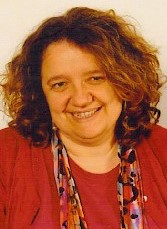
My name is Jane Stranz. I was born and brought up in Britain and am an ordained minister of the United Reformed Church, a small non-conformist church. For over 10 years I worked as a parish minister in the Eglise Réformée de France in Dunkerque, Chambéry and Ferney-Voltaire. Fom July 2002 to October 2011 I led the language service of the World Council of Churches in Geneva. Currently I'm working on a two year mission on ecumenical relations, inter-religious dialogue and inter-cultural ministry with the Fédération Protestante de France based in Paris. It's going to be exciting and a steep learning curve. I'm married to Stephen Brown a journalist, researcher and theologian who works at Gobethics.net. Over the next two years we'll see how we manage a commuting marriage between Paris and Ferney Voltaire. Since 1999 I've been living with multiple sclerosis, sounds rather noble but really means I just live in denial and inject interferon b three times a week and count myself very lucky to live in a country with a great health care system.




 Posts