All last week at morning prayer we remembered the Bible. From Tuesday to Friday we had no Bible reading but rather we worked with the stories of the Bible that we actually already know in our hearts and heads, written with the words of our memories, with our feelings and more besides.
After we had done a bit of remembering we went off and looked at one or other of the wonderful textiles hanging in the chapel as part of our Stitching Peace exhibition.
We began with the calming of the storm and Christ walking on the water, we ended with the woman who annointed Jesus with perfume "In memory of her". We also remembered the 10 plagues of Israel and the healing of the woman bent double.
It was interesting that we never really did get around to trying to list the 10 plagues but instead we got "side-tracked" by one person saying, "the thing that always struck me was Pharaoh's stubborness". We were looking at an "arpillera" made at the time of the Pinochet dictatorship in Chile and very present in our minds were the images and news from Libya. The plagues the people suffer as the result of one person's intransigence - how much time does it take to understand, what kind of macho posturing is this that takes no account of the human cost of confrontation?
It was wonderful to remember the Bible, it felt like stolen time somehow - early in the morning subversive prayer. It was fun and good and powerful - and interestingly days later now I can still remember all of the readings. If we had read the passages I suspect that might not be the case.
Monday, 7 March 2011
Remembering the Bible in stolen early morning time
Thursday, 3 March 2011
Remembering the Bible - stubbornly
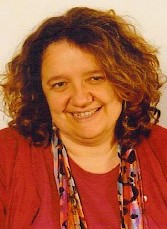
 The Ecumenical Centre chapel is housing the wonderful Stitching Peace exhibition until March 18 - here is a picture of the amazing Roberta Bacic who curated the exhibition for the WCC, showing some of the young stewards from central committee around the exhibtion. I'll be writing more about that in coming weeks.
Each morning this week we have remembered a Bible text at morning prayer and then gone and visited one of the pieces of textile art hanging in the chapel.
Yesterday morning we remembered the plagues of Israel and then went and looked at an arpillera which showed how a village responded when under Pinochet the water to the houses was cut off - by coming together and making sure their village looked well kept for despite the terribly added pressure of not having water.
As we tried together to remember the plagues one person said that the thing that she was thinking most about was the stubbornness of Pharaoh. Insistent at holding on to power. In the end only able to forge fowards to destruction of himself and his army because of that - how much pain and suffering could have been avoided if he had allowed compassion and understanding into his heart. We never did manage to remember together the ten plagues of Israel but somehow we did remember this essence of the story ...
Monday, 9 August 2010
God of Kiwis and Kangaroos and the Dolphin Christ
At morning prayers this morning Lucy D'Aeth wrote us some wonderful prayers - including a great blessing which had the phrase "God of kiwis and kangaroos". Her prayers of intercession were good too. Full liturgy here. Jill Hawkey led prayers and Peter Prove preached a great sermon, about which more in a later post.
We also sang two wonderful hymns I've never sung before. Singing of them made me think once more of Erik Routley's wonderful phrase "hymns are the folk tunes of the church militant". The first was called Where Mountains rise to open skies by Shirley Erena Murray. Here's an extract:
From broken word, from conflict stirred,
from lack of vision, set us free
to see the line of your design,
to feel creation’s energy.
The second new hymn to me is by Colin Gibson and called Where the road runs out
It spoke to me deeply today as we sang it but it also made me smile, I love the line "be the dolphin Christ"
Where the road runs out and the signposts end,
where we come to the edge of today,
be the God of Abraham for us;
send us out upon our way.
...
When the coast is left and we journey on
to the rim of the sky and the sea,
be the sailor’s friend, be the dolphin Christ;
lead us on to eternity.
You can find more details of New Zealand hymns here.
Hymns are the poetry of the church so often today they are replaced with songs. It was good to sing hymns this morning and be enlivened by words and music.
Tuesday, 8 June 2010
Prophets of a future not our own - a quote from Oscar Romero
“We cannot do everything and there is a sense of liberation in realizing that. This enables us to do something, and to do it very well. It may be incomplete, but it is a beginning, a step along the way, an opportunity for God’s grace to enter and do the rest.”
Oscar Romero, Prophets of a Future Not Our Own
Circulated at work by a very hard working colleague on her retirement
Saturday, 8 May 2010
Tears and feeling
I have been thinking alot about passion, deep-felt feeling, conviction and emotion in recent months. There are lots of reasons for this, as with most people there's been quite a lot going on in my life, not all of which gets written about here (fortunately!).
When I was at my middle school from age 10-12 I was very proud that I never cried at school - neither from physical or emotional pain. I'm really not sure where the idea came from that I should control my emotions, that it would be better not to cry in the public setting of my school, try to be "strong". I'm sure it wasn't a very healthy approach to life, somehow I must have been fearful of my emotions taking me over, of them being a separate power over me rather than part of me.
There are times today when I also wish that the red heat of emotion did not drive through me so clearly, but for the most part I just surf the roller coaster of emotional living. For women who have historically been seen as being over emotional it is particularly complex to walk the path of integrating emotions. Though perhaps for men the path is equally hard, as anger and aggression are more valued in their expression than other "softer" emotions.
Integrating our feeling and thinking is a challenge most of us face.
I've been reading through parts of John Bell's The Last Journey again this afternoon, looking for inspiration for some writing I need to do and I came across this prayer
What did they think, Lord, those who watched you cry
in front of women, in front of other men,
for your dead firend, or your favourite city?
Did they admire your tenderness having seen your toughness?
Were they disgusted by your tears and loss of self control?
Or were they drawn into your sorrow for the plight of the world and the pain of its people?
Help me to share the solidarity of your deep sorrow so that I can share in the certainty of your deeper joy.
Monday, 19 April 2010
The icon painters prayer
 Two wonderful French Roman Catholic icon painters are holding an exhibition of their work in the chapel of the ecumenical centre from Monday 19 to Friday 30 April. they began hanging the icons on Friday and the chapel looks quite different.
I shall try and post at least a photo a day of the icons - some of which have prayers next to them. For now though I've posted the prayer of the icon painter in French, maybe later in the week I'll get around to doing some translations ... maybe means I have good intentions and no will power ...
In the meantime you can already access the liturgy for Monday morning here, part of it includes a responsive reading of part of Colossians:
He is the image of the invisible God,
the firstborn of all creation;
More about the exhibtion soon ...
Monday, 29 March 2010
Are Christians making any difference?
We are praying this week for the peoples and churches in Brunei, Singapore and Malaysia. As Holy Week begins our colleague Dr Manoj Kurian prepared a liturgy for which he wrote music for a Malaysian version of the Orthodox acclamation of the gospel - using the in recent times much contested word "Allah" to refer to the trinitarian Christian God.
In his sermon on the suffering servant from Isaiah Manoj asked us whether the more than two billion Christians in today's world were making any real difference. "We conform so often to what Christ was against rather than try to find new ways to transform society". Just like the people who celebrated Christ's triumphal entry into Jerusalem on Palm Sunday, we need to ask ourselves what kind of Messiah we are expecting, just a new king who'll sort out all our problems or someone working to a different set of rules, a new system of renewed relationships as opposed to the systems of the world that push the poor to the margins.
Manoj went on to plead that to follow the way of Christ the suffering servant we we should see our service as part of our worship and see God in each other.
So are we Christians making a difference or would the world be just the same without us?
Monday, 22 March 2010
Prayers, art, queueing and singing for world water day
Our brilliant colleague Maike Gorsboth who coordinates the Ecumenical Water Network preached at Monday morning prayers as we marked world water day. In her sermon which will be online tomorrow, she paid hommage to the late Steve de Gruchy and his "olive jordan river agenda" linking creation and liberation. It was powerful, heartfelt and authentic; a really good sermon. Maike also managed to get enough of us to queue for the toilet at lunch time today that we were able to take part in the world record attempt at making the world's longest toilet queue. As we waited in line - we had to be at least 25 people for the queue to be part of the record attempt - we sang songs from the morning's worship and then told funny toilet stories. We also admired Manoj Kurian's brilliant artwork specially painted for the day. You can find photos of artwork and queue here.
Wednesday, 10 March 2010
Oil and emptiness as blessings at morning prayer
Elaine Neuenfeldt led our morning prayers this morning by encouraging us to return to Monday reading from the 2 Kings 4.1-7. In that text, to save her sons from being sold into slavery, a widow is told by Elisha to ask all her neighbours for as many empty jars as possible. Behind closed doors the miracle takes place of the small amount of oil she already had being enough to fill every one of the jars she has amassed, sufficient for her to pay off her debts, save her sons and have enough for them all to live on afterwards.
The story is one of healing in community, of ordinary people not offering their richness but their emptiness, their worthless empty jars save lives and buy back fullness of life.
So we listened to the text and reflected on it together. A person who works nearby and comes from Rwanda spoke about how for her the emptiness represents the listening she hopes to receive from her friends and neighbours, yet so rarely do we offer or receive the real emptiness of unjudgemental listening. She also spoke movingly of coming empty to prayer and leaving feeling filled.
Both emptiness and fullness are symbols of blessing.
Coming home this evening my heart was full of song after Holden Evening Prayer and on the bus I ended up reading a few more pages of Sarah Coakley (I was so hooked I missed my bus stop!) all about the complex and vexed problem for feminist theology of kenosis or self emptying. I'll come back to that in a later post but as I finally got off the bus it really seemed that morning prayer and evening home coming were part of the same reflection around fullness and emptiness. Very female themes.
To end our shared reflection this morning we prayed some word by the Brazilian feminist theologian Ivone Gebara inspired by Psalm 63
Vida, ó minha vida
Life, o my life
love, o my love
meaning, o my meaning
you dwell in me and I seek you without ending.
All my being thirsts for you
as dry earth thirsts for water
as the wanderer in the night hopes for the rising of the sun
As the pilgrim longs for coming home
likewise, I seek you at work and at rest
in joy and in sorrow.
Earlier, I was amazed by your majesty and you mystery in the sanctuaries of stone,
I praised your glory and honour on my knees.
Today, I seek you in the depth of my being and
in the gestures of tenderness that expand the earth,
I seek you in the laughing of children and in the grass that grows in the fields.
to seek you like love and justice gives meaning to my life,
for that I praise you
Every small gesture of compassion gives me joy,
and your mysterious presence is embodied in my body
My remembrance teaches me your faithfulness.
When I lay in my bed I remember you,
I meditate many hours on you
The darkness of the night is turned into light in my heart.
In many moments you have been my help, consolation and hope in the midst of many pains.
The powers of death threaten us, but they will not be victorious.
In the depth of the earth dwells life
And life will continue to bring forth new hopes and seeds of love, for ever.
Life, o my life
love, o my love
meaning, o my meaning
you dwell in my and I shall seek you without ending.
Wednesday, 17 February 2010
Walter Brueggemann's marked by ashes
Marked by Ashes
Ruler of the Night, Guarantor of the day . . .
This day — a gift from you.
This day — like none other you have ever given, or we have ever received.
This Wednesday dazzles us with gift and newness and possibility.
This Wednesday burdens us with the tasks of the day, for we are already halfway home
halfway back to committees and memos,
halfway back to calls and appointments,
halfway on to next Sunday,
halfway back, half frazzled, half expectant,
half turned toward you, half rather not.
All our Wednesdays are marked by ashes —
we begin this day with that taste of ash in our mouth:
of failed hope and broken promises,
of forgotten children and frightened women,
we ourselves are ashes to ashes, dust to dust;
we can taste our mortality as we roll the ash around on our tongues.
We are able to ponder our ashness with
some confidence, only because our every Wednesday of ashes
anticipates your Easter victory over that dry, flaky taste of death.
On this Wednesday, we submit our ashen way to you —
your Easter parade of newness.
Before the sun sets, take our Wednesday and Easter us,
Easter us to joy and energy and courage and freedom;
Easter us that we may be fearless for your truth.
Come here and Easter our Wednesday with
mercy and justice and peace and generosity.
Copyright (c) Walter Brueggemann (b. 1933)
Monday, 8 February 2010
All you need is love ... it is what it is says love
As worship began this morning I was a little surprised when the pianist struck up the Marseillaise (we are not praying for France but for the Netherlands, Belgium and Luxemburg) then of course the music progressed and became "All you need is love ..." and quite a number of us laughed at our double take.
As we left the chapel we were encouraged to help ourselves to heart-shaped sweets and some of the candles were placed in a heart shape in front of the altar. Love was the theme our colleagues from the Benelux countries had chosen for the service this morning, but it was not saccharine sweet and had great depth and simplicity - as well as some very welcome humour! You can find the outline here.
In her sermon Jet den Hollander ranged from memories of a Valentine's Day spent many years previously in Cuba to reflections on the present day diversity of the Netherlands and the word "allochtoon” meaning those coming from a foreign land as opposed to "autochtoon" meaning of the land itself. She ended first with a celebration of the Belgian/Dutch Roman Catholic theologian Edward Schillebeekx and then with the wonderful poem by Erich Fried Es is was es ist sagt die Liebe, read in English by different voices around the chapel. It was a powerful and beautiful moment.
Is love justice? is love harmony? is love unrealistic, idealistic?
It is what it is says love ...
I've posted Erich Fried's poem before but here it is again, in English rather than German, with thanks to our liturgical team this morning.
You can find Jet's sermon here.
IT IS WHAT IT IS ~ Erich Fried
it is nonsense, says reason
it is what it is, says love
it is unhappiness, says reflection
it is nothing but pain, says fear
it is hopeless, says insight
it is what it is, says love
it is ridiculous, says pride
it is frivolous, says caution
it is impossible, says experience
it is what it is, says love
Saturday, 30 January 2010
Prayers for Britain and Ireland
Over this weekend I'm trying to dream up a sermon with the title "Mother tongue - foreign land". The excuse for these musings is that the Ecumenical Prayer Cycle invites the world to pray for the countries of Britain and Ireland from tomorrow.
Someone else was originally due to lead worship in the ecumenical centre next week but that fell through, so I found myself with the task of reflecting on my home country, a place I haven't lived in for a nearly a generation. I'll see how it comes along. One of the problems with it is that I recently received or perceived the beginnng to a sermon fully formed, I was really excited by it at the time. Now though I'm having to let go of that idea in order to try to say something perhaps less beautifully perfect but more real. No idea how it will turn out. I want to try and play with the idea of how my home country is totally familiar and yet very much a foreign land to me and use that as a springboard to think more about changing faith, church and ecumenical landscapes ... all set somehow between Babel and Pentecost, coping with life's mess and structure.
Yesterday at lunchtime a few of us reheared the hymns I've chosen - all rather unknown and a little difficult. It made me smile but also surprised me that the tunes and words evoked hobbits and elves for one of my colleagues! Anyway although we shall not have any Scottish or Welsh music, we will have a poem by a Welsh poet (Rowan Williams) and morning prayers throughout the week will be led by a colleague from Scotland and based on the Iona Community's morning prayers. You can find the order of service here.
Wednesday, 20 January 2010
All prayed out?
There were times when I was in pastoral ministry when I felt that I only really prayed when I prayed aloud to lead others in prayer. It was as if prayer only held that deeper feeling for me when leading worship. I used to worry about that, rightly so too I think. It is easy for pastors to get so used to leading worship that they never allow themselves time to receive, to pray in an ordinary way.
Today I have been praying in public rather alot - two big services in one late afternoon and evening. Our friend Karin Achtelstetter was ordained to the Word and Sacrament of the Evangelical Lutheran Church of Bavaria and it was a real privilege to lead the service with her bishop Ark Nitsche. Sometimes worship just works and this did, in a great mix of French, German and English with some touches of Portuguese and totally amazing music led by Terry Macarthur.
Then I went on to lead the local francophone Week of Prayer for Christian Unity combined service, which also featured stunning music, a good sermon by Christine Housel from WSCF and a liturgy that simply seemed to flow. It is a particular blessing when worship does the job of grounding heaven on earth and lifting earth more heavenwards in gentle, non-glitzy, real sorts of ways.
I was physically exhausted and so grateful a friend drove me home afterwards, but I didn't feel all prayed out, I sort of felt all prayed up: filled with something unnamed and beautiful - the Spirit perhaps ...
Given how the night turned out this was just as well ...
Sunday, 17 January 2010
Bits and pieces of inspiration
Sometimes it is not so bad to get older and to begin at last to know oneself a bit. Today I have had some time to catch up on a bit of reading, thinking and pottering around. It has been a very busy and emotional week in many and various ways and it has been good to have some normal time, sleeping in after a party for a friend, going to the market, shopping and drinking tea. Time to let go of some strains and stresses and live with some of the happiness and hope the week has brought - as well as the desperate tragedy unfolding in Haiti. No words really suffice for that, even though I tried.
Reading Ben Myers splendid Faith and Theology I realised that I shall never write a thological monograph (or even an article) but that I get enormous pleasure and inspiration from reading what others write and from encouraging them to write (I'm having some fun getting a group of young theologians to write about ecumenism at the moment - well actually getting them to deliver is really the issue currently!) It's good to encourage others to unlock their creativity. It was Ben's post about the spirituality of theology that triggered this realisation in me. Mine is a bits and pieces theology. The theology of the practioner, communicator, translator, liturgist and preacher not really of the lecturer or writer.
It has been of more theological importance this week to write "Pray for Haiti" on large strips of paper than to write a treatise on the future of ecumenism. Yet oddly this week of deeply practical editing, translating and liturgical work has also been one of totally gratuitous inspiration. Pure grace. Suddenly, while I was doing something else, a sermon called "mother tongue - foreign land" came into my mind and strangely it seems to be a bit about the future of ecumenism. As I now start to write it of course it doesn't seem to be quite so beautiful and luminous as it was during those first moments of perceiving how it could go, but it still excites me. This kind of inspiration hasn't really happened to me before - not quite so obviously anyway. No doubt by the time it is finished the sermon will even have a completely different title, but it will still have its origin in the moment in fron of my computer when I was checking the VAT!
That links to my final bit of inspiration for this evening. The role of language and mother tongue in inspiration. The sermon came to me in English and is about a far away land called home. When you spend your days playing and struggling with language it's interesting to see which langauge the Holy Spirit is speaking in today. I often say I have a mother tongue (English), a father tongue (German - my 3rd language) and a foreign language (French) which is my working language and my love. Twelve months ago I realised very painfully that I cannot bear to leave a context where I can speak French most of the time. So why if I dream in French does inspiration come this time in English?
Anyway, a bits and pieces theology is where I am and will remain I dare say. Bringing together prayers and Bible translation, song and academic reflection, inspiration and hard labour, thanksgiving and lamentation, spirituality and action. It's a fine place to be I just won't be writing any ground-breaking theology ... however I do still harbour some delusions about maybe writing a bit of detective fiction. We'll see how much older I have to get before I give up on that illusion as well!
Monday, 26 October 2009
Gloom into hope
In the light of the resurrection despair is always premature.
God has a project in today’s events.
In paths we have not known, God leads, turning gloom into hope.
From a liturgy prepared by Deenbandhu Manchala to mark Diwali with the people of India, Pakistan and Srilanka
Monday, 28 September 2009
To bear witness does not always mean to be a martyr or a saint ...
Through the Ecumenical Prayer Cycle Christians are encouraged this week to pray for Armenia, Azerbaijan and Georgia. In the Ecumenical Centre chapel this morning Carla Khijoyan and Tamara Grdzelidze led prayers with a simple Orthodox form and some glorious Armenian chanting. They each shared a story from their own culture about what it is to bear witness to faith. Carla, who works with the WCC's migration programme, spoke powerfully of the Armenian genocide, how to be Armenian is intrinsically to be Christian but also to be part of a people driven into the desert, persecuted and today scattered across the nations of the world, but with a strong identity which still seeks to bear witness to essential truths in the present.
Tamara, who works in Faith and Order - among other things on the Cloud of Witnesses project - spoke about the witness of a Georgian Orthodox priest and theologian who lost his life in 1943 in the gas chambers. Not technically a martyr to the faith but someone whose life story speaks volumes of where it is that faith may lead some of us in extreme circumstances.
Each of our cultures has stories of the lives of witnesses: individuals and sometimes groups of people whose tenacity, goodness, powerful words, faith, standing up for what was right, prayerfulness, generosity and much more, speak to others across borders of time and place. We need someone else's story to make sense of our own sometimes. For those stories to speak to us the people do not need to be saints or martyrs to faith, their story has in some way to touch our own. We need to be open to receive from the past and to recover sometimes forgotten stories from the past.
Early in November All Saints and All Souls' days approach and in my Protestant, feminist and certainly not very saintly way I'm beginning to think about how I might meaningfully remember stories that touch my own. Perhaps I need to begin gently making lists of those - both dead and alive - whose witness to the gospel and whose life-stories have touched mine. From year to year if I made such a list it would also chart my personal and spiritual changes perhaps, some parts of the list would remain the same, it would change or be added to in other areas. Theologically this idea speaks to me not of fixed immoveable tradition but of open and evolving tradition.
So who would be the first five women, the first five men and the first five groups of people whose witness have touched your story and spoken to you deeply of gospel faith?
Monday, 17 August 2009
Memorising light and salvation and praying for the Pacific
This morning Faautu Talapusi from Samoa spoke and sang from the heart with great calm and authenticity. She remembered how her parents had made her and her two sisters memorise verses from the Bible each week, she was honest about the resentment she felt. But contemplating the challenges of life today and meditating on Psalm 27, she pointed to two constants, the one fear, the other "light and salvation" or as she put it "God's awesome love". Somehow the gentleness and beauty of the verses she was obliged to learn as a child percolated through with a message of meaning and support.
I was moved as I listened to her because I have met so many people for whom a similar regime of rote learning would have broken their spirit and faith. For Faautu that constrained learning did not lead her to memorise resentment but to memorise light, salvation and love.
She also linked this fear and salvation motif to the challenges facing her region of the world today:For the Pacific Islands, its churches and communities – there is the constant threat of climate change amongst other things – when the water levels rise to the point that our islands are inundated and uninhabitable what then? How do you deal with a whole country without land, not a single inch of land? Is that still a country? How do you take a culture, its people and identity and transport everything to a foreign land? How do you tell people that they must leave the land that buries their placenta, and their ancestors under water? How does one do this?
I was also moved because this week, as so often during the year praying with the ecumenical prayer cycle, the countries we were remembering were facing current crises or grief. The challenge to all of us is to memorise more light and salvation and less fear as we go through life.God of mercy – we pray for the people and churches of Fiji, Kiribati, Marshall Islands, Micronesia, Nauru, Palau, Papua New Guinea, Samoa, Solomon Islands, Tonga, Tuvalu, Vanuatu, Kanaky and Tahiti. We pray that they continue to bring witness to your Word as they struggle against political instability, economic uncertainty and the consequences of climate change.
Tuesday, 11 August 2009
Reflection: Have you seen Christ lately?
The following reflection was shared by Emma Halgren at morning prayers today.
You can find the full liturgy here.
Reflection: Have you seen Christ lately?
As the road outback unfolds like a ribbon, I look for the telling signs of a Christ-like figure that matches the road and the image within my mind.
Gnarled old trees bend to usher me on through corrugations and dust and casually I look in case I see the Christ within my mind.
An emu runs with a determined stare followed by several more, ignoring me and my road ahead, passing by until it is no more.
The faded homestead now left empty and bare flickers through the mallee scrub. A house, once a home of laughter and tears, now stands open to the elements and years and still I look for the Christ in my mind: could I possibly see Him here?
The whitened bones of a lonely steer glisten in the heat of the day, discarded and broken though once prized and nurtured; surely I couldn’t see Christ here.
A family of four, wide eyed and expectant, welcome me into their home. Their hopes have been sucked dry by the cancerous drought, as day after day the rains pass them by.
Could it be here that I find the Christ in my mind?
In the distance ahead a ramshackle pub quivers in the heat of the day and in the silence of the bar a knowing nod welcomes me this day.
Words are spoken of good times and hard, a laugh, a curse is mixed with what was needed to say and a departing handshake all cracked and hard sees me on my way. Could this have been the Christ of my mind?
As the night sky closes and the birds call their rest in the dark protective trees and as silence falls in the great outback, I know that I have seen Christ in all of these.
Dennis Cousens
Frontier Services Cunnamulla Patrol
Monday, 10 August 2009
ANZAC biscuits and Maori chanting on St Laurence's Day
It's the summer and many colleagues at work are on holiday but prayers in the chapel have continued and have been enriching these summer days for those of us who are around and able to get out of bed in time to attend.
This week the ecumenical prayer cycle moves to Australian and New Zealand and colleagues from that part of the world blended together many elements into a moving a stimulating service which included some wonderful Maori chanting and some great modern songs celebrating creation.
In the reflection Revd Michael Wallace first invited us to remember St LaurenceOne of the seven deacons in Rome during the time of Pope Sixtus the second, Laurence was in charge of distribution of alms to the poor. In 258, the emperor Valerian put to death numerous priests and deacons. When Pope Sixtus was beheaded in this persecution, the prefect of Rome demanded that Lawrence surrender to him the riches of the Church.
Lawrence asked the prefect for three days to gather together the church’s wealth. He then worked swiftly to distribute as much Church property as possible to the poor. On the third day he presented himself to the prefect, and when ordered to give up the treasures of the Church, he presented the poor, the crippled, the blind and the suffering and said, "Behold the treasures of the Church!"
This act of defiance led directly to his martyrdom on August 10th.
Lawrence defied the oppressive power of his day. In spite of the threat of death he kept his focus on serving Christ and his people. Even though the church lost a deacon it gained encouragement to resist the powers of evil. Laurence is remembered for his courage and his focus on not only serving but also valuing the poor.
There was also a powerful reflection on how the church can begin to speak to young people who gather in churches particularly on ANZAC day, moved by stories of those who died in wars far away from home nearly a century ago. What Christian message do we want to share with them?
The fragility of our cultures creates a situation where the demands and values of commerce can override everything else. Commerce threatens to fill the space of culture and religion, and sideline history and shared meaning.At the end of the service we were offered ANZAC biscuits. A sign of women's frugal work for peace.
Yet in this context a powerful spiritual yearning still arises. Despite their highly secular worldview and alienation from faith, people want to be part of an heroic and inspiring story, to believe in the kind of self-sacrifice that is displayed in the life of St. Laurence and Blessed Mary McKillop.
Find the full order of worship here.
Tuesday, 4 August 2009
I go to morning prayer to pray, have my horizons widened and learn new things
This week through the ecumenical prayer cycle we are praying for Canada and the United States. This morning the focus was on Canada. We listened to a recording of the wonderful Huron carol translated by Jean de Brébeuf, prayed some wonderful and very funny words by Karl Barth, listened to verses from John's gospel. In preparation for the gospel reading we listened to an extract from Stephen Neill's, A History of Christian Missions, The Penguin History of the Church 2nd edition (US printing), Penguin, New York and London, 1986, p.171
A veil of romance has concealed from the world what life among the Indians was really like. With noble courage they combined unbelievable squalor, treachery, and bestial cruelty. Conditions of life for the missionaries were miserable; communications were so difficult that at one time the rule had to be made that no more than three drops of wine could be allowed for each Mass. The constant wars between the Indians threatened the peace of the mission. In 1642 Father Isaac Jogues was captured by the Iroquois and brutally tortured. He managed to escape, but in 1646 returned among them, saying Ibo et non redibo, “I shall go but not return”. His prophecy was true; on 18 October 1646 he was murdered, to be followed the next day by the young layman, Jean de la Lande, who was his companion. Worse was to follow. In 1649-40 the Iroquois fell on the Hurons and practically exterminated them; the three Jesuit missionaries Brébeuf, Lalemant, and Garnier were tortured and burned alive. This was practically the end of the mission. Various further attempts at missionary work were made throughout the area which is now Canada and the United States, but with little lasting success. The missionaries were, in fact, watching the tragedy of the red man. Neither Britain, France, nor Holland comes well out of this.
The inhuman cynicism with which the white man engaged the Indian in his own
quarrels, setting Indian against Indian and Indian against European, makes one of the most shameful passages of colonial history. To make things worse, “drink and the devil had done for the rest”; the Indian could not resist the temptation of the white man’s fire-water, and here as elsewhere the supply of alcohol to a primitive people was almost tantamount to deliberate murder.
Find the ful order of morning prayer here, recommended for Barth's prayer if nothing else which includes the inimitable lines:
Be the Lord of the well-fed and of the underfed,
and also of those who are called to speak and write,
whether they produce creations that are good or not so good.
If tonight I learn how to transfer the audio files from my Nokia we might even be able to offer podcasts of morning prayer soon. However, I susupect this may require technological skill I do not yet have ...


 Posts
Posts