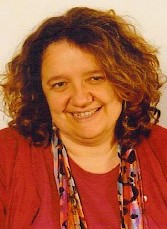
Interesting academic article on generosity as a management strategy here. It's all about counter-intuitive generosity very interesting - here's an extract:
if a manager practices counterintuitive generosity — that is, the worse things get, the better he treats his staff — he gets rewarded with employees who are loyal, engaged, and willing to slog through the mud with him.
It's interesting to see that many of these virtuous terms: forgiveness, generosity, integrity, are prized in good leadership and management. They are also often prized in the new social networks and software developments and social networks.
More on this when I get a chance.
Monday, 29 March 2010
Generosity - it's a management concept!
Tuesday, 4 August 2009
Word of the day l'auberge espagnole
It is no secret that I am not a tidy person. My other quite particular and tidy translator colleagues doubtless despair of my mess sometimes. However, all it takes is a visit to my husband's office to see mine as a fairly orderly space. (He'll probably edit that last sentence to oblivion within moments of reading this!)
"Auberge espagnole" is one of those nationalistic little phrases that get into languages - like to take French leave (the equivalent in French being to take English leave - filer à l'anglaise). The implication is that a Spanish hostel or inn would be a bit chaotic, a bit of a hodgepodge, a place where you have to take pot luck (by the way a pot luck supper in French is called a repas canadien).
I have also seen the term auberge espagnole used as a congretational model for churches - not trying to be all things to all people but trying to offer different ways in to faith and being church. Of course it appealed to me - perhaps a subtitle to be blog should be auberge espagnole, what a shame I don't speak the language!
Since my time at the CEC assembly I've been pondering what an auberge espagnole model of communication might look like. As we set up the communications work for the assembly I was quite excited by the fact that we had freedom to try and get messages about the assembly out there. It was fun to encourage people to blog or tweet - to offer thoughts, concerns, campaigns or groans and not try to control or santise things. It was very energising and generated quite a creative space that may have looked chaotic but actually led to everyone working as a team on the different parts that made up the whole.
In terms of the work I have been doing on leadership I suppose it's a bit like the three-ringed circus. It's very different from the control approach to communication - of which I suppose the Lambeth conference last year would be a prime example. (I leave Dr B to comment on that as he was there and found it extremely frustrating.)
Of course any good communicator will need a bit of both - a bit of the auberge espagnole approach and a bit of the control approach. The control approach can unfortunately have its roots in fear and sometimes leads to never daring to communicate anything. The auberge espagnole approach could be seen as muddled and it does rely on high levels of trust within the team.
Whether choosing a control or an auberge espagnole model for the work that's being done, working on building trust in congregations or organisations of any kind is never wasted. As I begin to contemplate the writing of my diploma for the Craighead Institute I am more and more interested in the role of "intangibles" like trust, confidence and motivation in organisations. Vision, leadership and integrity of purpose can offer inspiration for generating trust and other intangibles. I suppose that may not sound like the picture of a church near you, but I'm learning that even healthy organisations are not perfect!
Saturday, 6 June 2009
Living with fragments or fragmentation?
Amongst many themes we are looking at during this final weekend of our leadership training session is the issue of trying to hold on to a vision of the whole and avoid fragmentation.
I've been wondering whether I really understand or believe this since I heard it for the first time yesterday - after all I've been blogging quite a bit about fragments in quite a positive way recently. I suppose though that "living with the fragments" is not the same as being in a state of fragmentation. I think I could even grope my way towards saying that living with the fragments is actually a way of resisting fragmentation and keeping the whole in view - or trying to keep the whole in view.
Part of me also wondered though, whether this insistence on having to keep the whole in view is not also quite a Roman Catholic way of looking at the organisations and congregations of religious life. A way of saying "don't forget you belong to the church", don't forget the higher authority. Perhaps I'm wrong about this, after all Presbyterian Reformed have a strong sense of authority for church order residing the systems and structures of the church, of authority being shared. This is also not fragmentation.
One of the phrases Christine Anderson used today that really appealed to me is how those in apostolic consecrated life (of the 32 participants on the course I am the only one for whom this is not the case) today are called to "live in the crevices" of society, alongside the people a fragmented society has forgotten. Perhaps this is actually another way of talking about and calling people to live with the fragments.
Friday, 5 June 2009
On the roof of Rome - an evening hosted by Francis Campbell, British Ambassador to the Holy See
 The Craighead Institute was honoured to have its certificate giving ceremony at the residence of the British Ambassador in Rome this evening. We walked up almost 10 sets of staircases to reach a roof terrace with of course stunning views - this is Rome in June. Ambassador Francis Campbell
was very welcoming and gave a good speech about how without religious organisations delivering services to real people at the grassroots, it would almost impossible to achieve the millenium development goals. He also particularly welcomed our group as there were far more women than at the usual receptions hosted at the residence!
Later after we had moved downstairs, the ambassador gave us fascinating insight into the complexity of the issues followed by the British embassay to the Holy See - using diplomacy to push the millenium development goals; the multilateral approach that the posting requires and the growing understanding of the importance of religion in diplomacy and international affairs. A heartening and interesting evening.
There's a link here to an article by Campbell in the Tablet in which he says:
Europeans take it for granted that modernisation and secularism go hand in hand. But the experience of the rest of the world tells a different story. The challenge is maintaining faith while living peacefully with those who do not share it. Retreat is not an option.
Thursday, 4 June 2009
The expressive organisaiton - maybe the way to see how management is a theological task
 One of the things I am beginning to grope my way towards with the paper I am writing for my leadership and spirituality course is how to affirm management and leadership as theological tasks.
This evening I've just been sent a link to a book which I think may help me do that, "The Expressive Organisation". It has some interesting looking chapters on for instance: Scaling the tower of Babel: relational differences between identity, image and culture in organisations, or: Corporate communication orchestrated by a sustainable corporate story, or: Reputation as strategy. Sounds like I have some fun reading ahead.
That last part is sort of where I'm heading in terms of trying to work out a link between the theological idea of being "witnesses" or "disciples" and the organisational ideas of how and what you do being as important as whatever your product may be. I'm probably not making much sense but never mind, thinking aloud onto my blog is part of overcoming writer's block.
Wednesday, 3 June 2009
Off to Rome for final part of course on spirituality and leadership

Sad that it's the last time for now that I shall take the night train to Rome
Here's a taster of a tiny (and bloggable) bit of what I have written so far:
Surf the Volcano, Visit the Circus: A Liturgical and Feminist Reflection on Organisations and Leadership
...
Reflecting on issues of management and leadership, I have realised that some of the models for reflecting on these categories are set, if not by an overtly patriarchal discourse, then at least by a discourse which sometimes forces women leaders into models that they have not always had the chance to develop. One of my concerns as an ordained woman is to see what models for women's leadership may be possible, could be developed, might be taken up by the churches and church organisations. How can I as a woman, how can women more generally find their voice?
Recent reading of Grace Jantzen's work also helps me to see that often simply by being and by having their own voice, women are putting a spanner in the works of the way things have always been done. This is a challenge and a responsibility for women involved in leadership, and something that male and female leaders in the church need to become more aware of to have a more holistic approach to understanding some of the dynamics at work in their organisations. In what ways do I / we as wo(men) leaders support and conform to systems which so often work against us? What does surfing the volcano and visiting the circus mean for women with leadership responsibilities today? In churches, such as mine, where women have been ordained for several generations (the first woman in my tradition was ordained in 1917) there is also the question of how we support one another as women leaders at a time when the clergy in many protestant denominations is being feminised.
Sunday, 17 May 2009
Interesting article on social trust and immaterial values
There is an interesting article on a Dutch website here, it's about religion and development. I like the idea of giving hands and feet to immaterial values ...
Social trust is found where people trust the good intentions of others and are confident that others can carry out their intentions within their social and institutional contexts. The importance of social trust for relationships and effective cooperation in development contexts needs no argument. But how do we ‘give hands and feet’ to this essential, but immaterial value?The issue of trust and other intangibles in organisations is something I'm trying to build into my paper for the Craighead Institute. It's not all that easy to get your head around but as I watch a tidal wave of trust wash away swathes of British politicians it's easier to understand just how important the immaterial is to every organisation.
Saturday, 16 May 2009
Poetry, waste, war and leadership ...
 I have just been watching a programme by Jeremy Paxman about Wilfred Owen, the English First World War poet. My mother taught Owen's poetry at school while I was growing up. It was interesting to learn that Owen's poetry only really became part of common cultural heritage in the 1960s.
Listening to the well known lines from Owen's poetry, and the less well-known lines from his letters home, I reflected on how horrifically wasteful humanity is of human beings. Yet in the crucible of desperate, vile battle poetry can sometimes flourish, even if it can take us decades to appreciate and recognise green shoots of pure genius sprouting in the terror of the battlefields.
Watching Annie Leonard's "the story of stuff" last night, I was moved in a similar way to how poetry sometimes moves me, as she described how wasteful of human beings, their lives, their dignity, their dreams and aspirations the systems are which underpin our ridiculous push to consume, buy, own and possess. I began to understand that in some ways today's consumerism is the underlying conflict which those of us fortunate to not live in present day warzones live with.
Churches too can be terribly wasteful, treating employees as commodities, putting up with the "collateral damage" of ministerial stress and congregational distress. Nine years on the ministries commission of my church have shown me how wasteful churches can be of talent, relationships, possibilities for renewal, chances for reconciliation ...
The question for church leaders from elders to archbishops, from patriarchs to sacristans is how to lead with humility and integrity, and yet also be decisive. So many of our leadership models come from the commercial warzone, are these appropriate models for the church? As the church in Europe at least becomes far less maintstream, more minority and counter-cultural will we not also need models of leadership which can inspire us and yet perhaps not necessarily offer us impossible ideals of perfection and effeciency? These issues around models of leadership and what alternatives may be vialble interest me as I work on the paper for my course in Rome.
Meanwhile I have not yet read Stephen Cottrell's Hit the Ground Kneeling nor have I looked much at the poetics of management. It strikes me though that poetics and creative theory may have more to teach us in developing new management models. As we try to be some of the green shoots of hope, creativity and beauty amidst the ongoing attrition of consumerism, perhaps the discipline, metre, craftedness and creativity of poetry may help to free up ways of perceiving what some of those models could be. Poetics may also be the way to help integrate spirituality and leadership while practising integrity and showing humility.
Thursday, 23 April 2009
Resistance - pointless or purposeful?

I thought about this conversation yesterday when I came across this book in the WCC library and realised that whatever else I believe about resistance I do not believe it is pointless. You can find details of the book here and read the contents here.
Thinking about it a little more I realised that I am also not very good at resistance, it's easier to be liked, to get on with one's little life, to play self-preservational politics or even the politics that destroy others. It's also easier to get lost sometimes in the red heat of moral outrage and lose the energy for the long tough struggle.
I suppose somehow for me resistance is about trying to hold fast to some kind of moral compass - often failing but trying to start over doing it again, calling myself, society and the systems and organisations I am part of into question.
Yesterday's quote from Bonhoeffer opens a chapter in this book on "Poisonous Inequality". The book begins with why and how to resist, looking at the call of the Bible to resist and the life of prayer as offering the strength to resist.
Resistance is a complex and multi-faceted term. Interestingly managers are taught to recognise and "deal" with resistance. (As I write that the image of olive trees and bulldozers in Palestine comes to mind.) In management terms resistance is often seen as a negative thing. If we cannot reform we can resist, says the introduction tho the book. Within myself I recognise both positive and negative forces of resistance. Resistance that wants to hold on to my own power, privilege and comfort; resistance that tries to do what is right, hold on to what is good, point to the values of hope integrity and the future. I'd like to kid myself that I'm more involved in positive rather than negative resistance but as they say life is lived forwards and understood backwards. Resistance and its importance is often only fully understood afterwards, years or decades afterwards.
Résister, as I have written before several times, is a key element of my assumed French Protestant identity.
So who is willing to plant and protect real and metaphorical olive trees, to protect them and to say that they have always had a right to grow?
Monday, 20 April 2009
Quote of the Day
"One must be fond of people and trust them if one is not to make a mess of life." E.M Forster
This quote comes from the essay Forster wrote in support of humanism called "What I beleive".
Bertrand Russell wrote an essay with the same title to go alongside it from which this comes:
"The good life is one inspired by love and guided by knowledge".
Today these words about trust, love and humanity spoke to and guided my faith and hope. Not sure what Richard Dawkins would say about that., but hey.
Sunday, 19 April 2009
The circus as a management ideal and tool for social change
 I have to admit I have not been faithful to my blog but am busy blogging elsewhere on a blog noone else can read - yes even more free-fall than my jottings here! It's my way of trying to get over writer's block and start the paper I need to get done for my course with the Craighead Institute.
One of the ideas I'm interested in for the paper is "the three-ringed circus". Just by googling I've discovered that the term is used used in all sorts of ways in management and business, mainly to mean the best of all possible solutions: to your IT problems, to inspiring your fundraising team or improving your (macho) mastery of the strategic environment. Sometimes though the term seems to be used as an image of chaos, a space that is potentially creative but not easy to control.
While we were learning about healthy and sick organisations one of the things we were encouraged to understand is that no organisation is ever completely healthy or completely sick. Even when things are going really, really well the image is the three-ringed circus and not a perfectly ticking Swiss clock! If your organisation is generally healthy it will not be possible to control and keep tabs on everything all the time.
Anyway one of the interesting things about the circus that I have discovered in recent months is that it is also something that interests some theologians. On Ben Myers Faith and Theology blog he has this great quote from William Stringfellow on the theological significance of the circus: “In the circus, humans are represented as freed from consignment to death. There one person walks on a wire fifty feet above the ground … another hangs in the air by the heels, one upholds twelve in a human pyramid, another is shot from a cannon. The circus performer is the image of the eschatological person – emancipated from frailty and inhibition, exhilarant, transcendent over death – neither confined nor conformed by the fear of death any more…. So the circus, in its open ridicule of death … shows the rest of us that the only enemy in life is death and that this enemy confronts everyone, whatever the circumstances, all the time…. The service the circus does – more so, I regret to say, than the churches do – is to portray openly, dramatically, and humanly that death in the midst of life. The circus is eschatological parable and social parody: it signals a transcendence of the power of death, which exposes this world as it truly is while it pioneers the Kingdom” (A Simplicity of Faith, pp. 89-91).
Meanwhile there's a video interview here with Shane Claiborne who founded the Simple Way community in it he says: "you can get together and talk theology but if you can't juggle together what good is it."
Then earlier today something really strange happened as I started to write about the circus I had the radio on in the background and heard a short programme from South Africa introduced by Midge Ure about the Zip Zap school of circus arts for social change. It really helped me have new thoughts about what I want to write about - how about the role of worship as circus? I love the image of circus arts for transformation as well. Perhaps I shall have to give my paper the title learning the circus arts for a management of transformation!
Anyway while I think about all of that here's more from the Radio 4 blurb:
Anyway while I think about all of that here's more from the Radio 4 blurb:
Midge Ure travels to Cape Town in South Africa to visit Zip Zap School of Circus Arts for Social Change. Midge is expecting the big top, bright lights and clowns in comedy big shoes and red noses, but this is something entirely different.
Founded in 1992 by Laurence and Brent van Rensburg, the vision for the Zip Zap circus school was to teach circus skills to South African children from all walks of life - from Cape Town's wealthy middle class elite to children born in the townships. Boys, girls, wealthy, homeless, extroverted, introverted, aged eight to 18, all have their places and responsibilities at Zip Zap, which attempts to embody Mandela's vision of the Rainbow Nation.
Midge meets Zip Zap's founders in Cape Town, and joins Shannon and Neville, two trainers from Zip Zap who travel to Khayelitsha township once a week to run the circus outreach programme there for kids born with HIV.
Shannon and Neville seem to embody what Zip Zap is all about. The former is a white American from Minneapolis who went over to train with Zip Zap and the latter is a black South African from Khayelitsha township - they got together at Zip Zap.
At the Khayelitsha outreach programme, there is no big top or paying audiences, just 25 children aged between eight and 13 who were all born with HIV. They practise circus skills in the street, including juggling, unicycle and throwing hoops. Midge is initially a little sceptical about how teaching circus skills to kids born with HIV can improve their lives. He hears how they have been ostracised by their own communities and how the circus workshops attempt to enable these children to develop their physical strength and abilities, while gaining self-confidence.
Midge says, 'I get it now. It's not about building up wonderful performers, it's about integration, it's about self-esteem. The circus works - it gives all these kids a focus, it gives them something to do, something to learn. But most importantly it gives them a little bit of hope.'
Friday, 10 April 2009
Rev gal pals Good Friday five
 I've never taken part in RevGalPals Friday five but thought I would at the end of this Good Friday. Here are the five questions:
1. How will you pray and worship today?
2. Share a powerful memory or memories of Good Friday past.
3. How have you grown and experienced God's love during this past Lent?
4. In whom do you see the face of the suffering Christ most clearly?
5. Where do you find hope for resurrection?
I've spent much of the day looking forwards to going to the servicethis evening in the Reformed Church in my town in France. This was only the second time I have gone there on Good Friday since I left as the serving minister in the parish and the way back over the past 18 months to the place where I once led worship has been an interesting and surprisingly gentle path of reconciliation. Today is a holiday in Switzerland where I work but not in France where I live. I missed the discipline of morning prayer in the chapel at work but I did enjoy finishing reading a book in bed this morning! That relaxation, spending time with friends over lunch and just pottering around helped me prepare to go to church and be part of music and prayers with the tiny group of folk who gathered there.
I worshipped with the lovely organ and flute music, through singing German chorales with French words, looking at the simple wooden cross and somehow glimpsing for a moment understanding of suffering and atonement. We listened to the passion narrative from John's gospel and prayed with words of Dietrich Bonhoeffer. The service helped me to just let my thoughts meander.
They meandered to a packed St Thomas Church in Leipzig in 1990 in the former GDR (East Germany) where I sat next to the man I loved and listened to Bach's St John's passion, in the church where Bach had been the choir master. I had preached at a Good Friday service in Wolfen where I was student minister and then got on a train to Leipzig. It was an enormous privilege - we had free tickets because the son of the manse I was living in was one of the choristers. Five months earlier the Berlin wall had fallen, Good Friday and Easter were in the middle of the country's first free election campaign. (Well that's how I remember it but perhaps I should check the dates!) It was an uneasy Good Friday, as I look back now I realise these were people waiting for the shock and threat of the future.
This Lent I have grown in my understanding of anger as a positive and negative force in all of our lives. I have also grown in my understanding of leadership being about containing anger, fear and frustration. A Franco-Swiss theologian called Lytta Basset has written a book called Holy Anger and I remember feeling very liberated just reading the title. I have experienced God's love this Lent at moments when I have been welcomed or let go. I let go of responsibility to prepare worship during Holy Week (well almost!) and was deeply ministered to by others. Yesterday a Maundy Thursday service which began with people laying roses around the altar helped me understand that I can let go of my longing for wholeness and completeness and learn to live with the fragmented nature of life and faith.
I see the suffering face of Christ in so many places, yet it is true that I see it today most clearly in women, men and children living in desparate grinding and unrelenting poverty and war. I do also see it in those great witnesses to faith and humanity who have gone through some form of what might be called "heroic suffering". However, throughout Lent I have been trying to raise awareness of justice and water through the Ecumenical Water Network's Seven Weeks for Water. I have never spent a single day of my life having to worry about whether I would be able to have enough water to drink. Perhaps today I see Christ's suffering more in those people whose suffering seems intractable, unchanging and never-ending - trudging daily to carry water, trying to find enough food. While I worry about the meaning of life, people worry about being able to go on living ... meaningless, dehumanizing suffering grinding people into the dust. Who will remember them?
I find hope for resurrection in remembering the Bible and remembering people. As I wrote "who will remember them" this verse came to my mind: Are not two sparrows sold for a penny? Yet not one of them will fall to the ground unperceived by your Father. (Matt 10.29)
There is hope for resurrection in God's memory being so much greater than ours, holding together the human fragments of so many genocides and wars and calling humanity back to humanity, life and love. "Jesus remember me when you come into your kingdom".
And thank you for asking for a poem - it has made me search out Elizabeth Jennings Collected Poems from the back of my bookshelves. I half remembered her poem Resurrection but here's the poem that follows it and where I left a bookmark, it's a meditation on the painting accompanying this post.
Mantegna's Agony in the Garden
The agony is formal; three
Bodies are stretched in pure repose,
One's halo leans against a tree,
Over a book his fingers close:
One's arms are folded carefully.
The third man lies with sandalled feet
Thrust in the path. They almost touch
Three playful rabbits. Down the street,
Judas and his procession march
Making the distance seem discreet.
Even the praying figure has
A cared-for attitude. This art
Puts down the city and the mass
Of mountains like a counterpart
Of pain disguised as gentleness.
An yet such careful placing here
Of mountain men and agony,
Being so solid makes more clear
The pain. Pain is particular
The foreground shows a barren tree:
Is it a vulture crouching there,
No symbol but a prophecy?
copyright (c) Elizabeth Jennings
Friday, 27 March 2009
Thorns in the flesh and jewels in the crown
I've been taking morning prayers for most of this week and this morning as we ended the working week I chose a reading from 2 Corinthians 12 which includes, "Therefore, to keep me from being too elated, a thorn was given to me in the flesh"
The form our morning prayers take depends mainly on who is leading them and whether there are enough of us to dare to sing. Often after the Bible reading we simply keep silence. This morning as we looked back at the past working week I remembered our friend Pauline Mackay telling us about Pauline Webb speaking about at the Harare assembly of the WCC in 1998.
Nelson Mandela visited the assembly and the WCC's controversial programme to combat racism was celebrated. Pauline Webb spoke reflectively at a side event about the PCR - as it is known - saying very astutely that what is celebrated now as the jewel in the crown of the WCC's legacy had actually for many years been the thorn in the institution's flesh.
Sometimes it is the things we struggle most with that become the making of us, but of course this is another case of life being lived forwards and understood backwards.
Sunday, 22 March 2009
Was Jesus a poor manager?
On Upside Down Heaven Hans Uli has been reflecting about whether Jesus was a poor manager:
The recent issue of Neue Wege - Beiträge zu Religion und Sozialismus ... features an interview Ina Praetorius did with Alphonse-Marie Bitulu from Kinshasa, who wrote a book entitled "Jésus, le mauvais gestionnaire" - Jesus, the incapable manager. The title and approach intrigue me. It points to a discrepancy of an ever more managed church and christian or religious service which at the same time often seems to drown in dilettantism and mismanagement. But the myth that good (today meaning results-based) management automatically yields good results grows steadily and threatens to suffocate true vision, creativity and authentic care for each other.
This set me thinking because one of the issues we're trying to tackle in an upcoming Ecumenical Review is trying to get churches which are involved in health care provision to take management more seriously rather than seeing it as a universally bad thing.
The more I think about management the more I think that what we refer to disparagingly as management is actually bad management. Alot of what is referred to as management in the church is often decontextualised quick fix ideas imported from a very different context. Yet context is one of the things that good management and leadership should take seriously.
In a conversation last year with Barbara Oxley who works in training educational leaders in the UK she said something that really struck me - "Leaders have to care about the people they are leading".
Caring should be an area that churches and non-governmental organisations are good at, yet churches and church organisations sometimes suffer from worse leadership and management problems than private companies.
Hans-Uli is right that wedding ourselves to a facile results based, bean-counting management approach can stifle creativity. The failure of some of these so-called management approaches in churches may actually mean that it will be difficult to look at management as a theological issue with enormous potential for the churches. There is also another side to problems with management in churches and that is the very defensive way churches can react to issues of accountability.
The private, public, voluntary and faith-based sectors all need good management. Part of the task of effective, good and caring managers is to lead staff in a way that encourages accountability and creativity and chanels them for the overall good of the organisations.
Anyway reading Hans-Uli was also a wake up call to me to start writing my diploma paper.
It also made me think about the parable of the dishonest manager in Luke's gospel which includes this:
And his master commended the dishonest manager because he had acted shrewdly; for the children of this age are more shrewd in dealing with their own generation than are the children of light. 9And I tell you, make friends for yourselves by means of dishonest wealth so that when it is gone, they may welcome you into the eternal homes.
Thursday, 19 February 2009
Ideas on management, change and philosophy
As I try to do some desultory research for my diploma paper I have come across some brilliantly bizarrely titled essays and papers in the plendidly named "Tamara: Journal of Critical Postmodern Organization Science. The truly sad thing about these crazy article titles is that I find them fun, intriguing or even interesting. This is a sad case of me having become a study for Private Eye's pseud's corner ... anyway here are a couple for starters:
Knowledge Management or Management of Knowledge? Why People Interested in Knowledge Management Need to Consider Foucault and the Construct of Power.
Illness, Work and Organization: Postmodern Perspectives, Antenarratives and Chaos Narratives for the Reinstatement of Voice.
That second one almost sounds like something Janet should be using for a remembered Bible seminar.
Sunday, 8 February 2009
With thanks to the sleeping partner of this blog
I have a secret researcher who knows his way around the internet for research purposes like nobody's business. He also happens to be my sleeping partner in other ways too - though we haven't slept in the same bed much recently. Anyway he's sent me some fascinating links to articles or abstracts of articles on various aspects of leadership - and the easiest way for me to keep track of them is to blog about them. Thanks Dr B!
There's an interesting article here on the organisation of resistance which shows how much our politics of protest movements have been changing in recent decades.
Then there's something interesting here about improvisation which I think is a fascinating challenge to institutions who try to set everything down and control it. I love this one because it's a sort of remembered Bible methodology of organisations. Great fun and all about improvisation - yes a narrative theology of business administration. This I really like!
Improvisation provides a way for businesspeople to become more entrepreneurial, and for businesses to teach and evangelize entrepreneurship across their networks.
When you script your narrative, your decision-making becomes binary. There are only two options:
On-script and off-script. All the energy goes into one of two areas: Wrestling reality into your scripted vision; and re-writing the script to fit reality.
Improvisation, by contrast, is a narrative engine. It invites participation, liberates good ideas, and challenges players to work at the height of their intelligence. The improviser knows that there are limitless options for action in every scenario and that if the fundamentals are followed, the story will take care of itself. Your energy and focus goes into performance, into making each and every moment of each and every scene count. Those moments add up, and turn into a compelling narrative. Freed of having to practice what you preach, you will have the much easier task of preaching what you practice.
With improvisation, players can shed themselves of unproductive energies and the fog of useless
communication that keep problems from being solved, and useful change from occurring.
With improvisation, players live in a world where clarity, sense of purpose and a spirit of teamwork prevail, and what can be achieved is exactly what Viola Spolin promised all those years ago: Communication, Learning and Transformation.
There's more on improvisation here.
Meanwhile my wily researcher has also come up with some rather more sobering articles on how the fetish of change and leadership can lead to failure.There's also a very interesting new take on the obsession with branding being something we should beware of as it is what your organisation does and how it does it which will actually count much more in the networked world. (Funny thing that it's called witnessing in church circles!)
Now I must do a bit of time management and stop blogging, otherwise I shall miss my train!
Doodling, drawing and finding a vision
Today was great fun as we started putting "graphic language" into practice by doing some more work on the PATH process. I was one of those doing the drawing this morning and it was quite a challenge to try and visually capture abstract terms like uniting or transformation and try and use the different coloured pens!
I can already tell that I am just going to have to try and get hold of David Sibbert's Fundamentals of Graphic Language. You can read more about another group's experience with the method here and here.
We really like the fact that in the vision stage everyone can contribute and there is no hierarchy or prioritisation in the vision stage of this planning tool. Also for cultures which are more visually and orally orientated it is a great tool because the graphic you all work on together is the minutes of the meeting - no really need for someone to type up a report - it is also more easily memorable. I can see how useful it could be in community work for instance.
Anyway I hope to do a bit more of this and I've decided I really want to practise doing the star people because they are so much nicer and more expressive than the stick people I usually doodle. Thinking about leadership in this more playful way makes it less frightening and also frees up our creativity to envision things differently and also to face difficulties more strongly as we go forwards.
Saturday, 7 February 2009
Reading Job
If I had not gone to the English eucharist which the course in Rome organised for us on Saturday evening I would not have been listening to Job but to Isaiah this weekend. The Revised Common Lectionary and the Roman Catholic Lectionary do not always mirror one another. One day I ought to write a dissertation comparing lectionaries in different Protestant, Anglican and Catholic traditions, though with any luck someone else might have already done this and so save me the trouble.
My friend Kersten, who has recently taken up a position as a chaplain in the Netherlands, says that she is shocked that the biblical texts which many lectionaries propose for Sunday worship reduce the Hebrew scriptures more or less to the Psalms and bits of Deutero Isaiah. The Torah, the part of the scriptures most meditated and commented on in Judaism, is only rarely proposed for Sunday worship in Christian churches.
Anyway the following passage from Job brought a smile to my lips despite myself. It's a harsh view of life. Job is not just desperately unhappy but very nearly suicidal.This is strong stuff and I feel it rings true for so many people today as well.
Interestingly the gospel text linked with this in the lectionary is the healing of Peter's mother in law - one of those nearly nameless women we tried to remember at our feminist theology group on Tuesday, she doesn't have a go at God like Job does but gets up and starts serving the men. Hmm!
Anyway here is part of chapter 7 of Job, a wonderfully powerful psychological study. His harangues of God certainly strike with chord for me.
‘Do not human beings have a hard service on earth,
and are not their days like the days of a labourer?
Like a slave who longs for the shadow,
and like labourers who look for their wages,
so I am allotted months of emptiness,
and nights of misery are apportioned to me.
When I lie down I say, “When shall I rise?”
But the night is long,
and I am full of tossing until dawn.
My flesh is clothed with worms and dirt;
my skin hardens, then breaks out again.
My days are swifter than a weaver’s shuttle,
and come to their end without hope.
‘Remember that my life is a breath;
my eye will never again see good.
The eye that beholds me will see me no more;
while your eyes are upon me, I shall be gone.
As the cloud fades and vanishes,
so those who go down to Sheol do not come up;
they return no more to their houses,
nor do their places know them any more.
‘Therefore I will not restrain my mouth;
I will speak in the anguish of my spirit;
I will complain in the bitterness of my soul.
World Water Day and strategic planning
The words strategic planning are not normally ones I would find inspirational or particularly energising, but after our leadership course this afternoon I may actually change my mind. Christine Anderson and Jo Kennedy (director of the Craighead Institute) introduced us to the PATH tool (invented by Jack Pearpoint, Marsha Forrest and John O'Brien) - PATH stands for planning alternative tomorrows with hope and you can find out more about it here.
What I liked about it is how collaborative and colourful the approach was, lots of really good idealistic energy was generated by concentrating first of all on the vision and then working backwards from there to achievable, realistic goals and priorities. All this was mapped out in front of us in a very transparent and artistic process and we ended by signing up if we were able to commit to doing something to realise the plan.
The issue we concentrated on was water. In particular the UN Water decade and how we can try to mobilise our congregations, churches and ourselves to get more involved in the global campaign for water justice. Of course it gave me the perfect opportunity to talk about the Ecumenical Water Network and get generally rather over excited about water. Anyway World Water Day is on March 22nd - what are you planning to do to mark the day this year? Meanwhile the Ecumenical Water Network is intending to do seven weeks for water again this Lent so watch out for that at the end of the month.
So it all goes to show, strategic planning isn't boring at all, actually it can be a great tool for advocacy!
Friday, 6 February 2009
MS research and justice in health research
I've learned today about new research potentially linking MS to vitamin D deficiency. Delighted as I am that progress is being made in research and prevention of the disease I suffer from, this news set me thinking. Part of our management course today was to reflect on how justice and peace issues are dealt with in the agendas of our different organisations and churches. After the flowering of interest and commitment to these issues in the 1970s and 1980s the way that institutions talk about them now is rather more low key.
Yet justice touches almost every single area of our existence - none more so than health. Tomorrow we will for instance apply what we have learned so far in our leadership training to the single issue of water. Water is essential for life and for good health. Yet access to clean drinking water, to water to irrigate crops, to sanitation is often restricted. Politics and profit begin to matter more than people.
Yesterday I read about our friend Pauline Mackay starting her new job at Church World Service in New Zealand. I was shocked to read that ninety percent of the world's health research is on diseases affecting 10% of the world's population. Huge sums are put into research into MS and I am truly very grateful - my expensive drug, for which there is as yet no fairly traded version, keeps me healthier than if it didn't exist. Meanwhile diseases affecting huge numbers of the world's population remain in the research twilight zone. No money to be made out of selling drugs to poor people, they don't have insurance so their illnesses will go almost unnoticed. Another case of market forces being deadly ...
Subscribe to:
Posts (Atom)


 Posts
Posts