This stunning piece of textile art in patchwork and quilting is called "Journey to Peace" and is by Deborah Stockdale. It is the central work commissioned for the Stitching Peace exhibtion which will come to Jamaica as part of the International Ecumenical Peace Convocation - the exhibition has itself been on a journey, it was displayed in Geneva for a month earlier in the year. Roberta Bacic who curated the exhibition comes from Chile but lives in Northern Ireland. Many of the pieces are packed in Ireland and waiting to come to Kingston as I write this ...
I arrived in Jamaica just after midnight local time last night. Members of the local committee were waiting to meet us at the airport - it was wonderful when feeling so tired to be welcomed and taken to our accommodation. What was interesting though was that even in this brief meeting at a midnight hour with all of us tired, we were already getting into the theme of "just peace". One of the people arriving at the same time as me was a young person from Syria. As we waited we exchanged perhaps rather superficial comments about the situation in Syria with her. Her response was interesting, "much of what is said is propaganda". Given the late hour and our need for sleep after 24 hours of travelling there wasn't time to have much follow up conversation. I'll admit to wishing I could be a fly on the wall at the youth programme where I am sure that discussion and many others will continue.
Once I was compos mentis enough for some cogent thought again this morning after a few hours sleep, I thought back to our conversation last night. It struck me that "just peace" is definitely not about easy slogans or one-size fits all solutions. It's about having good quality and nuanced information about situations (both of conflict and of reconciliation), but it is also in some way trying to come to a judgement about those situation. Not a judgement for all time but a judgement in the here and now. Syria could be a good case in point, but so are many other countries and situaitons.
To be for justice and for peace will often mean knowing not to take sides in a simplisitc way but knowing rather how to stand up for the (gospel) values of peace and justice as such. Sometimes though to be for justice and peace will mean taking sides, and being prepared to be vilified for taking that stance. Being for a just peace is not something static or set in stone it is very much about being on a journey and sometimes it will mean daring to put our feet on what is not solid ground. Daring to get it wrong.
In Deborah's Journey to Peace this sense of moving towards something is clear but what you can't see so clearly from this image is that there are people in the ecumenical boat, people also walking in the labyrinth of peace which is the IEPC logo of locked hands. There are however also people who have stepped out of the boat and are walking on the water. They really are daring to believe that the journey to just peace will carry them on. Pilgrims of hope borne forwards by hope and belief in water and the word... a beautiful baptismal image.
Here in Jamaica we are surrounded by water, all of us coming here have to cross it in some way or another. As we arrive and as we leave Kingston will we dare to go on walking on water into the future so as to build a just peace?
Thursday, 12 May 2011
Walking on water to journey to peace ... the IEPC begins
Monday, 2 May 2011
Now That We Have Tasted Hope - a poem by Khaled Mattawa
Now That We Have Tasted Hope
Now that we have tasted hope
Now that we have come out of hiding,
Why would we live again in the tombs we’d made out of our souls?
And the sundered bodies that we’ve reassembled with prayers and consolations,
What would their torn parts be other than flesh?
Now that we have tasted hope
And dressed each other’s wounds with the legends of our oneness
Would we not prefer to close our mouths forever shut on the wine
That swilled inside them?
Having dreamed the same dream,
Having found the water that gushed behind a thousand mirages,
Why would we hide from the sun again
Or fear the night sky after we’ve reached the ends of darkness,
Live in death again after all the life our dead have given us?
Listen to me Zow’ya, Beida, Ajdabya, Tobruk, Nalut, Derna, Musrata, Benghazi, Zintan,
Listen to me houses, alleys, courtyards, and streets that throng my veins,
Some day soon
In your freed light and in the shade of your proud trees,
Your excavated heroes will return to their thrones in your martyrs’ squares,
Lovers will hold each other’s hands.
I need not look far to imagine the nerves dying rejecting the life that blood sends them.
I need not look deep into my past to seek a thousand hopeless vistas.
But now that I have tasted hope
I have fallen into the embrace of my own rugged innocence.
How long were my ancient days?
I no longer care to count.
How high were the mountains in my ocean’s fathoms?
I no longer care to measure.
How bitter was the bread of bitterness?
I no longer care to recall.
Now that we have tasted hope,
Now that we have lived on this hard-earned crust,
We would sooner die than seek any other taste to life,
Any other way of being human.
Tuesday, 26 April 2011
Disjointed thoughts on wearing an apron on Easter Sunday and my months of magical thinking
 A friend who is now working in Canada for the Naramata Centre, which looks like a wonderful centre for spiritual refreshment, posted to facebook about Resurrection as a spiritual practice. It set me thinking about what that might mean for me this Easter. I have been very aware of a personal anniversary on Good Friday and Easter Saturday, of a letter I wrote and sent a year ago and of its consequences.
Many of you will have gathered that in recent months - actually I'm shocked to realise that it is not only recent months but quite a lot longer than that - things have been difficult. I've been fortunate that I have never entirely lost my laughter but I have struggled with desperate sadness, depression and suicidal feelings for long months. Some of it has its roots situationally, some personally.
During this time friends and mere aquaintances have seen me in tears more often than I can remember crying in the whole of the rest of my adult life. Some mornings I would wake up already weeping and not knowing why. Despite "knowing" quite a bit about depression I found experiencing this very distressing. Even now I wonder whether it is the path of integrity to try to write about it, and please I don't want sympathy. There was one day when I realised that I was living without any sense of future - for any serious theologian this is a pretty shocking realisation. Fortunately I'm not all that serious ... :-)
In "resurrection as a spiritual practice" this in particular triggered something for me "Find meaning in your experiences and speak the truth to power, and you help put death in its place."
It reminded me of standing next to many gravesides and throwing in earth, a way of both symbolizing and making real the fact that even though we love the one who is dead we are not buried with them.
Sometimes the only way we can put death in its place is by that separation. Sometimes the only thing to do is to shake dust off your feet and name the forces of death for what they are and put them in their place. I was struck by this at morning prayer today as we read St John Chysostom's Easter sermon - repeatedly and poetically he puts death in its place: "hell was in turmoil having been eclipsed." Resurrection begins when we name and identify death for what it is, leave it in its place and let life surge beyond and above it.
Sometimes of course part of that death which needs to be put in its rightful place is within each of us, is within me. When you're depressed dealing with that in a guilt free way is particularly difficult.
On Sunday I put on an apron as I was cooking - I am a very messy cook and should acutally wear an apron more often than I do in the kitchen. The apron says "woman with attitude", I was still wearing it when our guests arrived and it made them smile. Throughout all these months I have been fortunate to have remained in some way myself, essentially a woman with attitude, but it has been hard at times. And I think that the worst times have been those times when I have begun to take myself and my pain too seriously. I'm sure I have been desperately boring at times.
The apron belonged to my friend Suzanne, who took her own life. Wearing it on Easter Sunday was a tiny act of resistance against the forces of depression and death. Even when I weep I shall be a woman with attitude. Also I was able to wear her apron because I know that I have, so far at least, received enough support not to take the same path she did.
Somehow I find strength in vulnerability and hope to rediscover generosity.
This morning we listened to the story of the resurrection in Mark's gospel - the empty tomb. The emptiness of possibility, the void, the germ of transformation, the menace or threat of resurrection.
Joan Didion called the account of grieving for her husband the Year of Magical Thinking and I have understood that more clearly as I ploughed through these months of mess. Depression is in some way magical thinking. Learning to leave behind the obsessive meandering of the the grief-stricken depressive mind is perhaps the threat of resurrection for me this Eastertime - and please don't get me wrong this is not a judgement on others, just my path now. I hope.
So I suppose that this writing is in someways also more magical thinking. I know that as I have managed to get back to blogging I have begun to feel better and that as I have returned to reading I have felt the same. I also know that I have been very fortunate, I have not lost laughter or love completely and I have been blessed with friendship.
I wish I could say I feel I am a better person for going through all of this but I know quite clearly that I am not. Perhaps when I am at last able to forgive myself for that as well as much else I shall truly know that I am feeling better. John Chrysostom put it like this:
Let no one mourn that (s)he has fallen again and again;
for forgiveness has risen from the grave.
Each of us has to find what works for us. May you find yours if this is has also been part of your experience. May forgiveness of ourselves and of others rise from the grave for all of us.
Let's be people with attitude!
Sunday, 20 March 2011
Stitching Peace - while war rages ...
 Yesterday afternoon I took the catechism group around the Stitching Peace exhibition. I've shown groups of children and adults around the exhibtion during the four weeks it has been in the Ecumenical Centre chapel. It's been a really good and meaningful experience.
Tomorrow we take the exhibition down, pack it up and it will travel back to Northern Ireland and rest before transferring to Jamaica in May when it will be at the core of the International Ecumenical Peace Convication.
Each of the pieces in the exhibtions tells a story of ways individuals and groups can build non-violent and committed societies based on values like solidarity and respect. These are stories born of pain, anger and often deep poverty and oppression. Powerfully though the pieces selected show that even in such situations it is possible to choose to stitch peace.
Showing the young people and some of their parents the chapel yesterday we also looked for a while at the icon of the stoning of St Stephen which the WCC received at the outset of the Decade to Overcome Violence. And again, as I do week in week out with visitors groups, I asked them to consider the physical stones and violence we may each be capable of doing with our hands - the icon shows two people throwing large stones down on St Stephen. And the violence we do with our words - the icon shows Saul (later to become St Paul) looking on, his words have encouraged the violence which makes St Stephen a martyr.
This morning I woke to the news of missile attacks on Libya ... is this where my prayers for the people of Libya lead? Unbearable thought. Is this what is really needed? Will it work - what is hoped for from this?
Pictures of fighter jets and macho military paraphernalia have replaced pictures of the devastation in Japan. These bombs and swift response units make us feel we are powerful. The reality of war is deeply sickening. And of course part of that reality is Ghadaffi having already chopped off water and electricity supplies to whole cities - an act of war as deadly as any missile.
I know myself well enough to know that I am not a true pacifist, but I do not believe in the ease of war nor in retributive violence, (read a reflection from Phil Wood on that). Of course it is hard to weigh up the responsibility to act and defend the innocent against the resort to war, but do we tend towards military solutions more easily simply because the armaments are available to us?
I know that tomorrow as we take down the fragile textiles I know that shall be thinking about how terribly tiny and insignificant, how poverty stricken yet beautiful and creative our efforts at stitching peace are. One missile probably costs more than the whole budget for the peace convocation in Jamaica. When the the women under Pinochet took their flour bags and started stitching their stories and pain in simple powerful ways, they showed that despite horrific oppression and poverty, the human spirit will find a way to express anger, pain and the desire for justice. That same human spirit will also find a way in the depths of distress to dance, laugh, celebrate and make music. To stitch peace we need also to push those values to the fore.
I shall try to go on believing in the small "signs of the kingdom" type of peace building, which relies on flawed, hurting and wonderful human beings telling their stories with creativity. I'm still enough of an idealist to think that "retributive reconciliation" can begin with needle and thread much more effectively than with exhorbitantly priced precision armaments.
And I should add that some of these thoughts are also triggered by conversations with one of the teenage boys about his future plans. He really wants to become a fighter pilot. And it is of course a really great career. Needle and thread or the creative arts don't quite offer the same attractive adrenaline highs ... do I want to package Christ's gospel of the Beatitudes in a similarly attractive way - might I even have the capacity to do that, to understand contemporary culture well enough to be able to do that?
Thursday, 3 March 2011
Remembering the Bible - stubbornly
 The Ecumenical Centre chapel is housing the wonderful Stitching Peace exhibition until March 18 - here is a picture of the amazing Roberta Bacic who curated the exhibition for the WCC, showing some of the young stewards from central committee around the exhibtion. I'll be writing more about that in coming weeks.
Each morning this week we have remembered a Bible text at morning prayer and then gone and visited one of the pieces of textile art hanging in the chapel.
Yesterday morning we remembered the plagues of Israel and then went and looked at an arpillera which showed how a village responded when under Pinochet the water to the houses was cut off - by coming together and making sure their village looked well kept for despite the terribly added pressure of not having water.
As we tried together to remember the plagues one person said that the thing that she was thinking most about was the stubbornness of Pharaoh. Insistent at holding on to power. In the end only able to forge fowards to destruction of himself and his army because of that - how much pain and suffering could have been avoided if he had allowed compassion and understanding into his heart. We never did manage to remember together the ten plagues of Israel but somehow we did remember this essence of the story ...
Monday, 25 October 2010
Beech, lime, birch, hazel and oak - an arboretum of angels and an invitation to dance
 One of the wonderful things about being in Berlin for 28 hours was that our hotel was less than 5 minutes away from where Stephen used to live in Georgenkirchstrasse. The former East Berlin Missionshaus is now the Berlin Brandenburg Church's offices. The church and theological book shop that was always there is still open and doing good trade it would seem. I remember visiting Stephen in 1984 and buying my first book by Christa Wolf from the shop.
On Saturday morning I did of course buy books - a couple by my former professor Friedrich Schorlemmer and one by Margot Kässmann - but I was particularly looking for the little wooden angels you can see pictured here which come with accompanying cards, biblical verses and quotes by theologians. In the past I've always bought them for other people but this time I wanted to keep at least one for myself ... I've still not decided which it will be though.
These little Schutzengeln or guardian angels have different names - your angel of freedom, your angel of clarity, your angel of constancy, your angel of departure, your angel of equanimity ... and many more. Each one is made out of a different kind of wood which is supposed to go with the idea that the particular angel represents. For instance the angel of clarity is cut from lime tree wood which is both easy to cut and very strong. I was also though fascinated to learn that in Germany there is an old tradition of planting limes on the village or town square, the place of gathering but also building dance floors into the tree. The Tanzlinde also probably served as the place of judgement or court. The kind of clarity that also invites all to the public dance seems like a wonderfully angelic thing to me. Reading about it reminded me of the role of the sycamore as the place of religious gathering in the gospels. Trees are like public buildings in old communities and these extraordinary old Tanzlinden look as imposing as some old market halls.
As I read the angel cards I have brought back with me it strikes me that in any human life we need a whole arboretum of guardian angels to encourage us in difficult and challenging times, helping us ever to go into the future. I love botanical gardens and arboretums, so next time I go to one I shall try to learn more about the qualities of the different trees and think about them being messengers of those qualities in my life. An invitation to continue the dance.
You can see more images of the dancing limes here.
Thursday, 30 September 2010
Silence and Honey Cakes
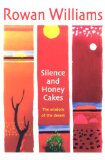

One of the great joys of holidays is of course reading. Yesterday afternoon I lay on the lounger in the little sun trap courtyard at the back of our holiday let and read Rowan Williams Silence and Honey Cakes.
Reading about the asceticism and deep wisdom of the desert faithers and mothers while I'm on a sybarritic holiday in the vineyards of the south was a bit of a contrast.
Rowan Williams writes beautifully and very challengingly. The chapters were originally lectures, the content is easy to read. But the gospel call from the desert mystics is raw and clear. Lying on my sybarritic holiday lounger the wisdom, the humour, the spiritual truth, the demands of true prayer and the call to examine my own life honestly and thoroughly brought tears to my eyes many times. Doubtless I am at the moment too easily moved to weeping for many reasons but reading the book and re-reading parts of it today challenges me very clearly once more to know that spirituality is not about "well-being". I don't try to practise some vague discipline of prayer in order to feel better but to discover more of God. Discovering God is not "nice", it isn't a warm fuzzy ... it may end up questioning everything.
Perhaps I just have to accept that I am one on William James' sick souls
Anyway here is an extraordinary passage on language from Silence and Honey Cakes, from the chapter on "fleeing":
"One implication of this is a possible new definition of at least part of what's involved in being a person of faith today (or in any age, really): being a believer is manifest in how we talk, in what we think of language. What is we could recognize people of faith by how they spoke? By an absence of cliché, or of dehamanizing mockery or glib consolations? And what if conversion meant not just taking on a new vocabulary and new ideas but a new style of talking? The "world" is a place where it is barely possible to speak without making things more difficult and destructive, the commonwealth of God is a place where speech is retored, in praise, in patience, in attentive speaking (which is bound up with attentive listening). This is not about any kind of despairing silence, being silent because there is nothing to say or know or because you're always going to be misunderstood. It is more of an expectant quiet, the quiet before the dawn, when we don't want to say anything too quickly for fear of spoiling what's uncovered for us as the light comes."

Thursday, 26 August 2010
Someone's crying Lord, Kumbaya ...
This week in chapel we have been singing "kumbaya" as a response during prayers of intercession. Dr Manoj Kurian put together a liturgy reflecting on the heaviness or lightness of the yoke we carry ...
He wrote these prayers ...
Song: Someone’s crying Lord Kumbaya
Someone’s crying Lord!
Crying, in Pakistan and China
Crying, hungry, homeless and dispossessed
Crying, oppressed and exploited
Crying of shame and exclusion
Crying in the streets, homes, fields and factories
Crying, abused and violated
Hear their cries Lord
Help us to hear their cries too and share the pain
Help us to respond and accompany our sisters and brothers
Someone’s crying Lord, Kumbaya!
Song: Someone’s dying Lord, Kumbaya
Someone’s dying Lord!
Dying because of neglect and callousness
Dying because of greed and selfishness
Dying because girls and women are taken for granted
Dying of preventable diseases
Dying of unhealthy lifestyles
Dying as lives are cut short by natural and man made disasters
Lord, save humanity from untimely death
Lord, help us to save lives
Someone’s dying Lord, Kumbaya!
Song: Someone’s walking Lord, Kumbaya
Someone’s walking Lord!
Walking the talk of justice and equity
Walking to uphold dignity and respect
Walking the path your Son chose
Walking with and living the joy of people
Walking with and sharing the burdens of communities
Walking the path to unity, in faith hope and love
Help us to walk this journey Lord!
Walk with us Lord!
Someone’s walking Lord, Kumbaya!
Song: Someone’s praying Lord, Kumbaya
Someone's praying Lord!
Praying in tears and anger
Praying in frustration and weakness
Praying for strength and endurance
Praying for wisdom and discernment
Praying for good health and peace of mind
Praying for churches and the people of Latvia, Lithuania and Estonia
Praying to heal the divisions among people and to ease the burden of history
Praying for the recovery of livelihoods, resurgence of hope and peace in communities
Lord we pray , guide each step we take today
Someone’s praying Lord, Kumbaya! Manoj Kurian
Tuesday, 17 August 2010
Florence Nightingale as theologian and Liverpool's lady chapel exhibition
 The Lady Chapel at Liverpool's Anglican Cathedral is currently housing an exhibiton by Alice Lenkiewicz on "noble women" - noble women is the theme of the women celebrated in the Lady Chapel's windows. I'm reading about them thanks to this great little book. One of the few working class women celebrated in the windows is Kitty Wilkinson who promoted practical hygiene and education in a selfless way. A statue of her is due to be erected. Kitty's story is less well-known than the story of Grace Darling pictured here or than Florence Nightingale whose legacy is better known and is also being highlighted this year as the 100th anniversary of her death is marked.
Nightingale was particularly remembered at the service in the Cathedral we attended - 13 August is the day she is remembered in the Anglican calendar. There is an excellent article by Rachael Kohn on Nightingale 's theology on the ABC religion and ethics site here.
Because my own view of Nightingale is so influenced by childhood tales of her heroic hospital reform in Scutari, I remained fairly ignorant about her theological writing. Judging by Kohn's piece it sounds as if I would have had much in common with her thinking - a deep spiritual longing combined with a broad church approach to understanding God.
"You say that mystical or spiritual religion is not enough for most people without outward form ... For myself, the mystical or spiritual religion as laid down by John's Gospel, however imperfectly I have lived up to it, was and is enough."Kohn's piece is based on Val Webb's book Florence Nightingale: the making of a Radical Theologian (Chalice Press, 2002).
Perhaps one day hundreds of years into the future there will be other windows in other cathedrals depicting wonderful women - be they noble or not. Most of the "nobility" celebrated in the Liverpool windows was not so well behaved. Most of the women had to transgress to get anywhere ... this makes them a hard act to follow.
Thursday, 29 July 2010
Dreaming dreams ...
This morning walking to the bus and then sitting in the chapel I had, not exactly an epiphany, but in quiet and from pain I arrived at a moment of perception and groped towards wordless understanding of what my rational mind says is intractable.
Then of course the day took over, but even now at the end of the day I still remember the physical feeling of what that groping glimpse of perception gave me.
Others would call it just a day dream.
Saturday, 17 July 2010
Nothing can separate us from the love of God - solidarity in depression
A good friend phoned me on my mobile, she's never phoned me before, I didn't recognise the number but as soon as I heard her voice I knew she was getting in touch to offer consolation. I have been crying in recent days, feeling sad and as if the future has drifted out of my grasp. I'm normally rather noisy and upbeat, I suppose people get worried when this British woman can't control her tears.
My friend is a wiser woman than I am, she listened to my as usual incoherent pain and then warned me she was going to be unfair, "this is mean what I'm going to say you know, but really Jane, nobody has died and you know even if they had we believe that death will not conquer or have the last word."
My friend did not offer this tritely, I know her story and the death and loss she continues to bear. But she offered it out of deep compassion, her way of calling me back to life. It reminded me of the words I have read next to countless graves:
For I am convinced that neither death nor life, neither angels nor demons, neither the present nor the future, nor any powers, neither height nor depth, nor anything else in all creation, will be able to separate us from the love of God that is in Christ Jesus our Lord.
Romans 8:37-38
Meanwhile as I return to blogging and reading I also came across this prayer on Steve Taylor's blog and found it quietly inspiring and reassuring.
Father God,
it is hard to hope each morning,
to look forward to new treasures and mercies,
discovered when we are alive to your presence in all that we encounter.
Open our minds to the endless possibilities of life and power and thought.
Help us to meet you in our everyday life, in our anxieties and difficulties,
for you are there with us in our pain and sorrow.
Lift us from despair to new hope. Restore and renew us each returning day,
so that we may find joy in our journey with you.
Amen
A prayer from the Mozarabic Sacramentary (10th century) (Hat tip)
Tuesday, 8 June 2010
Prophets of a future not our own - a quote from Oscar Romero
“We cannot do everything and there is a sense of liberation in realizing that. This enables us to do something, and to do it very well. It may be incomplete, but it is a beginning, a step along the way, an opportunity for God’s grace to enter and do the rest.”
Oscar Romero, Prophets of a Future Not Our Own
Circulated at work by a very hard working colleague on her retirement
Saturday, 24 April 2010
Angels against my inner demons
 Another picture of one of the icons from the exhibition in the chapel: the angel of prayers.
Throughout this week I have been wrestling with some inner demons: the usual stuff of feelings of lack of self worth, rage against my uselessness and an inability to even glimpse the future (or so it seemed). Loving other people is one thing, learning to love myself is another.
And then there came the angels. I should perhaps explain, I am Reformed, I'm not really into angels particularly ones that look like this beautiful one painted by Didi Marmoud. And yet ... I do occassionally buy strange guardian angel knick-knacks to give to friends and have rather wacky magnetic guardian angel on the oven door.
In human form angels have helped me this week with the inner wrestling and wreckage. It won't have been easy for them, I'm not always open to help even when I know I need it. The angels have come in various forms: wearing suits and ties, lipstick and jackets, jeans and dreadlocks, designer clothes. Some listened, some talked, some brought me gifts, some walked with me, some gave me encouragement, some hugged me, some gave me advice, some watched me weep. Angels are messengers and this week I have been blessed by the silence, the words and the gentleness of my angelic visitors. Like the artist Tirabosco last week when he was decorating the water carafe I would put a halo over each of them, each is blessed and they have blessed me by opening up more than glimpses of the future again. Ah yes, and the angel bearing Italian earings inside a late Easter egg was particularly appreciated - I'm just a material girl really and one day I really should do a blogpost about my earring fetish!
Miroslav Volf on justification by grace
On Thursday morning I read this extract from Miroslav Volf's Against the Tide at chapel. This is from a wonderful essay called "Shopkeepers Gold".
Could the hope for the inner cities lie in part in the retrieval of the doctrine of justification by grace? How could dead streets receive life from a dead doctrine? Imagine that you have no job, no money, you live cut off from the rest of society in a world ruled by poverty and violence, your skin is the "wrong" color - and you have no hope that any of this will change.
Around you is a society governed by the iron law of achievement. Its gilded goods are flaunted before your eyes on TV screens, and in a thousand ways society tells you every day that you are worthless because you have no achievements. You are a failure, and you you know that you will continue to be a failure because there is no way for you to achieve tomorrow what you have not managed to achieve today. Your dignitiy is shattered and your soul is enveloped in the darkness of depair.
But the gospel tells you that you are not defined by outside forces. It tells you that you count - even more, that you are loved unconditionally and infinitely, irrespective of anything you have achieved or failed to achieve, even that you are loved a tad bit more than those whose efforts have been crowned with success.
Imagine now this gospel not simply proclaimed but embodied in a community that has emerged not as a "result of works" (Eph. 2.10). Justified by sheer grace, it seeks to "justify" by grace those whoa re made "unjust" by society's implacable law of achievement. Imagine furhtermore this community determined to infuse the wider culture, along with its political and economic institutions, with the message that it seeks to embody and proclaim. This is justification by grace, proclaimed and pacticed. A dead doctrine? Hardly.
As I was reflecting on the social significance of justication by grace, I remembered a passage from Nietzsche's Thus spoke Zarathustra ... "O my brothers, I direct and consecrate you to a new nobility: you shall become begetters and cultivators and sowers of the future - truly, not a nobility that you could buy like shopkeepers with shopkeepers gold: for all that has a price is of little value."
Justification by grace, I thought, musing on Nietzsche's profound observation, is so deeply at odds with our "shopkeeper's culture". It takes the price tags off human beings not so as to devalue them but so as to give them but so as to give them their proper dignity, a dignity not based on what they have achieved but rooted in the sheer fact that they are loved unconditionally by God. Divine love is that indispensable nourishment for the human soul of which the prophet speaks when he calls, "Ho, everyone who thirsts, come to the waters: and you that have no money come buy and eat! Come, buy wine and milk without money and without price." (Isa. 55:1)
I shall now try to stop quoting large chunks of Volf but really recommend the book, deeply satisfying. Go out and buy a copy! I feel profoundly challenged to think about how to "love in a time of petty dreams and persisting enmities". I often feel caught in petty dreams and persisting enmities, reading Volf's has helped me once again to see my faith as the key way through that. I like the way he speaks about faith rather than spirituality too.
The book is a real reminder of why societies need intellectuals and why Christianity needs thinkers.
Tuesday, 12 January 2010
The bread and fish of civilisation and chaos
I have had a brilliant, difficult, distressing and fabulous day. A day when two good people drew hearts on post it notes and left them on my computer screen. A day also when I have cried - I don't do that often. There has been comfort from a good and wise friend and I have learnt some very powerful things about myself - from my own words. Sometimes you have to get sad and upset, feel as if you're at the end in order to begin to formulate your inner turmoil and find a way out.
My wise friend is also learnèd and told me about how in the apocryphal gospels the image of the heavenly banquet is of bread and fish - the fish representing chaos and the bread, civilisation. This was quite a revelation to me - and of course the fried fish breakfast Jesus eats post resurrection with his disciples takes place on that most liminal of places, the beach. I had never before thought about fish as symbols of the fruit of the terrifying chaotic waters, nor really about bread as the fruit of civilisation, symbolising the static not quite so terrifying city.
Anyone who has visited my office knows that I can live with chaos - or that I have a high tolerance for disorder (though some this week have been shocked at the apparent order that is briefly reigning there for a few days this week, rumours that this is because I'm worried about receiving the award for the most untidy office are not entirely unfounded), but I try not to descend completely into it. I'm not happy all the time with the ordered existence of the city - my ideal city would definitely be inspired by Hundertwasser very organic and colourful - so my natural dwelling is the shore, the beach. It's the place of liturgy, the place of living with contradictions, the place for great breakfast parties, for holding together the ambiguities of chaos and order; it's also the place for tears.
I understood much more about myself and about others as a result of the conversation with my wise and vulnerable friend. I understood my own distress a bit more and I groped towards understanding the strange spirituality of resistance I have been involved in over recent months.
Tonight as I reflect on this and much, much more, I realise what I learned from Jürgen Ebach 20 years ago holds true for me today also. Actually I am only just crossing the red sea into the desert and leaving Egypt behind, the land of promise is part of my faith-filled vision but there's quite a way to go camping in the desert first.
The desert like the beach is often a sandy, stony place; a liminal, dangerous, ambiguous place. But it is also a place to be close to that which is essential - tears, joy, hope.
Friday, 18 December 2009
Resistance

This year year Leeds postcards turned 30. Their fun designs and feminist cards were part of my radical youthful past. This one is qutie tame compared with much of what. I'm going to have go scrabbling through my papers and files to find my favourite one.
Sunday, 13 December 2009
Rowan Williams - poetry, icons; pacifism and resistance
 As daylight fades to the darkest day of the year I've been turning to my poetry shelves and in recent days reading in the poems of Rowan Williams. Inspiring and enriching. I started at the back of the book with some of the poetry he has translated. I particularly like those from the Welsh poet and pacifist Waldo Williams.
Rowan Williams quoted the Welsh poet in a sermon he preached on "What is life" saying that Waldo was as close as any to a definition in his poem Pa Beth Yw Dyn (What Is Man), when he wrote ‘Cael neuadd fawr/Rhwng cyfyng furiau’ “Inhabiting a great hall/between narrow walls".
Unfortunately an English version of that poem is not in this 2002 collection. Let's hope that the Archbishop will have time soon to translate some more. In the meantime,
I was particularly moved by one titled Die Bibelforscher (for the Protestant martyrs of the Third Reich). Here's an extract:
Earth is a hard text to read; but the king
has put his message in our hands, for us to carry
sweating, whether the trumpets of his court
sound near or far. So for these men:
they were the bearers of the royal writ,
clinging to it through spite and hurts and wounding.
However I've turned again and again this week to Williams poem meditating on Rublev's icon, pictured here, the first line just hooks me in time and again. Not sure I can say much more than it speaks to me and moves me. That's poetry.
Rublev
One day, God walked in, pale from the grey steppe,
slit-eyed against the wind, and stopped,
said, Colour me, breathe your blood into my mouth.
I said Here is the blood of all our people,
these are their bruises, blue and purple,
gold, brown, and pale green wash of death.
These (god) are chromatic pains of flesh.
I said, I trust I make you blush,
O I shall stain you with the scars of birth
For ever. I shall root you in the wood,
under the sun shall bake you bread
of beechmast, never let you forth
to the white desert, to the starving sand.
But we shall sit and speak around
one table, share one food, one earth.
copyright (c) Rowan Williams
Wednesday, 9 December 2009
Luke 21 and the theme of resistance
Tonight we sang Holden Evening Prayer for the last time before Christmas. Quite apart from the wonderful music and times of silence and breathing that this simple order of evening prayer offers, the thing that strikes me time and again is how powerfully the Bible texts speak when they are not going to be commented on but simply meditated in silence.
This evening we heard from Isaiah 25.1-5 and then a long reading from Luke 21 beginning with the widow's mite and ending "You will be hated by all because of my name. But not a hair of your head will perish."
Listening to this text this evening - wonderfully and powerfully read by my colleague Theodore Gill - I was struck once more by how enriching it is to listen to longer passages from the gospels than are often read at public worship. I was also thinking about difficult issues in my own life, broken relationships, things that have gone wrong, times when I have felt if not persecuted then certainly harrassed ... this passage gave me great succour thinking about all of that. I realised too that any who in turn felt harrassed by me would also gain succour from this text.
So in the silence while feeling upheld by God I also felt deeply challenged by the text. All of us can be victims - life is like that. Victims of illness, of accidents, of war, of ideological conflict, of depression, of doubt, of violence. With the Advent candles glowing and prayers still waiting to be sung I pondered the ambiguity of life, my own potential to be an oppressor as well as a resister. Sometimes it's too easy to think of oneself as a victim. This evening listening to the the very strong words towards the end of the passage I thought about how much we all so want to believe that God is on our side, that we are right. Stig Dagerman would say that our need for consolation is insatiable, yet the image of God that comes across is that in both extreme and more minor suffering we will be endlessly and continually upheld. A God who believes in resistance and knows all about endurance. In the silence I found this not only consoling but comforting and reassuring.
I gave thanks also for a beautiful and reassuring day.
Here's the text that led to these rambling candlelit thoughts:
He looked up and saw rich people putting their gifts into the treasury; 2he also saw a poor widow put in two small copper coins. 3He said, ‘Truly I tell you, this poor widow has put in more than all of them; 4for all of them have contributed out of their abundance, but she out of her poverty has put in all she had to live on.'
The Destruction of the Temple Foretold
Signs and Persecutions
5 When some were speaking about the temple, how it was adorned with beautiful stones and gifts dedicated to God, he said, 6‘As for these things that you see, the days will come when not one stone will be left upon another; all will be thrown down.’
7 They asked him, ‘Teacher, when will this be, and what will be the sign that this is about to take place?’ 8And he said, ‘Beware that you are not led astray; for many will come in my name and say, “I am he!” and, “The time is near!” Do not go after them.
9 ‘When you hear of wars and insurrections, do not be terrified; for these things must take place first, but the end will not follow immediately.’ 10Then he said to them, ‘Nation will rise against nation, and kingdom against kingdom; 11there will be great earthquakes, and in various places famines and plagues; and there will be dreadful portents and great signs from heaven.
‘But before all this occurs, they will arrest you and persecute you; they will hand you over to synagogues and prisons, and you will be brought before kings and governors because of my name. 13This will give you an opportunity to testify. 14So make up your minds not to prepare your defence in advance; 15for I will give you words and a wisdom that none of your opponents will be able to withstand or contradict. 16You will be betrayed even by parents and brothers, by relatives and friends; and they will put some of you to death. 17You will be hated by all because of my name. 18But not a hair of your head will perish. 19By your endurance you will gain your souls.
Sunday, 29 November 2009
Resistance - the price of saying no and the springboard of virtue
 On this Advent Sunday I have been reading more about resistance as I wait for the coming of God's republic of justice and joy.
Jacques Tarnero in the final essay in the book pictured here recalls Marc Bloch citing how Hitler in Rauschning said "We are right to speculate on human vice rather than human virtue. The French revolution appealed to virtue. We should rather do the opposite..."
Bloch comment on this is "That a French person is to be forgiven for preferring the teaching of Montesquieu's revolution to this message: the popular State needs the springboard of virtue".
Tarnero points out that of course many have also been
killed in the name of virtue. Nevertheless, and despite virtue seemingly being an unfashionable term, he claims that it is the (pre)condition for the very idea of resistance. Without the demands of virtue what would the limits be between what is acceptable and what is intolerable.
He ends his essay with this quote from Adam Michnik written from prison in Poland in 1984:
"Dans la vie de chaque homme vient un moment où pour dire simplement: ceci est noir et ceci est blanc, il faut payer très cher. Ce peut être le prix de la vie. À ce moment le problème principal n'est pas de connaître le prix à payer, mais de savoir si le blanc est blan et le noir noir. Pour cela il faut garder une conscience."
Les éditions autrement have brought out a series called "our values" - there are various titles on justice, friendship, citizenship and the one pictured here on resistance.
The series received support from the French mutual insurance company Macif's cultural foundation.
Saturday, 28 November 2009
Is our need for consolation insatiable?
 I had a gift token for my local bookshop and my eye was caught this morning by a tiny ACTES SUD publication of a short essay translated into French by the Swedish author Stig Dagerman Notre besoin de consolation est impossible à rassasier - our need for consolation is insatiable.
It's a powerful essay on suicide and the absurdity of life, perhaps not the best thing to read at a time of depression.
Interesting that the English translation of the essay will only be published later this year - the French translation has been around since 1981.
Towards the end of the essay Dagerman reflects that the consolation offered by contemplation of the freedom of the sea is interupted by the reality of having "to turn back to the land and face the organisers of the oppression of which I am victim. And will be forced to recognize that human beings give life forms which, in appearance at least, seem to be stronger than the individual."
He ends by saying that his only consolation is "the memory of liberation which bears me up as on a wing towards a goal which gives me vertigo". (As these are fragmentary translations of a translation do try to quote the official English translation which should be out soon - see below.)
Is our need for consolation insatiable? Probably. Just like our need to be listened to, to be heard, to be respected, to be loved. We too turn back to the land and try to face the demands of life and differentiate between those which are absurd and those which are unavoidable! There is dark humour in Dagerman's essay, in the end neither humour nor the desire for freedom could hold him. He took his own life in 1954, the need for consolation overcame him.
Our Need for Consolation Is Insatiable / Vårt behov av tröst är omättligt … (1952). Translation by Steven Hartman, 2009.


 Posts
Posts