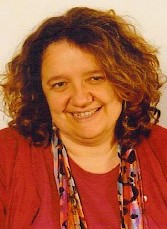
Some people are friends on facebook, some folk read my blog, others follow on twitter, some folk are well, just friends.
Anyway, incase you didn't already know, here is the news. Later this year the stranzblog will be moving to Paris. Not until October and it looks as if there will be quite a lot of traffic between Ferney Voltaire and a northern Paris suburb in the first instance.
I have been appointed the ecumenical officer of the French Protestant Federation, in the first instance for 2 years as I work on projects around inter-religious dialogue and intercultural ministry with the 20 plus member churches who are part of the Federation. I am both very happy and quite terrified but as you can imagine I have lots of crazy ideas about how to go about the job as well.
In the meantime however I am looking forward to the next six months before leaving Geneva. To the Peace Convocation in Jamaica, the Kirchentag in Dresden and much else besides. Lots to do and then at some point I suppose there will be quite a bit of packing, though there again perhaps not so much ... Dr B also has a new job ... in Geneva. People smile when I tell them this and say "Oh that's very modern to do marriage that commuting way these days". As we head towards our 20th anniversary I realise that commuting was where we started out, between London, Brussels, Strasbourg and Dunkerque. Things do come full circle.
Monday, 14 March 2011
Some news of later this year ...
Thursday, 28 October 2010
Beautiful sunny autumn days

As I walk across the garden to my office in the Ecumenical Centre Philip Potter Library, I walk past two beautiful Japanese Acers. They have been giving me enormous pleasure on a daily basis for many, many years. On the day this was take the "bise" was blowing strongly yet the leaves persist for a few more days their extraordinary changing colour heartening in the freezing of the encroaching dark of the autumn days. Bright sunshine and autumn colours are really part of the joy of recent days, alongside stunning sunrises and sunsets.
Every year another branch of these small but quite old trees dies back, as I wonder and rejoice at the colours I also worry that perhaps next year I will no longer be able to admire their wonderful leaves.

Sunday, 28 March 2010
Forgiveness in systems
Recently I found myself talking about how for trust to be developed people need to face up to what has happened in the past, learn to say sorry and also try to explain. I thought about this again as I watched a programme about Desmond Tutu on truth and reconciliation. So I eneded up looking at things that have been written on forgiveness in systems. I was fascinated to discover that forgiveness in systems is a concept in social system design and computing. I think I rather like the idea of a forgiving computer system!
Without forgiveness it is hard for individuals groups or systems to more forwards, hard to work for the future without being disproportionately weighed down by the past. I've seen this at work in local churches, families, workplaces and communities. It is never easy to say sorry, yet without it things get stuck and forgiveness cannot even begin. It is long term hard work, yet without it community cannot be built on decent foundations.
Anyway below are some quotes I found helpful and thought-provoking from one of the other things I came across in my internet browsing on forgiveness in systems from "On the Systems Intelligence of Forgiveness" by Laila Seppä. The article particularly uses the South African truth and reconciliation commission as an example but also looks at individuals like Corrie ten Boom and Coretta Scott King who have come to and then worked at deep understanding of forgiveness. A reminder that for systems to change and become more just it is important for individuals to find prophetic voice.
Miraculously, even when confronted with extreme oppression, there are those very special
individuals who do not submit to it. They have the vision of something better and the willpower to go against the current, which often demands courage. Usually they have to work inside the system, but fortunately they are strong enough to resist.
Systems intelligence is based on a principle of humbleness and optimism for change, which
acknowledges that one’s perspective of others might be drastically mistaken (Hämäläinen and
Saarinen 2006). Beliefs regarding structures produce behaviour and people’s behaviour often
reflects their best guesses of rational behaviour. They can get caught in systems that serve
nobody’s interest and feel helpless regarding their possibilities of changing the system, in this
case apartheid (Saarinen and Hämäläinen 2004). They can even conceal their real thoughts
because they are part of the system of holding back, which means that many of the core beliefs of people do not show up in their action (Hämäläinen and Saarinen
2006). People can feel insecure and as heretics and dissidents are despised by the system they are too frightened to speak up (Tutu 1999, Nouwen 2005, Varto 2005)
To forgive does not mean that you have to forget. It is not hypocrisy and turning your blind eye to the wrong. True reconciliation exposes the awfulness, the abuse, the pain, the truth (Tutu 1999). It means telling what happened, talking about it. Trying to forget by sweeping the past under the carpet means you get trapped with your past. A much better way is to express your hurt: “I will carry the memory of what you have done with me. I will not forget but I refuse to let what you have done stand between us. I refuse to allow it to create a permanent barrier between us. I still want you in my life.” (Carpenter 1998).
Friday, 19 March 2010
Women's lunch and the women's Haggadah
 I squeezed my timetable today to go to a women's lunch that my fabulous colleagues from the womens desks of the LWF and WCC had organised for women from all of the organisations working in the Ecumenical Centre. We were fortunate to have quite alot of the women from the World YWCA with us. It was fun, it was good, it was uplifting and we have projects to make our voices heard within our churches and organisations. Though as I said at the end it is not only about voice it is also about power!
It was a good, creative and straightforward time and reminded me what a special and brilliant place I work in. It's a privilege even if it doesn't always feel like that every moment of every day!
Elaine Neuenfeldt began our meeting by reading this"Song of Questions" from A Women's Haggadah by E. M. Broner and Naomi Nimrod. Looks like I may have to buy this sometime too ... am I the clever, wicked or simple daughter - or a bit of all three?
The Song of Questions
Mother, asks the clever daughter,
Who are our mothers?
Who are our ancenstors?
What is our history?
Give us our name. Name our genealogy.
Mother, asks the wicked daughter,
If I learn my history
will I not be angry?
Will I not be bitter as Miriam
who was deprived of her prophecy?
Mother asks the simple daughter,
If Miriam lies buried in sand,
Why must we remove her from sun and stone?
Where she belongs?
The one who knows not how to question
she has no past,
she can have no future
without knowing her mother,
without knowing her angers
without knowing her questions.
Wednesday, 17 February 2010
Walter Brueggemann's marked by ashes
Marked by Ashes
Ruler of the Night, Guarantor of the day . . .
This day — a gift from you.
This day — like none other you have ever given, or we have ever received.
This Wednesday dazzles us with gift and newness and possibility.
This Wednesday burdens us with the tasks of the day, for we are already halfway home
halfway back to committees and memos,
halfway back to calls and appointments,
halfway on to next Sunday,
halfway back, half frazzled, half expectant,
half turned toward you, half rather not.
All our Wednesdays are marked by ashes —
we begin this day with that taste of ash in our mouth:
of failed hope and broken promises,
of forgotten children and frightened women,
we ourselves are ashes to ashes, dust to dust;
we can taste our mortality as we roll the ash around on our tongues.
We are able to ponder our ashness with
some confidence, only because our every Wednesday of ashes
anticipates your Easter victory over that dry, flaky taste of death.
On this Wednesday, we submit our ashen way to you —
your Easter parade of newness.
Before the sun sets, take our Wednesday and Easter us,
Easter us to joy and energy and courage and freedom;
Easter us that we may be fearless for your truth.
Come here and Easter our Wednesday with
mercy and justice and peace and generosity.
Copyright (c) Walter Brueggemann (b. 1933)
Tuesday, 27 October 2009
Jonah and going overboard
There are days when I come home and think that I am extraordianrily privileged to have the job I do - even if it is tiring, demanding and even draining on occasions.
After morning prayers today members of staff joined in Bible study and Fulata Mbano Moyo led us in reading the first chapter of the book of Jonah. The focus of part of our staff meetings today was on consensus decision-making and Fulata chose the Jonah text to get us thinking about decision-making. Do we do make decisions like Jonah did by running away from the call of God? Do we draw lots like the sailors on Jonah's boat to try to divine what is going on in our lives? When we think we have discerned what is going on do we try to row against the storm or do we throw the supposed scapegoat to the stormy waves hoping to placate an angry God? Did the sailors on baord the boat reach the right consensus?
We had a fascinating discussion at the table I was at and then just before time was called our general secretary elect said "isn't this text about people taking the worng decisions? Jonah not listening to God's call, the sailors choosing human sacrifice to calm the waves?"
In the end our small group came to the consensus that even in the midst of the chaos of dreadful human crisis decision-making and scape-goating God still tries to intervene sending along saving fish, offering grace and resurrection.
Enlivening Bible study like this is a great way to start the day.
Wednesday, 26 August 2009
Beauty and gentleness on a full and busy day
Geneva has been thundery these past two night but this morning was fresh and pleasant, though it soon got very warm. I got to work early to prepare the new booths for the interpreters - really I must take a photo of how fabulous it all looks - especially the brilliant new staircase. I should explain that prior to this the interpretation booths for our main meeting room could only be reached by taking a two minute walk up and down staircases quite a long way away. It was the opposite of convenient. Now that's all changed and it's amazing what a difference it makes to the way that we work as a team between documentation and interpretation.
WCC central committee began with prayers this morning and then a moving moment as members gathered in front of the doors of the newly renovated hall for a time of prayer before the plaque naming the hall after the WCC's first general secretary was unveiled - Visser 't Hooft.
Later in the day as I was walking through the garden back to my office several of the stewards were already at work beginning to mark out a large labyrinth in the grass - they are using stones and a simple piece of string - tomorrow photos of that definitely as it progresses. I'm really looking forwards to using it.
As I was leaving my office towards the end of the afternoon one of my colleagues said something very lovely to me - it's easy for me to forget the good and beautiful things people do and say to me. So it's good to blog and remember gentle goodness at the end of a tiring and busy day.
Monday, 13 July 2009
Morning and evening, evening and morning another day at another internatiional church meeting
Staff began our meeting today by listening to Psalm 103 read by Colin Williams, the CEC general secretary. I found it both moving and uplifting to pray with 50 or so colleagues as we began 10 days of quite intensive and stressful work together. From Brussels, Strasburg and Geneva we gathered and by the end of today we have managed to achieve an enormous amount even if there have been a few frustrations on the way too! ;-)
Catherine, Laurent and Damian of our IT team have worked brilliantly and all the computers are unpacked, in place and plugged in. No one has been counting how many boxes we've moved up, down and around - just as well. And formatting of documents, trouble shooting, tweaking the website, preparing the hearings, sorting out interpretation, business plenaries and filling the bags for all the participants at the assembly ... et encore!
At the end of the day we are tired, but we know one another a bit better and we can see that our work is having some impact.
Towards the end of our meal this evening a choir of young people from Denmark sang beautifully for us. A moment of pure pleasure and grace at the end of a long day helping me to remember the morning's Psalm ...
Bless the Lord, O my soul,
and do not forget all his benefits ...
who redeems your life from the Pit,
who crowns you with steadfast love and mercy,
who satisfies you with good as long as you live
so that your youth is renewed like the eagle’s.
Monday, 22 June 2009
Called to one hope ...
Three weeks today I shall be in Lyon attending the Conference of European Churches 13th Assembly. The theme of the assembly is hope and a good deal of ground work has gone in to trying to prepare this assembly in a more interactive way with CEC's member churches.
Thoughts and expressions of hope, either in written or picture form have been gathered. You can also download a film with study resources called "Hope - European voices crossing borders":
The film has four sequences:
- A brief introduction (4:50 min).
- Hope for Humanity (11:30 min).
- Hope for Europe and the World (16:40 min).
- Hope for the Churches (17:00 min).The four sequences in the film aim to set up a dialogue and debate around the theme of hope. They are therefore best viewed in groups to share thoughts and discussions after each sequence.
Thursday, 29 January 2009
New blogs on the block
My colleague Hans Uli Gerber has started a new blog which made me smile with pleasure when I first saw it today. It's called upside down heaven and says:
This is about the beauty of messiness, the joy of complications, and the peace of non-conclusiveness. When things are upside-down there is hope for them to get better. This is also about how heaven and life are part of each other and about how heaven is so close, yet can't be possessed.
Those who know me know that I am a messy person so I like the idea of the beauty of messiness. I also wonder whether maybe the beauty of messiness could be linked to "messy church" which is a movement promoting informal more messy forms of church.
Hans Uli coordinates the WCC's Decade to Overcome Violence and his first post on the new blog is all about growing up speaking German in a French speaking part of Switzerland, about language and identity.
There's a link from ideas of messiness to Sarah Hall's new blog "Pieced Together Praise" which she started after the women in ministries meeting in Windermere. Sarah also has a link to Switzerland where she studied theology for a while - despite being British she also speaks fluent German and French. It's because of Sarah's blog that I've discovered the word "craftivism" - although I realise that this has been my approach to ministry and life for quite a while. Anyway craftivism seems to link in to all sorts of wierd and wonderful wacky types out there - including groups of radical knitters. I think I'm going to enjoy learning more about this.
In her most recent post Sarah has written about Jean Parker's exhbition Good Grief which was on in Sheffield recently. That's art rather than messiness but if any emotion is messy then grief is.
Anyway I think it's time not just for messy church but for messy theology. Any takers?
Monday, 5 January 2009
Jazz, management and squelchers
As I've been thinking in idle moments about the dissertation I must write this year for my management diploma, I've been learning as usual from Radio 4 and although you can't download a podcast you can just still listen to the programme about Jazz and management here.
John Kao is one of the world's leading experts on corporate change. In a disarming programme recorded at his grand piano in San Francisco, "Mr Creativity" shows Peter Day how jazz improvisation can help companies learn how to innovate.
"There’s the kind of left brain issues of articulating the narrative, establishing the strategy, figuring out the action plan. Then there’s the right brain agenda : how does that society learn how to jam, to improvise in the right way by balancing several contradictory imperatives … to make the music sound good."
Then listening to this week's In Business I heard lots of things about how great cities are for innovative well managed organisations and heard the term "squelchers" for the first time. Those are the people who won't let positive change happen, who want to hold on to separate cafeterias for the upper management and their key to the executive toilet. Very intersting, also becuase it was also about how cities are beginning to win out over suburbia these days - a link between management and architecture.
Inspired by the wonderful writings on the vitality of the urban neighbourhood of his fellow American the late Jane Jacobs, Richard Florida has long been looking at cities through the eyes of what he calls the creative classes.
In particular he is fascinated by the way that edgy bohemian areas produce interesting urban developments : colonies of artists at the cutting edge of change.
This has widespread application to business activity.
Companies should learn from the cities they have fled from. As the chaos and complexity experts tell you, the most interesting things happen on the edge. That’s where the life is.
Much to ponder as I go back to work.
Tuesday, 26 February 2008
Sideswiped by a trick question
Some days I do guided tours of the ecumenical centre for groups of visitors - particularly if they are French or German speaking. It's fun and the building has fabulous and powerful stories to tell - a beautiful chapel, a large piece of the Berlin wall in the garden, an enormous wall tapestry from Aubusson and much much more. I love showing people around and answering questions.
Well I do normally.
Today I stood in for a colleague to talk more in depth about ecumenism with a group and suddenly found myself fielding a question in German that I was not at all prepared for. Predictably my brain turned to mush.
The question went something like this - "Could you try to tell us what it is you're trying to achieve with your career and work here."
In the end after trying for the jokey response "heaven of course" I'm actually rather pleased they made me think about this. I realised that I do believe in "Unity in Diversity" even if ecumenism is not flavour of the month at the moment. Unity in diversity is a sort of red thread which helps me make sense of life and the world (well a bit anyway). For me it's about a faith that is non-monolithic, continually prepared to learn from others and be humble enough to be challenged by and even integrate ideas and realities beyond itself. The world is not just the way I see it but the way others see it.
Somewhere along the line of my rather tortured response this afternoon I realised that unity in diversity helps me cope with and understand the complexities of life and the world.
Let's just say that while I was speaking I perceivied that it made sense to me somehow - that was probably the moment my brain turned from mush and started thinking in French while my lips still continued speaking German. A moment of pure incoherent coherence.
Monday, 18 February 2008
Blessing at the end of a hard day
 Things have not been easy at work today, painful even.
As the long working day drew to a close I remembered this blessing from the WCC Vancouver assembly worship book. I used it last week for the meditational space at my course in Rome and thought of it again today as I reflected on what motivates me in my job. It's something to do with the unity of all humanity despite everything...
Blessing
As the earth keeps turning, hurtling through space,
And night falls and day breaks from land to land,
Let us remember people - waking, sleeping, being born, and dying -
One world, one humanity.
Let us go from here in peace.
Amen.
Friday, 4 January 2008
Sustainable church?
I've been reflecting on what a sustainable way of running the church might be. Reading some of the clergy blogs about the exhaustion following presiding services for the feast of incarnation also gave me food for thought. The decline of many of the traditional churches in Western Europe means that many clergy perform something akin to palliative care for institutions that are radically changing or dying.
Returning to my former parish over recent months and on Christmas Day also made me re-examine whether my own way of ministering was at all sustainable. I think I was driven by guilt rather than by grace for much of the time. Part of me can see that halving the number of services the church has each month is more sustainable, but when you have done 7 years of two or three services a Sunday starting at 9.15, it's sometimes a little difficult to see that change come in and to see it work well!
Lots of what is written about sustainable church on the web seems to be about using fairly traded food and green energy like this church tries to and like the Christian ecology link encourage churches to. There isn't masses about working styles and sustainability. The church is essentially about working with people which always requires an enormous investment of time - and is also fabulous, fun and frustrating. Pastoral care is always a privilege but it's usually completely knackering too, but maybe that just says something about me.
Surfing on the web the Church Action on Poverty approach to sustainability seems interesting. It looks at the creation of sustainable jobs and working environments by evaluating the political and social context and structures. As I prepare to go to Rome again in a month for the second part of my course I think I need to challenge myself about management and sustainability. I suspect that means challenging myself about setting sustainable expections. Hmm...
Thursday, 6 September 2007
Press conferences ... it's all about profile
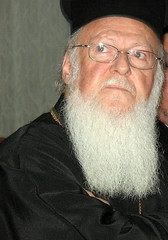
It really was a bit of a marathon - a double press conference starting with the Ecumenical Patriarch His All Holiness Bartholomeos I and then Bishop Wolfgang Huber, Cardinal Walter Kaspar and Metropolitian Kirill in the second. Metropolitan Kirill attacked modernity and stated that ecumenism as it is currently structured is in crisis.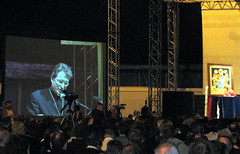
Thinking about it more theologically I realised that the two Reformed churches I come from have quite different takes on consensus or profile in terms of ecumenism. The United Reformed Church has written into its Basis of Union the idea almost that its own existence could give way to something else for the sake of wider church unity, more consensus, less profile. The Eglise Réformée de France, in some ways a much smaller church numerically than the URC, is much keener on providing specifically Protestant or Reformed perspectives on life. In a secularised context where the majority of Christians are Roman Catholic, having a distinctive Reformed profile and a commitment to being serious about faith, is one of the things that makes me proud of the ERF.
Anyway, enough theological musings for now. It is beer drinking time. I must throw the journalists out of the press room and let them and you know that tomorrow's press conference will be with His holiness Archbishop Anastasios of Albania, Bishop Margot Kässmann of Germany and two young people. More tomorrow on what their profile is.
A few technical problems
 As you can see we have a fabulous array of specially made pigeonholes for documentation in four and sometimes five languages. On Wednesday we got our first delivery of documents direct from the printers, which was great until we discovered that instead of 60 copies of documents in French Italian and German we had 480 of each but on the four different coloured papers - probably as a result of a problem in translation. For greetings on one page this is not too bad but before we discovered the pr
 oblem more than thirty documents had been printed – including some of 10 pages and more, so you can guess what the stewards have been doing all day – as well as everything else of course.
Tuesday, 4 September 2007
A great group of stewards
 One of the amazing privileges of attending assemblies like this is working with committed young people - I supose the older I get the more I realise what a privilege this is. We have a great group of 9 stewards working with us. Today they've been doing really essential work of carrying books and bags, welcoming and accrediting journalists, getting signage in the press room sorted out, buying water and chocolate for us all, helping the press liaison officers with identifying photos and posting them, helping journalists with finding their way around the Swiss keyboards and offering us IT support. to my shame I've still not learnt all their names but I will try to post some photos of them on the blog over the next few days.
They are also a linguistically very talented and diverse group and manage to communicate and get on wihtone another despite not haveing one common language - a true sign of the triumph of Pentecost over Babel!
The first press conference
This afternoon was the first press conference and it was like an object lesson in the fact that English does not (always) rule the world. Proof also that sometimes international meetings forget the hosts - today there was no Romanian interpreter, but tomorrow there will be. It also convinced me once more that language and communication issues very often need to need to go hand in hand.
Anyway, the interpreters did a great job in very difficult circumstances, even translating someone who asked a question in a language Luca described as Italañol!
Jean-Arnold de Clermont (speaking in French) said that it was his hope that the assembly would have something powerful to say about the scandalous way many migrants and migrant workers were treated across Europe.
Aldo Giordano said that people hadn't come to Sibiu to discuss the intricacies of Vatican documents but to experience and celebrate grassroots ecumenism which was much more important. This time Christians were able to share together was truly a time of grace.
Colin Williams said that he hoped that the assembly would help give Christians renewed confidence about their faith and and give a fresh impetus to ecumenism.
Monday, 3 September 2007
Notes from a philosophical press room?
Today was our set up day in the press room. Last night we were particularly impressed by the imposing bust of a scholarly gentleman whose wrtings are also displayed on the wall of our press centre. One of my colleagues described him as a writer and philosopher. His name is Nicholas Olahus and he certainly had a fascinating life, writing treatises in Dutch, spending time in the Netherlands prior to becoming an Archbishop. He also seems to have been a keen proponent of the Counter Reformation. Not sure that I shall find his white marble gaze quite so benevolent in the morning now I know that!
Life in the press room today has really been about trying to live in hope and pull a semblance of order from something that may seem like chaos, but which we know will in the end become an ecumenical assembly. One of the highpoints was the arrival of the pigeonholes - freshly made for our 300 journalists. Now I just hope we will have some papers to put into them! Our photocopier hasn't yet arrived. But it does look like we will have have badges tomorrow for all of the journalists who need to sort out their accreditation. Phew!
Late this afternoon our nine wonderful stewards arrived, many of them with very impressive spreads of languages, with them they brought copies of the assembly handbook hot off the presses. I think the best way to talk about this is to say that an assembly on split sites brings it's own challenges and advantages! We live in hope that it will not be pouring with rain just as we need to carry paper documents from the Faculty of Orthodox Theology to the press room.
And do visit the Sibiu stewards blog. None of these ecumenical and church gatherings could take place without the enthusiasm and sheer hard work of young volunteers like them.

 Posts
Posts