Tuesday, 29 March 2011

Water the source of life – and not of violence - reflection by Priscille Djomhoue

Women carrying water, Nile, Egypt. Photo: Walwyn/Flickr

Over on Seven Weeks for Water Professor Priscille Djomhoue reflects on the resonances between women's lives in the Bible and present day Africa. She also tells stories of women and girls suffering terrible violence and vulnerability because of lack of access to decent water and sanitation. Yet she asserts clearly "Water is the source of life, not of violence".

Here are two tasters from her meditation:

in many developing countries, not everyone has access to drinking water. In towns and in rural areas water is worth its weight in gold. People often have to travel long distances to find a supply of water in a river or a spring, and then carry it on their heads or their backs, exposing them to the risks of malformation of the spine or other back troubles. In many town areas, as is often the case in Cameroon, water has to be bought from a neighbour who has been able to have a well dug or who has mains water. That is not a new situation, since in the Bible, water was often such a scarce commodity that mention is made of people paying for it (Num. 20:17-19; Lam. 5:4).

In Africa, many women are denied their rights and do not have the money to buy water from their neighbours. This situation makes them vulnerable when an urgent need for water arises. In September 2009 in Yaoundé, in an area called Mendong, two young girls under the age of 12 were regularly sexually abused by the man in charge of the well where they often had to go to fetch water for their mothers. The police took up the matter, but it was too late. The physical and psychological damage done to them was immense.


Monday, 21 March 2011

The story of water deprivation is linked to so many other oppressions

At worship this morning Maike Gorsboth and Christine Housel preached a powerful and moving dialogue sermon, as we marked the international day for the elimination of racial discrimination and world water day.

As we ponder the present day and biblical stories, we cry out with the prophets for justice, and for mercy. The earth and the people are violated. Communities and nations are in conflict. Commerce and power dominate. We seek repentance. We honour the prophets among us. We seek to be and are a part of the solution. We open ourselves to the ways of peace, and we ask God to lead us to become ever-better peacemakers and prophets.
The liturgy also had both poignant and moving moments. Before the prayer of confession a series of people stood up from their places and said phrases like these:

In the country with the world's highest incidence of rape, statistics indicate that a girl born today has only a one in three chance of finishing school, and a one in two chance of being raped.

Those defending justice and human rights often become victims of death threats, assaults, criminalization and murder.

Every year, millions die from poverty – from malnutrition, from the lack of safe water and sanitation, from the lack of medical treatment and health care.
We also fed our prayers on cards in different languages on blue coloured cards through the congregation like a bucket chain to the reader at the front. This way of praying was inspired by one of the arpilleras in our stitching peace exhibition showing a bucket chain. At the end of the service we shared the peace and in the lobby afterwards all shared a drink of water rather than the more traditional post service coffee.

An excellent start to the week.

You can read more about the Ecumenical Water Network's Seven Weeks for Water here. And abotu the World Student Christian Federation's Water Justice campaign here.

And don't forget to read the sermon and the liturgy - where you can also see a picutre of the arpillera.

Monday, 14 March 2011

Bitter sweet with Seven Weeks for Water

This week's Seven Weeks for Water has just been posted and includes a trailer from the documentary film "Sweet Crude" by Sandy Cioffi. The focus is water and oil, specifically in relation to the Niger Delta.

Rev. Canon Dr. Ezekiel Olusegun Babatunde, from Immanuel College of Theology and director of the Institute of Church and Society of the Christian Council of Nigeria, has written this week's biblical reflection on Transforming the bitter water waters of Marah. Remembering the Exodus story of Moses making the bitter water sweet, Babatunde looks at the desperate need for transformation in the Niger Delta where oil spills are common place and water is turned bitter with pollution. Here's a taster:
Today, in the Niger Delta area people are also thirsty, searching for clean water in order to survive, similar to the Israelites in Exodus. Their situation is “bitter” – despite an abundance of water around them, they have no water to drink. Searching for clean and drinkable water is a herculean task particularly for women and children who often walk more than three kilometers to get water for their families. Like many other blessed nations situated in sub-Saharan Africa, Nigeria has abundant natural resources, particularly oil, which has made it attractive to multinationals scrambling for its resources. Three decades of oil exploitation have caused ecological devastation in the region. Water provided by various rivers in the area has been polluted, making it undrinkable. ... The Niger delta seems to be indeed a place of bitterness. Yet its inhabitants have not lost their hope and faith. ... The Nigerian people need such leaders, leaders who can liberate them, who can bring justice to the innocent men, women and children who have been mistreated, and to those to whom access to good drinkable water and a good life have been denied. Leaders who will, like Moses, not only purify water but heal the people and restore their trust.
You can find further background to the situation in the Niger Delta here and an article on the dilemma of restorative justice in that situation.
Meanwhile to be part of transforming bitterness to sweetness you can join the oil fast, or sign Operation Noah’s oil resolution asking for the world’s biggest oil producers Royal Dutch Shell and British Petroleum to be removed from the Stoxx Europe Christian Index. You can also pray for "Just Water" and use the EWN-WSCF prayer resource “Just Water” for the Universal Day of Prayer for Students (21 March) and World Water Day (22 March) to pray for justice and peace for all people.It's just one week away.

Photo: Daniel Zimmel


Wednesday, 9 March 2011

Holy irritant or fresh water?

Really please to see that bloggers like "Holy Irritant" have got inspired by this year's Seven Weeks for Water on Water, Conflict and Just Peace. Of course I think that Holy Irritant is a great name for a blog. Tony Robertson whose blog it is writes:

Water was one of life's gifts we took for granted.
A lifetime of travel has made me more aware of the fragile gift of water. I have seen the destruction of the OK Tedi River system in PNG. I have lived in Queensland with the experience of drought and most recently the impact of flooding.
Meanwhile although we have been enjoying the extraordinarily mild and clear late winter and early spring weather around Geneva of late, news here is of an exceptionally dry winter and of water tables only one quarter full as we begin spring and summer.

Monday, 7 March 2011

Adamah - the land we come from

The first biblical reflection on Seven Weeks for Water this year comes from Ani Ghazaryan who has been working with the WCC as an intern for the past year. Ani is working on a doctorate in biblical studies at the University of Lausanne but has been working with the climate and economic justice teams at the WCC. She reflects on the link between land and water, water and justice, land and justice.
At the same time the Ecumenical Advocacy Alliance has also made a great campaigning contribution to Seven Weeks this year and is encouraging people to sign a letter to the food and Agricutlure Organization (FAO) in support of the food and water rights of vulnerable populations. So do sign the letter and also look at the resources EAA are putting together as part of their fast for life campaign.
Sign up here to get the Seven Weeks for Water updates.

Meanwhile here's a taste of Ani's reflection:

Despite the deep relationship of humankind to the earth, today, humankind overexploits the land and water for our own interests, forgetting that we were called to take care of the Earth, God’s creation. Our greediness is such that we covet ever more without thinking about the Earth and the needs of vulnerable people.

The Tenth commandment of God commends us to not covet our neighbour’s property (Exodus 20:17). However, today many companies and governments invest in land resources for large-scale industrial agriculture in very poor countries – in a way which often affects the livelihoods of local communities, such as peasant farmers, pastoralists, or Indigenous Peoples. For these people the link to the land, including its rivers, lakes, and springs, is strong and vital.

How can we ignore the fact that millions of people are already suffering and dying because of the greediness of others? How should we address issues which are linked to the unjust sharing of land and water, such as land and water “grabbing”? How is it possible to come from the land, to be adamah and then to become a land grabber? To deprive people of the land from which they come - and to which we all will return eventually?

Sunday, 6 March 2011

Seven Weeks for Water is back and it's making a splash for just peace!


River transport in a quilombo, Brazil. © Carlos Penteado/Comissão Pró-Indio

Sign up for this year's great set of Lenten meditations and reflections from Seven Weeks for Water. This year they are all about Water and Just Peace and they're available in French, German and Spanish as well as English. Do let the Ecumenical Water Network if you're translating the material into other langauges.

Don't miss any of the Seven Weeks for Water in 2011, subscribe now to the email notifications. You can already download the World Water Day tool kit with ideas and resources for activities around World Water Day on 22nd March, or the order of Communion for Maundy Thursday.

The importance of access to water was recently affirmed by the Central Committee of the World Council of Churches (WCC). The WCC governing body issued a statement during its meeting in February calling for the implementation of the right to safe and clean drinking water and sanitation as a human right.

Biblical reflections are being posted week by week on www.oikoumene.org/7-weeks-for-water along with complementary links and ideas for activities for individuals and congregations. Among them are reflections on Exodus and conflicts around water and oil by the Rev. Canon Dr Ezekiel Babatunde, director of the Institute of Church and Society of the Christian Council of Nigeria, on water conflict in the Holy Land by Fr Afrayem Elorshalimy from the Coptic Orthodox Church and on the role of faith for communities who defend their means of subsistence by José Pilar Alvarez from the Lutheran Church of Guatemala.

Sunday, 17 October 2010

Ripples in the water ...

When I first saw this it reminded me of my very first physics lesson where we had to try and make ripples in the water and measure the impact of what we were doing. I think it was all about waves or something - I only did a year of phsyics.

In the aftermath of blog action day on water I've been thinking about that. About the ripples we make, the tiny insignificant but important ripples of advocacy and information. If the theme of water had not so inspired me there is so much I would still be ignorant about today: the links between water and justice, water and health, water and sexual security, water and sanitation, water and education, water and simply having access to the future ... and so much more. If you don't have to walk for 2 hours a day to carry watter you will have so much more time and energy for other things; if you don't have to pay a disproportionate amount of your meagre income for water this can be inviested in the education of your children. And so it goes on. Abundance for the rich few, overpriced paucity for the many.
Will the ripples of our advocacy make any difference? I hope so.

Friday, 15 October 2010

Water, water everywhere - today is blog action day on WATER!

All posts today will be about water in some way or another as part of blog action day.
The photo here of the mediterranean, from our recent holiday, reminds me powerfully of water as a glorious source of recreation and transformation. You can't be next to the sea without feeling the pull and energy of water.

But much as it would be fun to focus on a celebration of the beauty of water for blog action day, this day is about water and justice.


"Right now, almost a billion people on the planet don’t have access to clean, safe drinking water. That’s one in eight of us who are subject to preventable disease and even death because of something that many of us take for granted. Water is a global issue, and it affects all of us."

Over the past few years during Lent I have highlighted the work of the Ecumenical Water Network. It's a project at the place where I work which I always feel energised about and committed to. I can just see how important it is for churches and Christians to be part of a global campaign for water justice. Water is life! And of course water is also used by Christians in baptism and footwashing as well as being a major biblical theme.

But water is a deeply practical issue too, it's not just about well-building and sanitation, it's also about getting communities to act together to protect and restore their existing water supplies. You can see a great video about this here and also read an interview with the wonderful Moses Kulaba, who works in Tanzania with Norwegian Church Aid, linking accountable governance to issues of access to water.

Just access to water has the capacity to positively transform lives and communities. Lack of water justice has a desperately negative impact.


I'll write another post later today about how each of us can try to act for more water justice, locally and globally. Meanwhile as Moses said when he was talking to us in Geneva, getting people to find their voice is also part of the work of getting water to local communities.

Wednesday, 13 October 2010

A holiday picture in preparation for blog action day

So here's another photo from our holiday. This one reminds me of how on holiday I had time to take in life's curios, fun and decrepit things differently and appreciate them. Hey I even had time to photo things!

Because it's a dried up and out of use water pump it also reminded me of the work of the Ecumenical Water Network and of Blog Action Day this Friday which will be all about water.

Get blogging about water folk!

Tuesday, 28 September 2010

Blog Action Day is all about WATER

So I am really delighted that the topic I voted for for blog actiona day is the one that has been chosen WATER. So please register and get thinking about how to mark Blog Action day where you are from your perspective on the one thing that no human being or living organism on this planet can do without. What do you want to write about, sing about, paint about, put up photos about, write music about ? Start thinking about it now and register below! I've already got lots of ideas!

We're excited to announce this issue as the topic for Blog Action Day 2010: Water.

Today we unveiled the Blog Action Day 2010 site, and aim to make this year's event the largest single day of action on the web in 2010. Click here to check out the new site and register for Blog Action Day 2010, held on October 15th.

You don't need to be a water expert to participate — you just have to be interested in joining thousands of other bloggers from more than 100 countries in collectively raising awareness of one of the most important issues facing our world.

After all, clean water is essential for our survival, but dangerously scarce. Nearly one billion people in the world today don't have access to clean water and 42,000 people die each week from water-borne diseases. And the issue doesn't stop there — water availability impacts a wide variety of issues from the environment to women's rights and from technology to fashion. If you're unsure what to write about on October 15th, check out our list of water post suggestions to get started.

Last year, Blog Action Day included influential voices ranging from the White House to former Prime Minister Gordon Brown. This year, we're looking forward to an even larger group of influential voices, from celebrities to politicians, to help widen the scope of our conversation.

But we need your help to get the momentum going.

Register today and help kick-off Blog Action Day 2010!

We hope you'll join us. If you have any questions, please don't hesitate to email me anytime at maria@change.org.

Thanks,

Maria & the Blog Action Day team

Sunday, 18 April 2010

Angels and mermaids - testing the Genevan waters

So here are some of us tasting and testing Geneva water and also getting the artist Tom Tirabosco to personally decorate one of the water carafes for the WCC general secretary Olav Fykse Tveit. When Tom heard that we were from the World Council of Churches he changed the picture he was drawing from a mermaid to an angel, even adding a halo! Not quite sure what this means about the idea people have of religion.


Saturday, 17 April 2010

Not walking on water but drawing on water!

On Saturday afternoon the Ecumenical Water Network encouraged folk at the ecumenical centre to join in the water days organised by the Services Industriels Genevois
We had good fun at the event which was organised with simplicity and style - face-painting and plastic water bottle ten pin bowling for children, great local organic food to learn about, some fun water taste tests and free local cordials to drink. We also took a Geneva water quiz and won some fun plastic collapsable cups to be able to drink ordinary rather than bottled water wherever we are. Our responses also got put into a prize draw for being able to switch on Geneva's famous jet d'eau. The fountain is the symbol of the Genevan water company.
One of the other fun things was having the Bande Déssinée artist Tom Tirabosco decorate the water carafes being sold to encourage us to drink local water and also help support a project in Kisumu providing drinking water. The carafes are made locally from recycled glass and very stylish.
Detailed programme here.


Bowl away the plastic water bottles

This was just one of the great fun activities that the Société Industrielle Genevoise (SIG) organised about water. Geneva water has as its symbol the city's wonderful Jet d'eau. We even got to do a taste test of Genevan tap water over and against French and Swiss branded bottled water - for me the tap water won out - definitely tasted best.
So for those of us who do have access to drinkable tap water let's try and kick the habit of bottled water. It can be up to a 1000 times more ecological to drink tap water rather than bottled water. It makes sense.
Thanks to the Ecumenical Water Network for telling us about the event. Lots more photos and short posts from the event about to follow - one day I really am going to have to learn how to deal with photos, for now you'll just have to put up with multiple posting.

Posted by Picasa

Tuesday, 13 April 2010

Take the Seven Weeks for Water survey

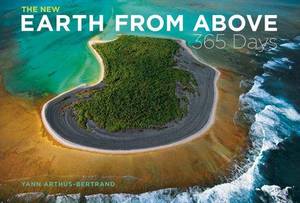
Over at the Ecumenical Water Network we'd really appreciate it if you could take the Seven Weeks for Water survey - if you complete and submit the form you also get a chance to win a copy of the Earth from Above pictured here.

Sunday, 11 April 2010

Baptism with flowers or at the ocean

Last Sunday in Pankow there was a baptism as part of the Easter service. All of the children at the service - and there were lots there - were invited to come forwards and decorate the baptistry with flowers. We were sitting so far back in the packed church that we didn't see what it looked like until we went forward for communion. It's a lovely way of involving people it also reminded me of the German tradition my father brought into our family of decorating the table place of the person whose birthday it was with flowers from the garden. Baptism is about rebirth, a new beginning with Christ so I think this is a lovely tradition particularly for churches which have large old baptistries like this.
Meanwhile David Ker baptised his children on Easter Sunday in the Indian ocean. Read about it in a great post called "what water baptism means to me", sounds like a wonderful way of making baptism both special and part of life. The photos are beautiful too.
Of course you can find different perspectives on Holy Water over on Seven Weeks for Water. Next year we really must get someone from the Pentecostal churches to write a meditation for us.

Monday, 29 March 2010

The deep links between the liturgy and our advocacy and engagement

As Holy Week begins so Seven Weeks for Water offers a final Lenten meditation. This week Canon John Gibaut who is director of the Faith and Order Commission brings things together by focusing on the Easter Vigil and looking at how reflecting about water liturgically can also nourish our engagement and advocacy about water as a human right.
Holy Week is the week that remembers on Maundy Thursday Christ washing his disciples feet; Lent is the time that traditionally prepared people for baptism. To be a disicple, to be a Christian is be a person of faith willing to follow, willing to step forwards. As we understand the spiritual meanings of water more we can also find deep and real resources to nourish and "water" our commitment to working for water justice at global and local levels.
Here's an extract from John's meditation from this week:

What the Christian community says and does around water in prayer—the water of Baptism, the Baptism of the Lord, the Blessing of the Waters at the Theophany, the example of Jesus washing his disciples’ feet, and all liturgical uses of water in public prayer—has profound implications for Christian understanding and awareness of water today. That we use water in prayer—and how we use it, and how much of it we use—has consequences. The Christian community’s liturgical use of water has the potential to be a rich source of theological reflection about what water is, and about the care with which it is used. The degree to which Christians experience the holiness of water in prayer will also contribute to the churches’ engagement with other faith communities, governments, environmentalists, and with all who thirst for a just and ethical use of water today.

Saturday, 27 March 2010

A card, a bottle and proverbial "merci"

I returned to my office one day this week to find a card and gifts on my chair - wine, chocolate and some carefully chosen words. I'm very lucky to have such good friends and colleagues - even luckier for my waistline that several others joined in eating the chocolate. The local organic wine was perfect for Dr B's gentle birthday supper.
On the card was a personal message framed by two proverbs:
"The cleverness of one alone is a shallow well that dries up." (From Uganda)
"Where a woman reigns the streams run uphill." (From Ethiopia)

I've been thinking deeply and painfully this week about how getting human beings to work together is one of the most difficult yet rewarding things. Human beings are social animals yet sharing and being and working together, how our common and uncommon projects evolve is a kind of alchemy that can perhaps only be called a work of the Holy Spirit. Or perhaps it can only be called that if it works. At events and in projects where things and people "gel" something special happens, together we become more than the sum of our parts and when it all works we glimpse something greater than ourselves, the kingdom of God perhaps.
I'm grateful for those moments this week that I have been part of something bigger, moments where a bit of heaven has been opened. Together our intelligence can fill even the driest of wells.

Tuesday, 23 March 2010

Water of vulnerability and of liberation

Maike Gorsboth's sermon from yesterday's world water day service is now online. It pays hommage to the thinking of Steve de Gruchy and his Olive Agenda linking creation and liberation ethics.

"Water is more than a symbol ... Water being the source of life makes it much more than 'just' a sacramental symbol or a symbol of liberation. It also makes it a means of liberation."

Over on this week's Seven Weeks for Water there is a powerful reflection by John D. Roth on footwashing and practising the politics of mutual vulnerability.
Jesus was challenging his disciples to cultivate a life of mutual vulnerability rooted in the confidence of God’s extravagant and abundant love. By washing the feet of his disciples, Jesus offered a physical, embodied demonstration of this new kind of politics—a politics demonstrated even more dramatically in his death and resurrection in which power was “made perfect in weakness.”
I'll try to return to some thoughts about vulnerability in a later post. I've been doing some thinking about the issue linked to leadership in recent weeks, not sure where that will take me but foot washing is a challenging model for Christian leaders.

Meanwhile this picture and others of our toilet queue were taken by the WCC's great photographer Peter Williams.

Monday, 22 March 2010

Prayers, art, queueing and singing for world water day

Our brilliant colleague Maike Gorsboth who coordinates the Ecumenical Water Network preached at Monday morning prayers as we marked world water day. In her sermon which will be online tomorrow, she paid hommage to the late Steve de Gruchy and his "olive jordan river agenda" linking creation and liberation. It was powerful, heartfelt and authentic; a really good sermon. Maike also managed to get enough of us to queue for the toilet at lunch time today that we were able to take part in the world record attempt at making the world's longest toilet queue. As we waited in line - we had to be at least 25 people for the queue to be part of the record attempt - we sang songs from the morning's worship and then told funny toilet stories. We also admired Manoj Kurian's brilliant artwork specially painted for the day. You can find photos of artwork and queue here.

Join the world's longest toilet queue for World Water Day

Go to the website of the World's Longest toilet queue and join the queue online. And if you're in Geneva between 12.00 and 12.15 come and join us at the ecumenical centre where we will be queuing in the main lobby.
Make a stand for sanitation and water for all.