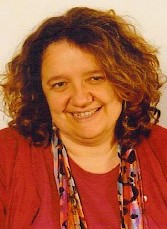
I am spending the weekend out at Crêt Bérard which is a retreat and training centre of the Swiss Protestant church. It is set at the opposite end of lake Geneva and I have a lovely room with a balcony overlooking a field of wheat almost ready to harvest and looking out towards the alps. Idyllic, varied, cultured and certainly restorative. Just taking the short train journey here was a real pleasure.
I'm interpreting for a session on "Emotions and healing" led by American psychologist Virginia Klein. It's the third year I've done this. Ginny tries to get people to understand their feelings by identifying the feelings of self-hatred that can inhabit us and by describing this in terms of how as very young children we use our imagination to create "perfect self" - who can "please" our parents, "calm them", make them stay together, stop them being ill etc. Ginny keeps asking us - who is telling you to be a good girl? who is telling you you can save everyone? who is telling you to be perfect? all powerful? totally adapted? That perfect self inside you is an illusion created by an imaginative child but we carry these perfect selves around with us, they can become a destructive voice of self-hatred within us - making us feel we either have to be "heroes or zeroes".
I'm not sure I agree with the method completely but it helps people get in touch with their feelings and analyse them quickly and that has to be a good thing.
At the end of the Saturday evening the director of the Crêt Bérard centre Pierre André encouraged us to read the parable of the prodigal sons by trying to identify the different kinds of perfect selves that were operating for the father the older and the younger son in the story.
It was an interesting way into the text and helped us to see some of the emotional energy between the characters in the story, the adapted older son who submits to his father's idea of what family should be, the younger son's illusion of being all powerful and being able to remake his life all on his own ... It is only when the younger son finally comes home that any emotion is expressed at all.
Saturday, 7 August 2010
The illusory perfect self and the prodigal son
Thursday, 3 June 2010
At Edinburgh 2010 and still learning more about global Christianity
 The Stranzblog took the train from Geneva to Edinburgh - yes all my colleagues thought I was crazy - to attend the Edinburgh 2010 event. The journey was fabulous and easy - and took about 13 hours. Three capital cities - Paris, London, Edinburgh - and four countries - Switzerland, France, England and Scotland - in one day. It was fun, though I was carrying the interpretation equipment which is a bit bulky.
I'm here to interpret into French and until this morning I was not sure whether I would be needed but in the end, despite several participants from Western Africa having their visas refused, I will be needed for the plenary sessions. This morning's session was an interesting one with a keynote address from professor Dana Robert on the need to find an eschatological vision for mission in 2010. Her speech will be online in a few moments. Keep checking the Edinburgh 2010 website.
This afternoon I was in one of the "tracks" which received a very interesting presentation on the Atlas of Global Christianity pictured here.
It was fascinating to see visuals of changes between 1910 and 2010 in how religions and Christianity in particular in spread around the world. I'm off to another meeting now so that will have to do for now.
Friday, 26 February 2010
Interpreting ...
I seem to have been doing alot of interpreting over the past ten days. For the most part it has been enjoyable and fun. It always has its hairy moments though, mostly to do with adrenaline and the knowledge that if you fail it will be hugely public - and in my case almost always in front of one or all of my superiors, oh joy! (Mention the words Mohammad Yunus to me and although I admire him greatly I will go pale - not one of my interpreting triumphs - I had problems sleeping for a week afterwards.)
Another problem is people who seem to think that because you're in the room with them multi-tasking (interpreting uses up alot of the brain's capacity) you could maybe give them a glass of water, tie up their shoe laces or maybe have a side conversation with them. None of these things help concentration ... :-)
Then there is the very different skill needed in doing simultaneous interpretation compared with consecutive interpretation. Because most of what I do is short bursts of an hour's interpretation with whispering equipment I tend to have to switch between the two. Consecutive interpretation uses your memory and recall - and ability to take notes (not easy when you are holding onto a microphone I found this week!) - at press conferences journalists tend to ask questions really quickly before the simultaneous interpretation has finished so you switch languages and switch skills. Just keep your nerve and be assertive with people trying to ask too many questions at once! The important thing is not to think about it too much and just surf the adrenaline. Interpreting means you don't really need to go in for high risk sports to get kicks - well that's my excuse anyway!
I always feel the interpreting has been useful if people respond in both languages and you can feel some understanding and relationship developing. In the next post you can find links to some of the things written at one of the things I interpreted for this week.
Tuesday, 8 December 2009
Can women ever be authentic? Must we always have the role of being "alibi" women, mere tokens? Or is ambiguity really where it is at?
I have just come back from another wonderful evening at the feminist theology group which was led this evening by my friend Karin Achtelstetter, director of the office for communication services at the Lutheran World Federation.
Karin encouraged the group to read the story of Huldah and work on various hypotheses about Huldah and her almost forgotten role as the prophetess who is consulted to confirm the scriptural canon and determine its interpretation. What might the text tell us about the complex roles women assume in leadership? You can see some of the background to our evening in an earlier post I made about Karin's work on Huldah.
Tonight we were intrigued at all the male envoys sent to consult Huldah - why on earth did the chief of priests not know how to evaluate or interpret the scroll of scripture found in the temple? Did they consult a woman to have her as an "alibi" (femme alibi is a bit like token woman), "hey we can destroy all of these objects in the temple that venerate Ashara (Yahweh's female companion) if a woman says we can". Is Huldah's voice a compromised one? After all it is a delegation of men who get sent to see her by the king - they are the ones telling the story, can we trust them? Not surprisingly they almost bury Huldah's role in determining the canon by being so insistent about naming themselves and writing precise minutes of their roles in King Josias' great reform! Some critics claim Huldah compromised herself, siding with power - but did she ever get the chance to tell her own story?
Tonight Karin put words into Huldah's mouth, explaining what she was trying to do.
We had very thoughtful and passionate discussions about women having the right to speak, to study, be listened to - and to get it wrong.
What moved me particularly this evening was listening to an ordination prayer for deaconesses from the 4th century which mentions Huldah. Yet today she is almost forgotten - though the director of Faith and Order assures me that some modern liturgies do remember her name and role.
As we ended our evening Karin explained that the reason she as a woman who exercises leadership was interested by Huldah was because of the ambiguities around her story - interpretation, speaking out, compromise, being a woman who plays the men's game. As she worked on the text she realised that despite justified criticism of being the "alibi" woman, Huldah nevertheless speaks with an authentic voice. It may even be the ambiguities that give her story and witness authenticity. I found that enormously reassuring and quite energising.
Monday, 15 June 2009
The paradoxes of Calvin's thought by François Dermange
At the Calvin event yesterday afternoon François Dermange who is dean of the Geneva Faculty of Theology and professor of ethics gave a brilliant 7 minute introduction to the paradoxes of Calvin's thought.
It was however one of those moments that was slightly unnerving as an interpreter, the speaker had sent two versions of his paper in advance, it had even been translated into English - just enough to lull you into a false sense of security. Then as he started to speak his text was projected behind him but in German, while I was listening to his voice in French and trying to interpret him into English. He didn't read his text at all but spoke freely on the 8 different headings he had developed and got rid of one of them on the way to make up time, I think 5 became 4 but we still ended up at 8 rather than 7. Fortunately he didn't change his headings so I just about managed to keep up (I have a recurring anxiety dream about interpreting philosophical and theological French and the word "rhubarb" coming out of my mouth!).
The 8 theses that Dermange developed on the paradoxes and underlying energy to Calvin's thought were:
Providence and Christology; Humanism and the call to holiness; Gospel and law; the Christian, acting and acted upon; the individual and the church; Idealism and pragmatism - the radical nature of ordinary life; Love and justice; Calvin saint or Prophet?
I found it helpful to think about Calvin's thought and work in terms of dialectical paradoxes but I particularly liked what Dermonge said about the radical nature of ordinary life for Calvin, it sort of helped explain me to myself if that makes sense:
"The Christian way must be lived by everyone where they are, in their family, their jobs, their political commitments. the radical nature of their vocation runs through ordinary life, simple things ..."


 Posts
Posts