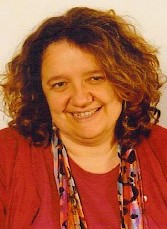
Twice in the past 48 hours I have had conversations with people about Minna Hietamäki's excellent presentation to the Faith and Order Plenary Commission on How much diversity is Enough? Earlier this week we received a copy of Minna's book Agreeable Agreement to review for Ecumenical Review. Here's a short extract from her presentation to Faith and Order:
In the contemporary world when other cultures and traditions come to us through newspapers, television and internet and when we encounter diversity not only when travelling ourselves but also though the diversity in the cultures that exist in the place we call home, it is very easy to think of diversity as a kind of decoration for our aesthetic enjoyment on the surface of the essentially one Church. It is my perception that in my country, the standard intellectually enlightened person with a more or less positive sense of religion would, in general, think in this way. They would say that religions in general and churches in particular are essentially about the same thing and differences are nothing more serious than variety of configurations of “the same”. But if we say that the Church is “the body of Christ whose interrelated diversity is essential to its wholeness” (par. 3), this kind of decorative diversity is not enough.Meanwhile here at home Dr B is getting better, slowly but surely we hope, and today he wrote something over on Open Source Ecumenism entitled"unity is strength but diversity is wealth". The quote is from Herman van Rompuy the EU Council president.
Reading Minna's article again and then Stephen's post I've been thinking about how the big dream of ecumenism is important in terms of focus but that it is how our institutions embody their professed ideals that will really impact their sustainability. Are there limits to the wealth of diversity? How do we embody the big idea's values while trying to tap in to the strength of unity and wealth of diversity?
In his post Stephen points to the value of the long view, slow rather than fast ecumenism I suppose you could call it. But embodiment takes time. Here's a short extract:
but maybe it is also important to take the "long view", to look down the line, to embody functions and mechanisms step-by-step, to take seriously the "wealth of diversity" rather than hiding behind a shield of unconvincing optimism - while at the same time identifying the issues and concerns around which the many interests and visions of the ecumenical movement might connect.



 Posts
Posts