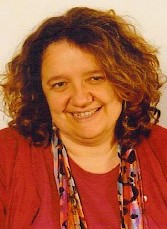
Claudine Haenni Dale spoke to our theme of "trouver sa voix trouver sa voie" at our feminist theology group last night. Claudine is in training to be a lay reader in the Anglican Church and is a human rights lawyer who has specialised in work on the prevention of torture and victims rights.
She chose two texts - the call of Samuel and Moses' response to God's call - to speak personally about her own quite recent journey of faith and the different emotions and sensitivities about speaking on behalf of others, finding her voice as a woman, pitching the message to the audience.
How do you, as a woman with a concern for the legal rights of non-combat people and a responsibility to communicate that to the military, find your voice when speaking to a group of 200 16-18 year old soldiers in central America? How do you speak and listen to those you visit in prison?
Claudine spoke movingly and with great humour and humanity about finding her own voice, the conversion experience of finding her way back to faith (her "way") through being invited to sing in the church choir, her choice of Anglicanism as the right place for her faith.
As we find our voices do we do it - when learning the local language say - in order to blend in so as not to be noticed? Or in so as to be able to use that voice in whatever language to plead a cause, our own or the cause of others? Claudine moved around alot in her youth, learning different languages in order to not get noticed - at least not stand out because she didn't speak the local langauge.
Yet how do we ever dare to speak of faith, in particular as women who have often been excluded from this role for many centuries in most of the Christian churches? Do recent converts have to right to speak in front of others? Does the fact that women preach and lead in some churches today mean that what is said is listened to less?
We returned to the call of Samuel in order to speak, in order to receive the call, the vocation he was counselled by Eli to listen. If we learn to listen to both words and what is left unsaid we will begin to find authentic voice and perhaps also our authentic way. In terms of faith this does not necessarily mean that we always have to find words to preach, things to say; it does mean we need to listen to God in ourselves and in others and bear witness to what God is showing us, doing for us and giving us.
I'm sure that as the week progresses I shall return to some of these thoughts but as we spoke last night I realised what a privilege it is to be part of this group where we both listen and speak. It is a space of liberation and grace.
Wednesday, 14 April 2010
To learn to speak, learn to listen ... at feminist theology
Tuesday, 13 April 2010
Take the Seven Weeks for Water survey
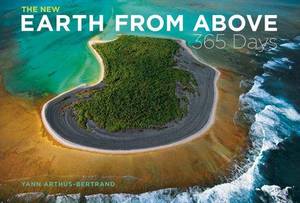 Over at the Ecumenical Water Network we'd really appreciate it if you could take the Seven Weeks for Water survey - if you complete and submit the form you also get a chance to win a copy of the Earth from Above pictured here.
Monday, 12 April 2010
The gospel - how ridiculous
In his sermon this morning Jooseup Keum said "how ridiculous" referring to Jesus washing his disciples feet. It really set me thinking about rationalitiy and spirituality, belief being foolishness to the Greeks and all that. It's too late for me to say much more for now, but it was a good start to the working week.
You can find Jooseup's thought-provoking sermon in full here but here are two extracts:
It was a lonely way. Jesus' way to the cross was a lonely way.
Nobody dared to walk together with him, even his disciples, maybe even us.
Imagine him, imagine his journey, he who is walking alone toward a cross. He carries all the agonies and sad stories of powerless people there. Somebody has lost their son, someone is crying, and someone is beating someone, someone is attempting suicide – can he provide any hope in their lives?
In the Gospel of John, Jesus is claiming the way is through washing the feet of his disciples. How ridiculous!
....
There are many ways in the world – motorway, bullet train and flight – however Jesus chose a tough, very lonely and slow way; off road. He is walking alone on a long endless mountainous path down to Galilee and waiting his disciples and us there. On his way to Galilee, he creates a new community of hope and love
Sunday, 11 April 2010
Baptism with flowers or at the ocean
 Last Sunday in Pankow there was a baptism as part of the Easter service. All of the children at the service - and there were lots there - were invited to come forwards and decorate the baptistry with flowers. We were sitting so far back in the packed church that we didn't see what it looked like until we went forward for communion. It's a lovely way of involving people it also reminded me of the German tradition my father brought into our family of decorating the table place of the person whose birthday it was with flowers from the garden. Baptism is about rebirth, a new beginning with Christ so I think this is a lovely tradition particularly for churches which have large old baptistries like this.
Meanwhile David Ker baptised his children on Easter Sunday in the Indian ocean. Read about it in a great post called "what water baptism means to me", sounds like a wonderful way of making baptism both special and part of life. The photos are beautiful too.
Of course you can find different perspectives on Holy Water over on Seven Weeks for Water. Next year we really must get someone from the Pentecostal churches to write a meditation for us.
Saturday, 10 April 2010
Käthe Kollwitz - sculpting for peace


So here are the photos I took at the memorial in Berlin to all victims of war and violence. This sculpture is a copy of a work by Käthe Kollwitz, a mother cradling her dead son. Stephen first introduced me to Kollwitz's work more than 25 years ago and I still find it very powerful and deeply moving.
My first ever blogpost from a high speed train
Dr B and I are sitting in the restaurant carriage of a German ICE train which left Berlin Hauptbahnhof and goes all the way to Interlaken - we'll probably get off in Olten or Bern to catch a connection to Geneva and then take the F bus all the way home. It's been a great time away and also the final phase in Dr B's healing process. On Monday he's going to go back to work, it will have been nearly three months. This week in Berlin has been a real holiday and re-integration to life for him and he seems to have grown in strength as the week progressed - being in his favourite city no doubt helped that, as did having the family from Merseyside with us, it was great fun.
As you can tell this post is really just an excuse to show off how totally connected we now are thanks to our splendid little vodaphone prepaid "surf stick" (I assure you that is a German word!). Bizarrely this German provider will not only give us good value 3G connectivity in Germany but also cheaper connectivity in France than any of the solutions available there. Sometimes cartel capitalism offers the consumer no choice at all and that's the case with mobile connectivity in France at the moment, so we are returning from Berlin with two of these surfsticks. However this is perhaps the moment to launch the campaign for a common European mobile phone with roaming at no extra cost.
You can find out more about sim card deals and options in various countries from a great blog on mobile connectivity here. The guy writing it has 8 sim cards just for Germany which seems a bit over the top to me, he even has one to switch on the heater in his car. Not something we need, we just take the bus.
Wednesday, 7 April 2010
What is lost is only there in black and white - wandering around the new national gallery in Berlin
 Yesterday after walking in the mid day sun in Tiergarten some of us went to the New National Gallery which is in part of former west Berlin that was in no-man's land. The Berlin Philharmonie and Herbert von Karajanstrasse are part of the same space. The whole area around Potsdamerplatz was destroyed at the end of the war, then with building of the wall there was not much reason for business to move there so major cultural buildings were put up in the space. The 19th cnetury church stands in the middle of all of these museums and concert halls, there are no flats or houses in site, yet from the outside at least the church seems to offer some kind of ministry to the world of the performing and decorative arts.
Meanwhile with the fall of the wall Potsdamerplatz became the place where the "triumph of capitalism" needed to become visible and just further down from the Philharmonie is an enormous shopping centre. It's quite a strange bit of city architecture - born of war and the divisions of history. I do wonder at the hubris of the new development - although of course I visited the shops too.
The permanent exhibition at the gallery tells the story of German history through the art and artists of the time - or maybe that should be it tells the story of German art through its history. At various points in the exhibition there are black and white reproductions of "lost" works - mostly art willfully burnt and destroyed befor the war. It's a powerful way of pointing to the holes in the collection - at first you don't quite notice that something is different.
The 20th century art in the gallery is challenging and powerful stuff, trying very often to tell a story with brash colours and satiricial themes - even if the horrors of the Third reich later went well beyond satire. The colours and lighting of the famous painting by George Grosz particularly struck me yesterday. Looking at the paintings I thought about how Christians and church leaders sometimes go on about the importance of the prophetic word, speaking the truth to power. Yet here were artists - often atheists or like Max Beckman questioning "God's mistakes" - who were painting, sculpting and drawing their perhaps much more prophetic view of society. One of the figures in Grosz' painting is a judge who could be mistaken for a cleric ...
uncomfortable and powerful viewing.
Meanwhile I was rather less convinced by Rudolf Stingel's carpet and chandelier installation in the upstairs area. Also black and white but it didn't quite tell a story for me but then I've never been very fond of patterned carpets.
Tuesday, 6 April 2010
Resurrection - Easter, Emmaus and Ecumenism in a sermon by Theo Gill
My own resurrection moment was to be sitting in Cafe Einstein eating my fresh fruit muesli this morning and thinking about colleagues gathering in the chapel and not having to worry about any of it! I do admit that I was a bit sad not to be able to sing one of my favourite hymns "Now the Green Blade Riseth" but it is wodnerful to be on holiday. Yvette Milosevic prepared the service and Theodore Gill preached on the Emmaus text and on Psalm 118: "A Song of Ascents". I wasn't there to experience him preaching but judging by the very approving text messages I got it obviously all went well. [Yes, the stranzblog has spies everywhere! ;0)]
More to the point Theo just sent me the text of his sermon and it was a very enjoyable read and had me chuckling. It makes some very good points about whether we really will all be able to recognise Christ together in the breaking of the bread if our ecumenical fellowship remains incomplete at Christ's table. Easter, ecumenism and Emmaus - are we on the way to full eucharistic fellowship, do we even want to be on that way?
Full text of Theo's sermon can be found here, but here are a couple of extracts:
those two travelers on the road to Emmaus were not the last would-be followers of Jesus to go wandering off on their own, in the wrong direction…
(my wife and I spent Easter weekend in Avignon – a majestic medieval city, but also something of a hiccup in the history of western Christianity… a bridge too far…)
No, they would not be the last to head the wrong way, only to be pulled up abruptly, to be forced to turn around and start over again on the ascent to community.
Nor were these the last disciples to be found standing, sad and dejected, so absorbed in a sense of confusion, doubt and abandonment that they momentarily lost the plot of the gospel narrative. Maureen Dowd, a columnist for the New York Times, wondered just this past weekend: “Why does the church seem more prone to self-pity than self-reflection?” I believe the answer to that question is that disciples are only human – and we disciples require regular doses of revelation to rekindle our hearts and minds.
...
Sometimes disciples go astray. For more than sixty years, the constitution of the World Council of Churches has held out as a chief goal of our movement the establishment of one, common eucharistic fellowship, so that we together may join in sharing the one bread and together may recognize Christ in our midst. We feature this vision of “one eucharistic fellowship” in our WCC promotional brochures, but…
What have we done about that goal, lately? Have we made six decades’ worth of progress in this area? Or four-and-a-half decades’ worth, since Vatican II?
My wife and I have known one another for forty years. She comes from one tradition of Christianity, and I come from another. Whenever we have taken communion together in the same service of worship, the action has been considered illicit by someone or another. Will we ever share the same bread, licitly? Perhaps at the feast in the kingdom of heaven…? Again, I wonder: What are we honestly doing to hasten the day of a common eucharist, in this life?
What is "strong" leadership, "strong" government - reflecting on the day the election is announced in my home country
It's not really surprising that I think about a quote from Heinrich Grüber's memoirs as I wander around Berlin this week. Grüber describes in his memoirs how he voted for Hitler - as did many others of his class and background - because he wanted "strong" government and the experience of Weimar democracy had been of weak ever-changing government.
Today the election will be called in Britain to take place in just one month's time. It's quite interesting chatting with our family about their voting intentions - our oldest nephew is (shock horror) probably going to vote Tory - but we've also been having discussions about voting systems, whether it's better for democracies to have change after a decade and the place for conviction in politics. It's fascinating to see how approaches to democracy and voting systems are very culturally determined. Do I want strong government or good government?
At a personal level I've also been thinking about "strong" leadership and our need to embue these words which tend to be seen as male virtues with value. Is the only way of describing leadership positively to be seen in macho language? Of course women are also strong and it is very much a female virtue as well. But surely goodness, integrity, mid-wifery, artistry, brick-laying, sculpting and many other things may offer us more useful images for the sort of government and society we want rather than this steroid obsession with strength.
Grüber learnt the strength of saying he was wrong to vote for Hitler and took up resistance to teh regime he had voted in very quickly. There is strength in recognising when we have been wrong, it's called humility and it's not a bad virtue for politicians and leaders to learn.
Stolpersteine - history under your feet

 Late last night going back to Nollendorfplatz with our friends Horst and Gaby they showed us two Stolpersteine in the pavement just outside an ordinary house in a side street.
I hadn't come across these small local memorials to people who were deported during the Nazi time. My research this morning tells me that these "stumbling blocks" - more than 1800 in Hamburg and 1600 in Berlin - have already become the world's most delocalised memorial. They were the idea of the artist Gunter Demnig and have spread outside Germany to Austria. The great part of the project is that it involves local people and schools in the research and also to raise money to make the blocks. It is about discovering the lost stories of local people who were forcibly removed. A real example of how the artistic imagination can encourage research, build community today with a sense of the past.
Here's an extract from wikipedia about the project:
Schools, relatives, and various organizations investigate facts about people, who were deported or persecuted during the regime of Nazi Germany.Once the investigation work has been done, Demnig manufactures a concrete cube of 10 cm/ 4 in, which he covers with a sheet of brass. Then he adds the writing “Hier wohnte” (Here lived), the name, year of birth and the fate: mostly the date of deportation and of death. The Stolperstein is then put down flush in the pavement/sidewalk in front of the last residence of the victim. The financial requirements are covered by donations, collections, individual citizens, contemporary witnesses, school classes, or communities. One Stolperstein costs €95.
Monday, 5 April 2010
History: how do we live with it?
We have been walking aorund in an overcast Berlin and seem to have already packed masses in to the day and it's not yes 18.00. Time now for a rest and a think.
The flats where we are staying overlook the extraordinary memorial to the murdered Jews of Europe, just around the corner is the Brandenburg Gate with on one side Unter den Linden and on the other the Strasse des 17ten Junis ... We caught a bus this afternoon on the corner of Rosenstrasse, where the non-Jewish wives of Jewish imprisoned men protested against the imprisonment of their husbands just around the corner from the Gestapo headquarters. Read more here and in Nathan Stoltzfus' book Resistance of the Heart.
We spent time going around the exhibition about the path to German parliamentary democracy in the German Dom on Gendarmenmarkt, (the English title is: Milestones - Setbacks - Sidetracks and the German title Wege - Irrwege - Umwege). This was the exhibition that used to be housed years ago in the Reichstag before the wall came down and the German parliament finally moved back there. It was interesting to go around it today with young people who are about the age I was when I first went around it with my father. Some of the most powerful images were those of the total destruction of German cities at the end of the war.
Looking the French Dom opposite led us to talk about the French Protestant refugees who had been welcomed by the Elector of Brandenburg following persecution in France. And then we went on to Bebelsplatz and looked down through the glass in the ground onto the completely empty bookshelves beneath - this, the square just next to the Kaiser's palace and opposite the university, is where the Nazi's famously burned books early in the Third Reich. Yet thousands walk past without even noticing this very discreet monument or memorial ... walking over history.
From here we walked up the Unter de Linden and went in to what was formerly the tomb of the unknown soldier following the first world war and which became a memorial to the victims of fascism in GDR times and which now - rather than an eternal flame and goose-stepping soldiers - houses an absolutely wonderful and desperately powerful sculpture by Käthe Kollwitz with the simple dedication "to all victims of war and violence". I had never been inside before and didn't know about this change which deeply moved me. The scupture shows a woman cradling her dead son. Not only the male soldier "heros" of war are remembered but the ordinary families suffering violence, a huge difference in how history can be viewed and the conscious placing of women at the heart of remembrance.
After that we headed to the Reichstag, for coffee and cakes, but also to show the family Richard Rogers' extraordinary dome. The building of parliamentary democracy in Germany has become a worldwide tourist attraction, it really makes the building belong to the people, makes what happens in the building a bit more attractive too. Politics can become a bit more fun if its architecture is like this.
So our day has been a little bit like an exercise in a historiography of public buildings and official monuments.
Walking up and down in the dome, looking across the once divided city, seeing the golden domes of the synagogue and cathedrals, looking at the hideous and beautiful highrise buildings of capitalism and socialism, the victory column and gate of the princely past and the huge sky, I thought about the huge discontinuity and continuity that are part of German history. Then I wondered about how nations build up national myths of continuity - some have integrity, others less so. What is amazing about wandering around the central parts of Berlin is how the ambiguity of continuity and discontinuity are made visible in the ways exhibitions are organised and memorials are built.
How do we live with history? My neighbour in Ferney recently said to me "We need to remember that wherever we put our feet the dust we are walking through is the dust of humanity". I felt that very much today walking around the city where my father was born. He was 15 when he had to leave and yet this is the city his daughter still wants to return to. My way of living with history perhaps.
Reading Herta Müller in Berlin
 Going round the splendid independent bookshop just off the Kollwitzplatz I bought myself some books by Herta Müller whose work I've not read before. I'm reading a very slim volume called Der Fremde Blick oder Das Leben ist ein Furz in der Laterne. The language is wonderfully precise and poetic, the subject matter and setting - totalitarian Romania - less so. Harrowing but brilliant writing. It's also interesting to read someone writing in German about the Romanian context as I wander around Berlin that has changed so much, holds so many diverse and complex memories for me, and where I almost don't understand the underground map anymore.
Sunday, 4 April 2010
Happy Easter!
We are drinking tea in Pankow following a really wonderful Easter service at the church of the four evangelists which was led by Ruth Misselwitz. What I found particularly heartening were the large number of young families and children at the service which was full, it was traditional and simple and real. I was deeply moved simply to be part of it, to realise how deeply I still know the German liturgy by heart and what a privilege that is too. I'll write a bit about some of my complex Easter emotions later - I was in tears for parts of the service but there was laughter too, as the children stormed back into the church carrying their Easter chocolates, just as the final communion thanksgiving prayer was being said at the altar!
For now I'm a little too close to the emotion of it all and truth be told I'm actually just trying out my new Easter egg, a German vodaphone dongle which means I can connect across borders much more cheaply and practically than via my mobile phone. It took non-technically minded me precisely 90 seconds to set it all up. I'm impressed. You won't be able to stop me tweeting now - must be all those Easter chicks!
Saturday, 3 April 2010
Night train to Berlin
The stranzblog arrived in Berlin just after eight this morning. We set off on the night train from Basel and were served breakfast in our sleeping compartment which we ate watching very familiar territory go by - Bitterfeld, Wittenberg, Jüterborg ... place where I was living and preaching just 20 years ago. It was wonderful to be in the city so early on Saturday morning, really crisp and cold but also very sunny and very lovely.
So we have already walked along the Spree, been to the Hakescher Markt, Reichstag, Brandenburg Gate and more importantly had a deliecious brunch on Kollwitzplatz as well as visiting the nearby bookshop - (ok it's true I did not come away empty handed, more about that later.)
Tomorrow Stephen's sister Myra, her husband Tom and the three children will join us. These few days in Berlin are our rather belated 50th birthday present to her. We also hope that they are the beginning of the final phase in Dr B's recovery. Berlin manages to energise him so let's hope he doesn't get too exhausted.
Meanwhile on Wednesday a real gathering of the clans is planned as my mother, her sister Doreen and her partner Martin also arrive in Berlin for the afternoon. They are on a church twinning weekend near Magdburg. We are going to have to find quite a noisy cafe to be able to cope with all 10 of us for Kaffee und Kuchen that afternoon. Should be fun if we mange to meet up though.
Friday, 2 April 2010
A poem by Elizabeth Jennings for Good Friday
It always seems to me that prose is not enough for some days, for some events, yet I've never really be able to write poetry - or not poetry I think much of or that says what I would like it to ...
On Good Friday I turn to poetry, and this year as last to Elizabeth Jennings
Friday
We nailed the hands long ago,
Wove the thorns, took up the scourge and shouted
For excitement's sake, we stood at the dusty edge
Of the pebbled path and watched the extreme of pain.
But one or two prayed, one or two
Were silent, shocked, stood back
And remembered remnants of words, a new vision.
The cross is up with its crying victim, the clouds
Cover the sun, we learn a new way to lose
What we did not know we had
Until this bleak and sacrificial day,
Until we turned from our bad
Past and knelt and cried out our dismay,
The dice still clicking, the voices dying away.
Elizabeth Jennings Collected Poems
Running away or becoming hyper active - how do you respond to Good Friday
On Good Friday I often return to Charles Elliott's reflection and challenge in his book Praying the Kingdom where he encourages the reader to practise a form of one of the Ignatian exercises where you inhabit the person of Mary at the foot of the cross contemplating the crucifixion.
A harrowing experience, watching the one you have brought in to the world dying a dreadful and seemingly pointless death.
Elliott recounts two main responses to taking part in this spiritual exercise. Many men respond to the exercise by fleeing the scene, leaving so as not to have to contemplate the unbearable. Many women respond by trying to tear Christ off the cross, be desperately trying to do something to stop this terrible travesty of all that is good.
But we are called in the midst of a political spirituality to simply be witnesses to that which is terrible and awful, to dare to live with it - not accepting it, not running away from it, not believing that we can stop it - simply surveying the cross and seeing it for all that it is, the terror, the horror, the pain, the injustice.
Sometimes though it's hard to stop running, sometimes it's hard to stop doing and just be in the terrifying space of another's pain.
Thursday, 1 April 2010
What book should I read on the train to Berlin ...
So do I want to be pseudo intellectual, pure pretentious or just authentically myself in my choice of reading matter for my holiday in Berlin?
I suppose the choice is theology, poetry, biography or crime fiction - realistically of course I still have 500 pages of Stieg Larsson to read so I suppose that will win out in the end.
Really what I want is the one thing I don't have - a really great novel I haven't yet read. Any suggestions?
Foot washing - the dream ...
On Maundy Thursday I always have crazy day dreams that the kings and queens and presidents and primeministers might be found at the local homeless shelter washing people's feet. Or that the CEO of a top company will wash the feet of the cleaning personnel - or maybe make coffee for the secretaries ...
These days of course such events would simply be part of the constant barrage of the celebrity round of photo opportunities.
Such gentle focused sensitivity, such practical sensuality in Christ caring for his disciples' feet, washing them and preparing them for the way ahead.
A crazy dream that the great of this world, the true leaders will have humility enough to care - enough even to care for the betrayer.
If I am not ready to take up bowl and towel I am not ready to lead.

 Posts
Posts