Most participants I chat with are really enjoying themselves the the Peace Convocation - some are suffering a bit with the heat, humidity and the distances we have to walk; a few might like a bit more variety in the food we get to eat (personally I've got rather addicted to rice n peas), generally there seems to be a great spirit and a wonderful atmosphere, particularly in the evenings at the open air bar at the Rex Nettlesford halls of residence. There are good conversations going on there every night and I admit to having developed quite a taste for the coconut rum on the rocks.
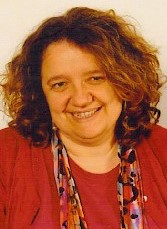
However, the pictures here don't show scenes of conviviality but of the back rooms where staff are busy working to keep data input, computer terminals, communications, documentation, finance, accommodation, Bible studies, workshops, seminars, plenaries and much else besides on track as much as possible. Lots of the work is physical, requires alot of concentration and sometimes also nerves of steel - cabling, data entry, collating documents, chasing down speakers, rebuilding the stage between worship and plenary sessions, building interpretation booths, spending ages with administrations on the phone tracking down shipments, dealing with payments converted between several different currencies, filming, writing, updating the web, finding people to sing or pray in different languages and much more besides ...
Creating an event for 1,000 people requires dedicated and committed staff and coopted staff - and liaison with a brilliant local team here in Jamaica, including many volunteers and students. We are not perfect, but together we're a good team, some of us more exhausted than others. When the IEPC is over we will have a real feeling of achievement, proud to have been part of this significant event in the WCC's history. It would not have been possible without us.
Blessed are those who fill in data and greet us at registration with a smile and get us a room!
Blessed are the finance folk who deal with our reimbursements
Blessed are the html programmers, the writers and filmakers getting the story out there
Blessed are the cleaners, the cooks, the travel agents
Blessed are the planners, the speakers and the inspirers
Blessed are the ones who find us ladders, boards, ramps, sound equipment and bamboo poles
Blessed are those who stock the frig with beer
Blessed are those who translate, convert currency, change air tickets, find doctors
Blessed are the musicians who in the midst of it all allow us to think we could still dance
Blessed is Nan, who coordinates us, with aplomb
Blessed is the IEPC staff, co-opted staff and volunteer team.
Thanks to all of you guys, you've done such a good job, we think we might try and do it again ... maybe in about 10 years time.
Monday, 23 May 2011
Behind the scenes ... how the #IEPC keeps on track
Sunday, 22 May 2011
Silence or applause - really in so many ways it is about how we put our hands together
 Our very good friend Paul Oestreicher has travelled from New Zealand together with his wife and fellow peace activist Barbara Einhorn to be here at Kingston. In the 1980s, back in the days when Dr B was the Campaign for Nuclear Disarmamment's international officer the three of them worked closely together, particularly on the German-German working group of END, European Nuclear Disarmament. The peace movement was important and faced political difficulties in both parts of the then still divided Germany. As I look back now I can see that the pain of that division on German soil gave birth to a very engaged peace movement, of course the experience of the war also drove the 1980s peace movement and pacifism in Germany forwards. Paul's personal story is similar to that of my father's - both fled Hitler's Germany in the late 1930s.
In the heat of the Jamaican sun Paul cuts a very elegant figure around the campus here in Jamaica in his light long white clothes. At the opening plenary he gave an inspiring, heartfelt and challenging speech "A New World is Possible - a cry for the end of war".
Here are some extracts:
Wherever you come from, whatever your church tradition, you may be Orthodox or Catholic, Protestant or Charismatic, Evangelical or Liberal, Conservative or Radical, all of us have come here because we wish to be friends of Jesus, rabbi, prophet and more than a prophet. To each one of us he says: You are my friends, if you do what I command you ... This I command you, to love one another as I have loved you. Is anyone, anywhere, excluded from that love? Here is the answer that Jesus gave to his friends: It is said: ‘you shall love your neighbour and hate your enemy’; but I say to you, love your enemies and pray for those who persecute you.The other interesting dynamic to Paul's speech was that when the WCC's general secretary introduced him we were requested to follow the Quaker custom of not applauding either at the beginning, during or at the end of the speech. In the context of our meeting here in Kingston this didn't quite work, applause at large events like this is often the only way that "ordinary" people can participate. I can see why Paul requested that - Quaker meetings take place in silence unless one is moved by the Spirit to speak - Paul is both a Quaker and an Anglican priest. Part of me wishes that we could have simply greeted his words with silence. That silence might somehow have "decanted" the truth and the message in the words. It is easy for speakers to play the crowd for applause and sometimes it can change the tenor of a speech, feeding of the rapture of the crowd. Silence doesn't always mean disapproval, it can also lead to a deeper consideration of what has been said.
Jesus was not an idealistic dreamer. He was and remains the ultimate realist. The survival of our planet demands nothing less than the abolition of war. Albert Einstein, the great physicist and humanist, recognised that early in the last century. He repeated it often with a clarity and credibility that few Christian pacifists have matched.
What I have put before you in stark simplicity, is nevertheless deeply complex. Having spent my life studying politics, I do not believe that there is any room for pacifist self-righteousness. I have not come to Kingston to demonise those who choose the military option. They are part of us, they are the many and we are the few. We must find ways of co-opting them into the peaceful struggle. The critics of principled non-violence are neither knaves nor fools. We must answer them wisely and patiently. They will rightly ask pacifists like me many serious questions: how, for example, is law and order to be maintained globally without heavily armed nations? On this point there is already good news. In the light of the last century’s history of unparalleled violence, international law is paving the way for genuine alternatives.
In the end we were not able to resist responding to Paul's speech with applause, it was a very measured performance but a bravura one nevertheless.
Now we need to decide how we will put our hands together to respond in practical ways to work for the abolition of war. Our hands must not then remain silent.
Photo copyright (c) EKD/epd
World Sunday for Peace - what is the right hand of God doing in your land?
 Today is World Sunday for Peace. Across the world's churches people have been invited to pray for peace, to plant a tree, to use the prayer for peace written by the host churches of the Peace Convocation. Here in Kingston, participants were invited to a wonderful service of praise and celebration in the main tent led by the Jamaican churches and the churches of the Caribbean. We had wonderful choirs, great readings, heartfelt and meaningful prayers, a fabulous steel band with brilliant drumming, dancing and music. We ended with wonderfully rousing singing of the hymn known as the Caribbean anthem "The Right hand of God" - the final verse goes:
The right hand of God is planting in our land
Planting seeds of freedom, hope and love
In these many peopled lands, let his children all join hands
And be one with the right hand of God.
Afterwards the blessing affirmation read:
"And instead of the cacophony of war we will compose a symphony of peace; instead of a world of chaos and confusion, we will create a new order of harmony and solidarity."
And that harmony of blended trained voices, enthusiastic steel drummers and cries of "Amen" accompanied us as we set out into a more gently paced day. A day of rest and enjoyment, time to get to know our host churches, discover some local specialities - (the hot chocolate rum was delicious, thank you!) and even for some to go to the beach. A reminder that #justpeace is not only about striving, writing reports or always "doing" more and more, it is also about making time for one another, letting things settle down and allowing things to emerge. Justpeace may often have to be struggled for but it cannot be achieved by force.
So what might the right hand of God be pointing to for justpeace in your country, in your context, in your life? What seeds of peace and justice are being planted, do we open our eyes to see what is already growing?
The prayer for peace written by the Caribbean churches and shared today with the world's churches begins:
God of peace and possibility, Creator, Redeemer and Sanctifier: We approach you to ask once again for your mercy, forgiveness and a fresh start. We ask you to help us give peace a chance, in this world.
Even as World Sunday for Peace closes may our prayers for justpeace continue.
Here are the links to the different language versions.
Saturday, 21 May 2011
Tears - we shall not hang our harps on the willows
 The opening worship for the IEPC included a prayer of lament, during the words of the prayer we hummed the tune to from the rivers of Babylon and then in the silence in between one of the young people from Jamaica bent down to a bowl of water and rose, wringing out tears of injustice and suffering. It was moving and powerful. As we moved from the lament further into the liturgy, our humming became singing - "By the rivers of babylon, where we sat down, and we wept when we remembered ..."
As we reflect on and work for just peace there is enormous pain but there is also hope. We will not hang our harps on the willows, we will continue to hum and sing the song, both of pain and of hope.
More images from Stitching Peace


The Stiching Peace exhibition is going well in the Assembly Hall of the University of the West Indies. Roberta Bacic had to travel back to Ireland today but the exhibiton continues with Mairead and Marlene from Derry. Roberta was really enthusiastic about the experience of this international gathering in Jamaica and has alraedy got several invitations for further exhibtions. Today we had a visit from a group of local quilters here in Kingston, they left some great comments in the visitors book which has praise in many languages for the exhibtion.
The catalogues are also available in four languages and look really great.
Thursday, 19 May 2011
At the traffic lights ...
At the traffic lights a desperately thin young man is kneeling in a terribly dangerous place in the middle of the road between notional lanes between the cars. He stands up and looks through the open window of my taxi "sometin' to eat man" he says.
I look at him with confused guilty compassion and the taxi driver curses, saddened to see such a young person, 16 at most, headed in a very wrong direction.
I remember the dilated pupils, the threadbare tshirt and the total resignation with which he turned away from me when he realised no cash would be forthcoming.
Only as we pulled away did I realise that kneeling in the middle of the road he was inhaling lighter fluid in some strange addictive ritual linked to danger and perhaps a cry for help. Perhaps exercising his addiction in a public way like this is the only way he can get enough money to scrape by.
As the traffic lights changed we pulled away and I thought about how the Levite and the Priest were on foot, only the Samaritan had transport. In my transport I just drove on by, it was all too easy.
Then I went off to my convocation on peace, peace in the community, peace in the marketplace …
And I know that praying for that distressed young man at the traffic lights is not enough.
I shall however try at least to do that. The Good Samaratian did a great deal more …
Peace on Earth
Get your hands dirty for a strong arms trade reduction treaty


In the exhibition space at the International Ecumenical Peace Convocation here in Kingston, the Church of Norway are getting people to leave hand prints and sign their name as a way of making a colourful and creative petition in support of an arms trade treaty that will protect and save lives into the future. Conventional weapons kill more than 2000 people every day, these small arms are sometimes referred to as the "weapon of mass destruction of the poor."
The Church of Norway is using the IEPC as a platform to start a global mobilization of the churches in advance of the June 2012 Arms Trade Treaty negotiations. The petition is a way to inspire church leaders and people in congregations to get involved in bearing witness to how harmful armed conflict remains.
So it's not surprising that in the exhibition hall of the Convocation they got the Norwegian general secretary of the WCC to be the first to leave his hand prints and signature on the petition.
The idea is that the hand print should form a heart where the thumbs and fingers meet. Our hands should drop the gun and instead greet one another in peace.
Time for all of us to get our hands dirty and get on with this part of the campaign against the arms trade.
Wednesday, 18 May 2011
Morning meditation
 We have moved to accomodation on the campus of the University of the West Indies. We're housed in groups of 8 in small almost monastic rooms with shared bathroom facilities and a large common area. The central garden courtyard is lovely.
This morning as we awake people try to be as quiet as possible, but in the (rather too) early morning we try to be careful about making noise as we rise and speak as little as possible. We can still hear someone in a room somewhere snoring gently. We wander around washing, brushing our teeth, drinking water - not everyone is a morning person ... it's a quiet and quite meditative time, beautiful light comes through the louvered window shutters and we can see the green palm leaves outside. We acknowledge one another but just get on with waking and preparing for the day.
Then the silence is broken by a song, sung gently but joyfully from one of the rooms. It was like a sign that we were now allowed to speak and enter more fully into the day.
The lines of song made me smile and another song rose inside me but remained this morning sung only by my heart:
"Er weckt mich alle Morgen, Er weckt mir selbst dar Ohr."
Peace to the whole of creation on this new day.
(I should add that there's is another story to be told about this which would be called the spirituality of the lost suitcase - time for that tomorrow)
Tuesday, 17 May 2011

Beginning to hang the Stitching Peace exhibition

Come and visit at the Assembly hall of the University of the West Indies open daily during the IEPC

Monday, 16 May 2011
The risen Christ calls us to peace not to vengeance - Olav Fykse Tveit preaches at Webster Memorial United Church
I was moved by the sermon preached by the WCC's general secretary, Olav Fykse Tveit. He really engaged with the congregation, blending humour about unity in diversity - recognizing the real differences between the Caribbean where tropical fruit juice is drunk and Norway where salt cod tends to the local speciality - with a powerful and heartfelt message about the true Christian values of righteousness, peace and joy.
He began by saying quite meditatively
"We are the church
We are the Kingdom
We are the World Council of Churches ..."
It is a sign of the united church to value righteousness, peace and joy as true fruits of the Spirit
He took Romans 14.11-18 as his text, encouraging the congregation to focus on joy, as this 3rd Sunday after Easter is called Jubilate, Rejoice!
This rejoicing is the gospel of resurrection which comes across locked doors in the person of the risen Christ breathing the words "peace be with you". "This tells us alot about how God calls us to just peace. The theme of just peace is not just something to discuss but it is a sign of the Kingdom of God and that fruit of the Spirit called joy. The risen Christ is present to bring justice and peace to the world as a sign.
Christ's presence brings with it a new reality of joy and peace. Despite the betrayal, humiliation, torture, pain and death that he has endured it is not with revenge that Christ comes back but with a true justice, he returns from death bearing the fruits of the kingdom. This is what he brings to the world through his presence.
Tveit then went on to speak about situations of war and peace in the world, mentioning in particular a visit in January to a minority church in Libya which had at that time particularly been praying for the Coptic martyrs of Alexandria
He continued by saying that the church is called to give witness to what is not seen, like a seed hidden in darkness, God's presence is alive. Pointing out that the WCC was not quite as old as Webster Memorial Church, he also made reference to the speech made by the then bishop of Oslo in the run up to the WCC's founding in 1948 "The Enemy divides, God unites". Reflecting on this Tveit then returned to the Romans 14 passage saying "We are created to be united, to be togehter." The text takes us further even than this towards accepting that God has created nothing that is unclean. It is we who make one another unclean.
We are here to be a signs of righteousness, justice and peace. God justifies us so we can bear witness to a unity of diversity, of difference. All of us are called to accept one another.
Getting to be 70 means we are still young enough to change while building on what those who went before. Change is possible. Another world is possible. To illustrate this Tveit told a favourite story of his mother who spoke of peace coming at the end of the German occupation of Norway. How her story of the day the peace came helped him to see pictures he had never actually seen, like the blackout curtains which had separated people and kept the light out burning in teh streets. The burning curtains were a clear sign of peace, not just a rumour. the story of peace also speaks clearly of the joy of something. People around the world carry such stories of peace and part of the practice of peace is to give and share them as signs to one another.
In any home life can be complicated, we can forget that peace also needs righteousness and joy.
"I believe the Holy Spirit calls churches to do everything we can together to witness to the reality of Christ's presence. There is no way of separating Christ from these values of justice, peace and joy."
Going through my (I should add imperfect) notes to type this up I realise that what moved me about yesterday's sermon was the very gentle but convinced weaving together of favourite themes the WCC's general secretary has preached about over the past 18 months. Tveit is keen to assert that justice joy and peace are the core Christian values. In all our talk about unity we must not separate ourselves from that. There were subtle but very clear messages about inclusivity and I think I am beginning to better understand the statement he sometimes makes when he says he doesn't believe in enemies. Here the idea received a bit more context for me and I was very struck by the idea of Christ coming back from the grave with the fruits of the Spirit. Justice, peace and joy are resurrection values with great capacity to unite us.
During the service yesterday there were also beautiful moments when a woman sitting close to me was more or less finishing the preacher's entences before he did and saying amen with real joy.
Worth getting up early on Sunday for.
The dance of justpeace?


This wonderful sculpture is at the University of the West Indies not far from the staff offices. From a distance it looks almost like a mural, only close up to you begin to get the idea of the wonderful movement and energy in the sculpture.
This truly is a woman in praise and joy:
"Glory to God and Peace on Earth"
Sunday, 15 May 2011
An early morning start at Webster Memorial United Church


Webster Memorial is celebrating 70 years of its foundation, and the service was a time of joy and celebration both of history and of the present. It was also a privileged time for those of us representing the world church to be part of a local event full of joy and history. It was a lively and quite long service but there was a strong sense of graciousness and welcome, a blend of the formal and informal that worked well.
One wonderful moment was a sort of extended extemporary greeting of one another about half way through the service. One of the choir members game down to greet us and she like many people in the congregation was wearing a name badge. I was so pleased, she was Marjorie Lewis the first female principal of the United Theological College of the West Indies and someone who while in the UK really encouraged the Daughters of Dissent project and in particular highlighted the work of the redoubtable and brilliant Madge Saunders. It was wodnerful serendipity to meet Marjorie at church because I'd been given a book for her in Geneva and she was busy handing out invitations to the book launch during the greeting session. Now at least there will be one copy of the book at the book launch tomorrow, but you can also find out more about Righting Her-Story: Caribbean Women Encounter the Bible Story. So, as is often the case if you want to find who you are looking for, just got to church! Marjorie is pictured here alongside a new WCC colleague Garland Pierce, who will be working closely with the general secretary, Olav Fykse Tveit who preached at the service.
One of the things that really impressed me at Webster Memorial was the scale of their social ministry and the way they manage to hold together tradition and renewal within the congregation. The 10.45 service is more charismatic in feel but this is very much a united church, a place holding together much diversity and celebrating. Perhaps some of that diversity just depends on what time you like to get up on a Sunday morning. Anyway it was a really good place to begin our time at the IEPC.
Friday, 13 May 2011
I hate my enemy but I do not want to blind the one who hates me
 I have enemies, I have people I don't like, people who have done harm to me ... there are people out there who don't like me, people who if I am really honest I do not wish well. Of course this is not an easy thing for a minister of the word and sacrament to admit to, but I am not always a very nice person, I keep trying to be better, sometimes I even manage it.
Today I read this story about a woman blinded by acid thrown in her face in a violent and desperately spiteful act. Now she gets to pour acid into the eyes of her attacker - literally an eye for an eye.
Today I was also interviewed for the International Ecumenical Peace Convocation here in Kingston. The Jamaica Council of Churhces is celebrating its 70th anniversary by hosting the world church here in for the IEPC. On Thursday evening they are holding a special event at which Father Michael Lapsley will speak. Lapsley had his hands blown off, was partially blinded and deafened by a letter bomb sent to him in South Africa. He seeks not revenge but forgiveness.
"The old law of an eye for an eye leaves everyone blind." said Martin Luther King jr
So how to we hold justice and peace together? An individual has a right to pursue justice, but does justice have to be retribution? How do we combat evil - by becoming evil ourselves or by seeking ways forwards that create win-win situations, restorative justice for ourselves and for others. Does it help a violently blinded person to become the perpetrator of that same act towards another, will vengeance help her to "move on"?
Think of the public expressions of joy when Bin Laden was killed ...
As I approach the opening of the Peace Convocation, I am thinking deeply of my own imperfections as a peace maker, how my own desire for justice sometimes holds me back from stepping forwards in peace. On the radio today I was asked why the World Council of Churches wanted to have this meeting about peace and rather than starting with the history of the Decade to Overcome Violence I simply said "it's because we want to follow the example of Jesus of Nazareth in building peace". Afterwards I wondered about that - do I as a Christian hide behind a sort of moral veneer of non-violence, am I able to practise what I preach. And of course the answer is not always, not always at all. Sometimes peace building means living with the absolute horrible mess of life and trying to celebrate goodness and joy despite everything. Some time ago we read in chapel this meditation by John Lederach on the dynamic relationship between mercy, truth, justice and peace, it is beautifully and powerfully written and comes from real experience of the pain of building peace.
As I continue to meditate and pray about this and about my own lacks in this area all too often I say this prayer:
Lord God preserve me from the hatred of my enemies. Teach me to pray for them and for myself. “Guide our feet into the way of peace” (Luke 1:79) Amen.
And here is the full quote from Martin Luther King:
Violence as a way of achieving racial justice is both impractical and immoral. It is impractical because it is a descending spiral ending in destruction for all. The old law of an eye for an eye leaves everyone blind. It is immoral because it seeks to humiliate the opponent rather than win his understanding; it seeks to annihilate rather than convert. Violence is immoral because it thrives on hatred rather than love. It destroys community and makes brotherhood impossible. It leaves society in monologue rather than dialogue. Violence ends by defeating itself. It creates bitterness in the survivors and brutality in the destroyers.
From first day in Jamaica

Here is a first collage from Jamaica - Members of IEPC spiritual life committee greeting one another and photos of some of the wonderful bougainvilia which is in flower everywhere, also the mural from the University of the West Indies where the Peace convocation will take place. The book shop at the university is a wonderful place (when would this blog ever say any thing else about a book shop!) and has supplied me with some poetry and other ideas to keep me going through the meeting.
I just had to get a picture of the dictionary of Jamaican English - yes I stopped myself from buying it, but listening to folk talking here is quite a challenge. A bit like the difference between Swiss German and German. I'm sort of half reassured that the locals seem to find me just as difficult to understand - it's strange we know we're speaking the same language so we nod and say yes and then have to turn around and ask again for clarification. so far all of this takes place in smiles and laughter. i'm going to have to get my Caribbean ears tuned in better and I really want to be able to say "Kingston" like they do here before I leave.
Thursday, 12 May 2011
Walking on water to journey to peace ... the IEPC begins
 This stunning piece of textile art in patchwork and quilting is called "Journey to Peace" and is by Deborah Stockdale. It is the central work commissioned for the Stitching Peace exhibtion which will come to Jamaica as part of the International Ecumenical Peace Convocation - the exhibition has itself been on a journey, it was displayed in Geneva for a month earlier in the year. Roberta Bacic who curated the exhibition comes from Chile but lives in Northern Ireland. Many of the pieces are packed in Ireland and waiting to come to Kingston as I write this ...
I arrived in Jamaica just after midnight local time last night. Members of the local committee were waiting to meet us at the airport - it was wonderful when feeling so tired to be welcomed and taken to our accommodation. What was interesting though was that even in this brief meeting at a midnight hour with all of us tired, we were already getting into the theme of "just peace". One of the people arriving at the same time as me was a young person from Syria. As we waited we exchanged perhaps rather superficial comments about the situation in Syria with her. Her response was interesting, "much of what is said is propaganda". Given the late hour and our need for sleep after 24 hours of travelling there wasn't time to have much follow up conversation. I'll admit to wishing I could be a fly on the wall at the youth programme where I am sure that discussion and many others will continue.
Once I was compos mentis enough for some cogent thought again this morning after a few hours sleep, I thought back to our conversation last night. It struck me that "just peace" is definitely not about easy slogans or one-size fits all solutions. It's about having good quality and nuanced information about situations (both of conflict and of reconciliation), but it is also in some way trying to come to a judgement about those situation. Not a judgement for all time but a judgement in the here and now. Syria could be a good case in point, but so are many other countries and situaitons.
To be for justice and for peace will often mean knowing not to take sides in a simplisitc way but knowing rather how to stand up for the (gospel) values of peace and justice as such. Sometimes though to be for justice and peace will mean taking sides, and being prepared to be vilified for taking that stance. Being for a just peace is not something static or set in stone it is very much about being on a journey and sometimes it will mean daring to put our feet on what is not solid ground. Daring to get it wrong.
In Deborah's Journey to Peace this sense of moving towards something is clear but what you can't see so clearly from this image is that there are people in the ecumenical boat, people also walking in the labyrinth of peace which is the IEPC logo of locked hands. There are however also people who have stepped out of the boat and are walking on the water. They really are daring to believe that the journey to just peace will carry them on. Pilgrims of hope borne forwards by hope and belief in water and the word... a beautiful baptismal image.
Here in Jamaica we are surrounded by water, all of us coming here have to cross it in some way or another. As we arrive and as we leave Kingston will we dare to go on walking on water into the future so as to build a just peace?
Monday, 2 May 2011
Now That We Have Tasted Hope - a poem by Khaled Mattawa
Now That We Have Tasted Hope
Now that we have tasted hope
Now that we have come out of hiding,
Why would we live again in the tombs we’d made out of our souls?
And the sundered bodies that we’ve reassembled with prayers and consolations,
What would their torn parts be other than flesh?
Now that we have tasted hope
And dressed each other’s wounds with the legends of our oneness
Would we not prefer to close our mouths forever shut on the wine
That swilled inside them?
Having dreamed the same dream,
Having found the water that gushed behind a thousand mirages,
Why would we hide from the sun again
Or fear the night sky after we’ve reached the ends of darkness,
Live in death again after all the life our dead have given us?
Listen to me Zow’ya, Beida, Ajdabya, Tobruk, Nalut, Derna, Musrata, Benghazi, Zintan,
Listen to me houses, alleys, courtyards, and streets that throng my veins,
Some day soon
In your freed light and in the shade of your proud trees,
Your excavated heroes will return to their thrones in your martyrs’ squares,
Lovers will hold each other’s hands.
I need not look far to imagine the nerves dying rejecting the life that blood sends them.
I need not look deep into my past to seek a thousand hopeless vistas.
But now that I have tasted hope
I have fallen into the embrace of my own rugged innocence.
How long were my ancient days?
I no longer care to count.
How high were the mountains in my ocean’s fathoms?
I no longer care to measure.
How bitter was the bread of bitterness?
I no longer care to recall.
Now that we have tasted hope,
Now that we have lived on this hard-earned crust,
We would sooner die than seek any other taste to life,
Any other way of being human.
Sunday, 1 May 2011
The deep consolation, the laughter and tearfulness of reading poetry
 For the past few days I've been reading the wonderful poems in Neil Astley and Pamela Robinson-Pearce's great anthology of hope Soul Food: Nourishing Poems for Starved Minds.
It is a read that is a voyage of discovery: moving, funny, profound there is real food and hope for starved souls in the 150 pages. We are so saturated and stuffed with images and music, yet here simple well-honed lines keep bringing us back to essentials. Few of the poems are long, many are very short.
I'm grateful for the many poems in translation that are included, opening up not only other languages (truth called "he" rather than "she" or "it") and cultures, but also completely different ways of structuring thoughts, poetry and hope itself.
Dr B even found one to read aloud to me last night, this by the fabulous Carol Ann Duffy, only a Radio 4 listener or a sailor would understand the final line!
Prayer
Some days, although we cannot pray, a prayer
utters itself. So, a woman will lift
her head from the sieve of her hands and stare
at the minims1 sung by a tree, a sudden gift.
Some nights, although we are faithless, the truth
enters our hearts, that small familiar pain;
then a man will stand stock-still, hearing his youth
in the distant Latin chanting of a train.
Pray for us now. Grade I piano scales
console the lodger looking out across
a Midlands town. Then dusk, and someone calls
a child's name as though they named their loss.
Darkness outside. Inside, the radio's prayer -
Rockall. Malin. Dogger. Finisterre.
| Happiness There's just no accounting for happiness, And how can you not forgive? No, happiness is the uncle you never It comes to the monk in his cell. copyright Jane Kenyon |
Anyway, although reading poetry might seem to resolve nothing, it does offer a structure that might be called joy or understanding, consolation or perhaps even hope. Gradually words are beginning to put me back together again, perhaps that is resolution of a kind ...

 Posts