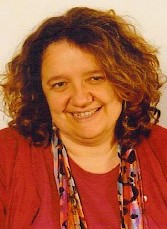
Today a letter about Margot Kässmann's resignation was read from the pulpit in many of the congregations in the Hannover Church. You can read the full text here. You can also read comments on the letter over on evangelisch.de.
It ends as did Kässmann at her press conference on Wednesday with the words from Arno Plötzsch - they can be sung to the melody of "Bleib mit deiner Gnade bei uns" and are often used for eternity Sunday. The words are reworked in calligraphy for a gravestone on the graphic pictured here. I must try to sing them at some point to have any hope of translating this poetically. Translating poetry is really not my forte.
"Du kannst nicht tiefer fallen als nur in Gottes Hand,
die er zum Heil uns allen barmherzig ausgespannt.
Es münden alle Pfade durch Schicksal, Schuld und Tod
doch ein in Gottes Gnade trotz aller unsrer Not.
Wir sind von Gott umgeben, auch hier in Raum und Zeit,
und werden in ihm leben und sein in Ewigkeit."
However low you fall God's hand is always there ...
Sunday, 28 February 2010
Open letter about Margot Kässmann to all congregations of the Hannover Church
Primroses, ecumenical winter and the coming of spring
This morning I noticed for the first time that the primroses at the bottom of the garden are in flower - this despite a terrible overnight storm and torrential rain. It made me feel glad - I love primroses. We still feel as if we are in the depths of winter but all around us is proof that the days are getting longer and that spring is well on its way. Slowly the invalid in the house is gaining strength. And we have had no snow in the valleys now for about two weeks. The skiing season is still in full flow but down here in the plain spring is coming.
Here in Ferney Voltaire winter was also something mentioned during the Week of Prayer for Christian Unity. My successor in the parish Pasteur Bernard Millet, had a very difficult time trying and failing to convince one of the local Roman Catholic priests to have the traditional pulpit exchange during the week of prayer. The local ecumenical group nearly despaired and then the bishop said he would come and preach. So, the local bishop of Belley Ars who is based in Bourge en Bresse, Monseigneur Guy Bagnard, preached here in the "temple". He admitted that this was a first, he had never in his life preached or attended worship in a Protestant church! (I should add that he is not a young bishop and will turn 73 this year.)
At the beginning of the service Bernard welcomed everyone, saying that he hoped that the bishop's presence at the joint ecumenical service held in a Protestant church was a sign that the local ecumenical winter so many lamented was now thawing. Many Roman Catholics came and thanked Bernard for these words at the end. Sometimes it is important to name things as they are in order to work for change in relationships. I mentioned last year that Monseigneur Bagnard has in recent years encouraged local Catholic priests to not go out of their way to let Protestant funerals take place in Catholic churches. This is of course not an official written ruling, just verbal counsel.
Ecumenical winter has been a theme at the ecumenical centre in recent weeks as well. Our new general secretary at the WCC tries to get us to see winter as not only as a negative time. Humorously he says that winter gives even small nations like Norway the possibilitiy to win gold medals in the olympics (even if in the end the Canadians beat Norway in the curling). Winter is a time for reflection, a time when the land lies fallow but the snow and ice are invisibly nourishing, fertilising and cleansing the ground for the glorious time of spring and the harvest which follows.
In the song from China that preceded the sermon Olav Fykse Tveit preached on Tuesday at his installation it is very clear that it is spring rather than winter which is the new general secretary's theme and his favourite season:
Winter has passed, the rain is o’er, earth is abloom, songs fill the air.The Norwegian poem and hymn that followed the sermon took up a similar theme:
Linger no more, why must you wait? “Rise up my love, come follow me.”
Refrain: Jesus, my Lord, my love, my all, body and soul forever yours,
In dale so dark I long for you, abide with me in spring anew.
O make our barren trees to growIf winter is the time for reflection and the silent invisible nourishment of the earth, then spring is the time for falling in love anew. A season where we can all begin to believe in new and lasting relationships, that these can grow and blossom.
our hands to blossom,
and let our lives bring forth such fruit
that heals our neighbour’s grief and pain.
From a global perspective of course if it is winter here it is summer somewhere else in the world - one reason why names of months rather than seasons should be used in international texts - this also helps us here in the Pays de Gex, we can see that our very local institutional ecumenical winter may actually be a fertile and enriching time. We also know and trust that elsewhere it is ecumenical springtime, in other places still a time for harvesting the fruits.
Further tribute to Steve de Gruchy
Following Steve de Gruchy's funeralon Saturday, a further tribute can now be found on Tinyiko Maluleke's blog here.
Friday, 26 February 2010
An appreciation of Steve de Gruchy from Tinyiko Sam Maluleke
We will cross post on Monday to the Ecumenical Water Network. Tomorrow family, friends, students and colleagues will gather for Steve's memorial. We remember them as we celebrate Steve's life and try to understand how to go on with his work and our work without him. The paper by Steve mentioned here is one I'm currently preparing for publication in Ecumenical Review.
I will be at the funeral as well. I also spoke to John and Isobel just before they left Volmoed to go join the search for Steve’s body at Mooi River and I have been in touch with colleagues in Pietermaritzburg. Some of you may know that I left Pietermaritzburg where I taught just before Steve joined the department. I was in the committee that interviewed Steve for the job. The rest is history. We have worked together in the Journal for Theology in Southern Africa ever since he took over its editorship. He addressed the SACC conference in ‘Green Theology’ three years ago when I was elected president. Like him, I was theologically brought up by John de Gruchy.When I saw, early on Monday morning an email message speaking of Steve having been involved in an accident in Mooi River (literally the beautiful river) my reaction was to write back to all recipients saying something like; ‘I hate hoax emails but I sincerely hope that this one is a hoax email’. How wrong I was! Sensing my knee-jerk denialism and the pain behind it, Rev Edwin Arisson, author of that email, wrote back to me separately to confirm its contents.
Several things strike me about some of the last words and gestures left by Steve’s departure and there is neither time, space nor energy to go into details here – and I have shared in brief, with some of you, some of my sentiments.
Steve was bumped off (the life) boat unaware that that would be his last ride. Steve was a lively person who loved life. He died riding the boat of life and riding it with joy and zest. His family informs us that shortly after being bumped off the life boat, he emerged and signaled to his son David to ride on, gesturing that he (Steve) would be okay. It seems therefore that Steve’s last ‘message’ to his son is instructive; instructive to his son and instructive to all of us. The signal is first and foremost one that says ‘ride on’. The second element is a gesture that says ‘ I will be ok’. A moment later, Steve was nowhere to be seen. Several hours later, he was nowhere to be found. Four days later, his lifeless body was found. Clearly, we are not Ok with this. We are not fine with this loss. Truth is; we are broken. But Steve’s last sign was that he would be fine. Do we have it within us to see the truth of Steve’s gesture? Maybe not now, but going forward, can we embrace the suggestion that Steve is Ok where he is now? Is that suggestion, in fact, not in keeping with our faith? The other piece of that gesture Steve gave was ‘ride on’. We ask, how can we go on? How can we go on without you, Steve? How do we go on doing what only Steve could do? How do we go on being what only Steve could be? And how do we go on doing the things Steve helped and made us do? But the gesture from Steve is: Ride on. Go on. What shall do with this suggestion? Can we find it in us to mourn Steve not only with tears but by going on riding the boat of life with zest and joy? Can we find it in the depths of our pained hearts to go on riding the theological life-boat with Steve-like zest and honesty? It seems to me that Steve’s last gestures bequeath us seeds of how best to remember his legacy.
In one of his last papers, read in Belem, Brazil in January 2009, Steve wrote and spoke about water. It was titled: Dealing with our own sewage: Spirituality and Ethics in the Sustainability Agenda” Typically, it was not an abstract theological treatise about water. He wrote about the South African government’s fifteen year old quest to get rid of the bucket toilet system – a system designed for black people living is areas where there is no running water. He wrote about a scientist dismissed from his work for writing a paper suggesting that South Africa was not managing its water resources prudently and that a water crisis was looming. In that paper he wrote about the tragic outbreak of the water-born disease Cholera in Zimbabwe during 2008. He wrote about the dogged human problem of how to deal with our own sewage and waste – and how we have always turned to water to help us. But what if there is little or no water? In that article Steve introduced what he called the ‘River Jordan Motif’ and the ‘River Jordan Ethics’. It brings to mind the river Jordan spiritualities that have sustained the township churches. These songs we sing about the crossing of the river Jordan. These songs we sing about water and the Samaritan woman. But Steve is very much alive to the life-giving and death-dealing possibilities inherent in the water. Thus he speaks of the living waters of the Jordan flowing into the dead water of the dead sea.
It is clear that water was an important pole around which Steve’s theology revolved. Here is someone who loved and respected water. He was happiest in the midst of water. He made water his theological motif. And the water he loved took him in and refused to give him back to us. Can a man die better? Was this why Steve signaled that, in water, with water, he would be fine? Without water our world will not be fine. What a rich theological legacy, Steve has left us!
Rejoice oh waters of Mooi River. The one whom you have taken is a lot more beautiful even than the river in which you flow!
Tinyiko Sam Maluleke
University of South Africa
Kairos - getting personal
There's a good article by Michael Marten on Ekklesia about making the Kairos document personal. Here's an extract:
Yusuf Daher, one of the people involved in the Kairos Palestine Document, spoke at a meeting in Jerusalem recently about the process of writing it. The Document took over 18 months to write and was, he said, written for two groups. Firstly, it was for Palestinian Christians like himself – Daher is a Melkite Catholic. He noted that all Palestinian Christian communities have adopted it without exception (though whether individual members of congregations are aware of it is, of course, another matter). It is being taken forward and there are plans to develop it into a substantial programme of action.
Secondly, the Kairos Palestine Document was written for the international Christian community, as both "a word of gratitude for the solidarity you have shown toward us in word, deed and presence among us", but also as "a call to repentance; to revisit fundamentalist theological positions that support ... unjust political options." It is, the authors say, "a call to stand alongside the oppressed and preserve the word of God as good news for all rather than to turn it into a weapon with which to slay the oppressed" (6.1).
In the next section, the Document explains how to understand the reality of the Palestinians: "Come and see." If only more churches would do this. Walking with Palestinians, experiencing their pain, seeing their loss – human rights organisations can write reports, UN departments can release endless statistics, and lobbying organisations can pick up on individual issues, but going to see the reality and walking even just for a short time with Palestinians is a different issue altogether.
Since attending the Bern Promised Land consultation in 2008 I've become more convinced that informing and changing hearts and minds in the churches on this issue is an important theological task of our time. In parish ministry month after month we would pray for peace in the land we sometimes call "Holy"- at times of open prayer even in our tiny Reformed congregation, the political and theological divisions would become clear with some praying for the "people of Israel" and others praying for the Palestinians. How can we hold justice and peace together, work for a sustainable future for all people in the area and also challenge our own deeply held and sometimes unacknowledged theological views? The challenge of and need for an ecumenical approach on this question are clearly what is needed within many local churches.
Many of the more conservative evangelical churches have strong mission to countries in Africa, South America and Asia and sometimes export a very one-sided approach on the issue, so it's important to work on mission, education and advocacy together. The Kairos Palestine document is part of that approach.
You can find the full text in English and Arabic of the Kairos Palestine document here. Translations into other languages are available at www.kairospalestine.ps
You can also find out more about the Palestine Israel Ecumenical Forum here.
Reuters, Protest info and more
 Olav Fykse Tveit, who has now been in post at the WCC for six weeks held a press briefing this week prior to his official installation as general secretary on Tuesday evening.
I attended the briefing to interpret which was fun and also a privilege (it was also work of course!). You can listen to what Dr Tveit had to say about his ecumenical vision, about Haiti and debt cancellation, about the Middle East and about Climate change by clicking on the audio links here.
It's been good to see that we had some pick up on Reuters Faith World blog. epd in Germany and some of the Francophone Swiss media have also written pieces following the press briefing.
It's good when interpretation can serve communication, I almost feel useful!
Meanwhile the sermon on the ecumenical movement of the cross preached by Tveit during the installation service is available in English, German, French, Spanish and Russian, though not yet in Tveit's mother tongue Norwegian. Perhaps we'll have to add some new translators to our lists.
Interpreting ...
I seem to have been doing alot of interpreting over the past ten days. For the most part it has been enjoyable and fun. It always has its hairy moments though, mostly to do with adrenaline and the knowledge that if you fail it will be hugely public - and in my case almost always in front of one or all of my superiors, oh joy! (Mention the words Mohammad Yunus to me and although I admire him greatly I will go pale - not one of my interpreting triumphs - I had problems sleeping for a week afterwards.)
Another problem is people who seem to think that because you're in the room with them multi-tasking (interpreting uses up alot of the brain's capacity) you could maybe give them a glass of water, tie up their shoe laces or maybe have a side conversation with them. None of these things help concentration ... :-)
Then there is the very different skill needed in doing simultaneous interpretation compared with consecutive interpretation. Because most of what I do is short bursts of an hour's interpretation with whispering equipment I tend to have to switch between the two. Consecutive interpretation uses your memory and recall - and ability to take notes (not easy when you are holding onto a microphone I found this week!) - at press conferences journalists tend to ask questions really quickly before the simultaneous interpretation has finished so you switch languages and switch skills. Just keep your nerve and be assertive with people trying to ask too many questions at once! The important thing is not to think about it too much and just surf the adrenaline. Interpreting means you don't really need to go in for high risk sports to get kicks - well that's my excuse anyway!
I always feel the interpreting has been useful if people respond in both languages and you can feel some understanding and relationship developing. In the next post you can find links to some of the things written at one of the things I interpreted for this week.
The Kirchentag's open letter to Margot Kässmann full text in English
Open letter from the Kirchentag to Dr. Margot Käßmann
Dear Dr. Käßmann,
It is with dismay that we take note of your decision to resign from your position as Chair of the Council of the Evangelical Church in Germany and as bishop of the Evangelical Lutheran Church of Hanover.
At the same time we express our great regret and sadness that we are losing you as one of the prominent figures in our church leadership.
We know you to be a great source of inspiration for Protestantism in Germany, and also for a committed Protestant engagement in the field of ecumenical relations, as well as being a great friend and supporter of the German Protestant Kirchentag. Your straightforwardness commands our respect.
It is our deep Christian conviction that mistakes can be forgiven, and especially in cases where responsibility is acknowledged.
We thank you that you are with all your heart and soul a pastor and friend to so many people in this country. Please continue to be so!
Fulda/Dresden, 24th February 2010
Prof. Dr. Dr. Dr. h.c. Eckhard Nagel for the Executive Committee of the German Protestant Kirchentag
Dr. Ellen Ueberschär, General Secretary, for the staff and management of the German Protestant Kirchentag
If you want to join/subscribe to this open letter, please send us an e-mail wchich will be forwarded to Margot Käßmann (fulda@kirchentag.de).
---------
Deutscher Evangelischer Kirchentag, Medien- und Öffentlichkeitsarbeit
Postfach 1555, 36005 Fulda - Magdeburger Str. 59, 36037 Fulda
Tel. 0661/96950-70/71, Fax 0661/96950-90, E-Mail runge@kirchentag.de
---------
33. Deutscher Evangelischer Kirchentag, Presse- und Öffentlichkeitsarbeit
Postfach 500162, 01031 Dresden - Ostra-Allee 25, 01067 Dresden
Tel.: 03 51/7 95 85-210, Fax: 03 51/7 95 85-300, E-Mail:
m.schaar@kirchentag.de
Thursday, 25 February 2010
More links, opinion pieces, reactions, interviews on Margot Kässmann
Retired Bishop Bärbel Wartenberg Potter has an interview in Der Spiegel with the title: "Sexism has a jealous face". She describes Kässmann as highly talented and as speaking the kind of language that could be understood by people within and beyond the church. She goes on to say how Kässmann was not afraid to make herself vulnerable but then also says that women have less experience of coping with public failure than men and that woemn's failure is often much more harshly judged than men's. Women, particularly in leadership roles are still pioneers in the church. She goes on to say that if Kässmann returns to a parish she has many qualities that will be able to be used there.
Yesterday on TV there was already speculation abotu her going in to politics ...
Meanwhile there is an excellent reflection on evangelisch.de by Olaf Droste, a Bremen pastor who works in radio. His piece was broadcast this morning on Radio Bremen/NDR. He takes up once more her theme of never falling so low as not to be caught by God's hand and adds that no one says that god's hand is particularly well upholstered ... it's been a hard fall. He describes her resignation and his own sadness, even if he knows that other faces will now emerge to lead the church.
evangelisch.de also have a a whole series of articles and comments here. Meanwhile the EKD site has various reports on this weekend's EKD Council meeting in Tutzing and this report which made me cry ... There are of course a number of reports on epd. I have good friends working at both epd and EKD and I dare not phone them to see how they are, I can just imagine how hard all in communication and the adminsitration must be working at the moment. Take care out there folks and hope you get some sleep soon - maybe next week?
This is what made me cry - not sure why, but this has certainly been an emotional time
Margot Kässmann was a bishop for more than 10 years and a national church leaders for three short months. I should be thankful that I have lived at least to see that. I sort of doubt that I shall see another woman church leader of her stature in my lifetime. Perhaps in my sadness I should trust more. A friend at work said to me today that she is still showing politicians the way to deal with these sorts of crises - quickly and straightforwardly - I did something wrong, I step down from public office. Tony Blair of course never thought he did do anything wrong. Silvio Berlusconi is busy rewriting the law to try not claim he didn't do anything wrong and Robert Mugabe is still depriving Archbishop John Sentamu of wearing his dogcollar.„Evangelisch aus gutem Grund“ – so hieß die Kampagne einer Landeskirche vor einigen Jahren, die sprichwörtlich geworden ist. Und so hegen an diesem Tag viele Menschen, die der Kirche nahe sind, neben den unvermeidlich traurigen auch wieder hellere Gedanken. Dankbarkeit, Traurigkeit und Zuversicht - es gibt Tage, in denen diese Gefühle ineinander greifen. Die Herrnhuter Losung des heutigen Tages stellt solcher Gefühlslage einen hoffnungsvollen geleitenden Vers zur Seite:
„Der Herr wird seinen Engel mit dir senden und Gnade zu deiner Reise geben.“ (1. Mose 24, 40)
Präses Nikolaus Schneider takes over as chair of the EKD Council
 I like it that Nikolaus Schneider is not a bishop, or should I say that he is not called a bishop but a präses or president. As deputy chair of the EKD council he has now taken over as chair of the Council following Margot Kässmann's resignation, at least in the interim and perhaps for longer. Given the voting last Autumn - he came a very strong second to Kässmann and none of the other bishops or church leaders came anywhere close - I think he will be a strong candidate for Chair more permanently, but we'll have to see how church politics play out.
Schneider is head of the Evangelical Church in the Rheinland which is a United Church with strong Reformed elements - very few Reformed churches have bishops most have moderators, stated clerks, presidents or some similar name (the tiny Polish Reformed Church is one exception). It was in the Rheinland Church that the Barmen Declaration was drawn up and agreed in 1934. It's a church with strong ecumenical links, particularly to minority Reformed churches elsewhere in Europe and the world.
Schneider has highlighted four areas in initial interviews: the question of social policy and how the poorest are treated; global justice, ecumenism and climate change. He supported Margot Kässmann's position on Afghanistan and seems set to continue to take on the political agenda for the protestant churches in Germany.
Schneider speaks excellent English and some French. I've worked with him on the French Reformed Church's ministries commission over two weekends. He was keen to see what his church could learn from the way we interviewed candidates and discerned about future ministers.
A good man, he now has a very difficult job. May God give him courage and strength as well as laughter and lightness, these are not easy times for the churches in Germany - Protestant or Catholic.

Wednesday, 24 February 2010
Open Letter from the Kirchentag to Margot Kässmann
The following open letter from the German Protestant Kirchentag to Margot Kässmann ends by saying "thank you that you gave yourself body and soul to being the pastor and friend to so many people in this country".
Offener Brief des Kirchentages an Dr. Margot Käßmann
Sehr geehrte, liebe Frau Dr. Käßmann,
wir nehmen betroffen Ihre Entscheidung zur Kenntnis, vom Amt der
Vorsitzenden des Rates der Evangelischen Kirche in Deutschland und als
Landesbischöfin der Evangelisch-lutherischen Landeskirche Hannovers
zurückzutreten.
Trotzdem ist unser Bedauern und unsere Traurigkeit sehr groß, dass wir Sie
als kirchenleitende Persönlichkeit verlieren.
Wir wissen in Ihnen eine großartige Impulsgeberin für den Protestantismus
in Deutschland, für ein engagiertes evangelisches Profil in verlässlicher
ökumenischer Verbundenheit und eine große Freundin und aktive
Unterstützerin des Deutschen Evangelischen Kirchentages. Ihre
Gradlinigkeit fordert unseren Respekt.
Es ist unsere tiefe christliche Überzeugung, dass Fehler vergeben werden
können, gerade dort, wo Verantwortung übernommen wird.
Danke, dass Sie mit Leib und Seele so vielen Menschen in diesem Land
Pastorin und Freundin sind. Bitte bleiben Sie es!
Fulda/Dresden, 24. Februar 2010
Prof. Dr. Dr. Dr. h.c. Eckhard Nagel für den Vorstand des Deutschen
Evangelischen Kirchentages
Dr. Ellen Ueberschär, Generalsekretärin, Kollegium und Geschäftsführung
des Deutschen Evangelischen Kirchentages
Wenn Sie sich diesem offenen Brief anschließen möchten, senden Sie uns
eine kurze e-Mail, die wir an Margot Käßmann weiterleiten:
info@kirchentag.de
In memory of Steve de Gruchy
At this point last year we were just publishing Steve de Gruchy's short meditation for Seven weeks for water on sewage, justice and the Jordan. This year we are about to publish an article by him in Ecumenical Review.
This morning the news came through that Steve's body had been found. Search parties had been looking for him since a rafting accident on the Mooi river over the weekend. A tragedy for the family and for the School of Religion and Theology in Kwazulu Natal of which he was head.
At lunchtime today we gathered in the chapel and shared stories about Steve: his paper on "A Theology of Shit" given in Belem last year; his wonderful collaborative way of encouraging both students and teaching staff; his creative and academic style; his zest for life and education.
We laughed and we were very sad, Steve's work, his being, his verve and insight were important for many of us and now he is no longer, and it is almost unbearable. We prayed and sang, lit candles and read from the Bible and from some of Steve's own writing. And gradually we left the chapel with damp eyes and returned to work having at least managed to lay down some of our grief ...
Steve may you rest in peace and rise in glory.
Update: I have posted an appreciation of Steve by Tinyiko Maluleke here.
Nick Baines on Margot Kässmann's resignation
Nick Baines has also written a good post about Margot's resignation.
So, her resignation press conference demonstrated just what the EKD and Germany have lost: a woman of stature, humility, dignity, clarity and courage. She is the best communicator the EKD has and is by far the best media operator in the Church.
Margot Kässmann - however low you may fall it is always into God's hand
Since the news broke earlier this week that Margot Kässmann had been found to have driven through a red light while nearly three times over the legal limit there has been a huge furore in the German media. Today she confirmed her decision to step down from all of her church offices - both as chairperson of the EKD Council and as bishop of Hanover.
It is difficult for me to say just how desperately sad I am about this. I quite understand how she felt she would no longer have any credibility or self respect if she tried to speak out on moral or political issues. It is nevertheless a tragedy. She is a hugely talented leader and theologian, a brilliant preacher, creative writer and speaker. The issues she raises strike chords with people's experience of God and life, she understands how to talk about prayer and faith in that sort of way.
Drink driving is stupid and dangerous and could be deadly, she will pay the legal consequences of her stupidity. Meanwhile, the church loses one of the very few world class women leaders it had. Somehow I fear that the reaction to this will be to play safe, to not choose the creative edge again but to choose the safe candidate. I suppose part of me feels that a man in this position would probably have tried to sit out the media storm, and might have been given a slightly easier time because a man would not have been quite so high profile in the first place ...
I already miss all that Margot would have been in her position as church leader, I feel as if part of my future has been taken away. And yet she remains one of my role models. Roles models are not supposed to be perfect, just to be people trying to be disciples of Jesus Christ.
As I read the statement she made below I cried as I got to the end where shes says that she knows from having lived through other crises that however low you fall it is always into God's hand.
One way and another it's been quite an emotional day. Margot may you continue to be held in God's hand and may those hands also hold all of us who today are so very, very sad ...
24.02.2010 16:21
Erklärung der Vorsitzenden des Rates der Evangelischen Kirche in
Deutschland (EKD) Landesbischöfin Dr. Margot Käßmann
Hannover (ots) - Es gilt das gesprochene Wort!
Am vergangenen Samstagabend habe ich einen schweren Fehler gemacht,
den ich zutiefst bereue. Aber auch wenn ich ihn bereue, und mir alle
Vorwürfe, die in dieser Situation berechtigterweise zu machen sind,
immer wieder selbst gemacht habe, kann und will ich nicht darüber
hinweg sehen, dass das Amt und meine Autorität als Landesbischöfin
sowie als Ratsvorsitzende beschädigt sind. Die Freiheit, ethische und
politische Herausforderungen zu benennen und zu beurteilen, hätte ich
in Zukunft nicht mehr so wie ich sie hatte. Die harsche Kritik etwa an
einem Predigtzitat wie "Nichts ist gut in Afghanistan" ist nur
durchzuhalten, wenn persönliche Überzeugungskraft uneingeschränkt
anerkannt wird.
Einer meiner Ratgeber hat mir gestern ein Wort von Jesus Sirach mit
auf den Weg gegeben: "Bleibe bei dem, was dir dein Herz rät" (37,17).
Und mein Herz sagt mir ganz klar: Ich kann nicht mit der notwendigen
Autorität im Amt bleiben. So manches, was ich lese, ist mit der Würde
dieses Amtes nicht vereinbar. Aber mir geht es neben dem Amt auch um
Respekt und Achtung vor mir selbst und um meine Gradlinigkeit, die mir
viel bedeutet.
Hiermit erkläre ich, dass ich mit sofortiger Wirkung von allen meinen
kirchlichen Ämtern zurücktrete. Ich war mehr als 10 Jahre mit Leib und
Seele Bischöfin und habe all meine Kraft in diese Aufgabe gegeben. Ich
bleibe Pastorin der hannoverschen Landeskirche. Ich habe 25 Jahre nach
meiner Ordination vielfältige Erfahrungen gesammelt, die ich gern an
anderer Stelle einbringen werde.
Es tut mir Leid, dass ich viele enttäusche, die mich gebeten haben, im
Amt zu bleiben, ja die mich vertrauensvoll in diese Ämter gewählt
haben. Ich danke allen Menschen, die mich so wunderbar getragen und
gestützt haben, für alle Grüße und Blumen, die meiner Seele sehr gut
getan haben in diesen Tagen. Dem Rat der EKD danke ich sehr, dass er
mir gestern Abend deutlich sein Vertrauen ausgesprochen hat.
Ich danke allen Mitarbeiterinnen und Mitarbeitern in der hannoverschen
Landeskirche und in der EKD, die mich haupt- und ehrenamtlich
unterstützt haben. Insbesondere danke ich meinem engsten Team, das mir
in manchem Sturm die Treue gehalten hat. Ich danke allen Freundinnen
und Freunden, allen guten Ratgebern. Und ich danke meinen vier
Töchtern, dass sie meine Entscheidung so klar und deutlich mittragen
und heute hier sind.
Zuletzt: Ich weiß aus vorangegangenen Krisen: Du kannst nie tiefer
fallen als in Gottes Hand. Für diese Glaubensüberzeugung bin ich auch
heute dankbar.
Dr. Margot Käßmann, 24. Februar 2010
Originaltext: EKD Evangelische Kirche in Deutschland Digitale
Pressemappe: http://www.presseportal.de/pm/55310 Pressemappe via RSS :
http://www.presseportal.de/rss/pm_55310.rss2
Tuesday, 23 February 2010
The Ecumenical Movement of the Cross
This evening the chapel at the Ecumenical Centre in Geneva hosted the service for the official installation of Olav Fykse Tveit as general secretary of the WCC. We had two wonderully talented and energetic musicians from Denmark leading our music and singing - Peter and Betty Arendt. There were songs from around the world particularly from Norway and a very lovely solo of a song from China about the coming of the springtime of faith sung by Betty. As it is Lent we are not singing Alleluia but sang instead the glorious anthem "El mensaje que hoy proclamamos" to proclaim the gospel.
Our new general secretary preached a profound and very spiritual sermon on the ecumenical movement of the cross, illustrating this by pointing to the various very beautiful and powerful crosses which are found in the chapel and grounds of the Centre.
Here are some extracts from the beginning and the end. Full text here. Full liturgy here.
The cross is and will forever be the sign of the church. This is the symbol that we have together, the symbol of what we have together, the symbol of what the churches have to give to the world. From the beginning to the end.
How shall we, then, best give shape to the ecumenical movement of the cross in our time? And how can the ecumenical movement be a movement of the cross – the tree of life? Perhaps we should emphasize what some of the early teachers of the church tell us: when Christ stretches out his arms at the cross, he is stretching out to the whole world, embracing everybody. One example is the colourful and powerful Latin-American cross in front of this pulpit, with images of daily life and a woman stretching out her arms to everybody and to God, in worship. Reminded of what the cross is, we see that the exclusiveness of the cross is precisely that it is inclusive.
The gift of the cross binds us together. Our open arms can be a sign of the ecumenical movement of the cross, showing that we need one another, that we want to share God’s gifts in this beloved world with all.
Monday, 22 February 2010
It's all about baptism on seven weeks for water
 Pictured here are rather younger visitors to the ecumenical centre chapel than we usually get. The children are running through the waters of baptism at the entrance to the chapel in front of the mosaic depicting Christ's baptism in the Jordan. The water they are running through is only figurative but it is still a strong and powerful symbol. I love telling visitors I take around the chapel that they are walking through or even on water.
The way we use real water in baptism liturgies is taken up this week by David R. Holeton over on Seven Weeks for Water:
It should not be surprising that, for centuries, all Christians wished to baptise in “living” (that is copious, preferably flowing) water. This generous use of water in baptism evokes its death-dealing as well as its life-giving qualities ...
Over the centuries, however, most churches have become accustomed to using water in such a minimalist fashion that the powerful symbolic realities behind it are all but impossible to see. The few drops that are sprinkled or poured on the candidate say little about death or new birth – either to the candidate or the community present ...
Instead of saving water during baptism, you can find out about other ways of improving the environmental and water footprint of your church. For example, Eco-congregations.org offers various modules with guidance and ideas for congregations on how to cut down on energy, recycle more, water and be generally a great deal kinder to the planet than we are already. The National Council of Churches in Denmark has identified 48 points for becoming a "green church". Remember that saving energy and reducing waste also protects our water resources.
Read more here.
David Holeton's piece reminded me on my friend Janet who baptised several members of her congregation in the sea off Iona a few years ago. All of those present still remember and talk abotu the event.
Photo by Peter Williams copyright WCC.
Thursday, 18 February 2010
A month is no time at all ...
A month ago yesterday Dr B was taken to hospital. It's been a long time since then and it's been no time at all. He is still gradually getting better but he won't be back at work just yet. We'll just have to see how it goes.
A month seems like such a long time when you're thinking about holidays or deadlines but it's no time at all when you're involved in the full time occupation of trying to get better. Things take time to heal.
I'm not very good at being the carer, so it's just as well my patient is fairly self-sufficient and able to look after himself. Even if at the moment this still mainly involves him ruling the world from the sofa with his Nokia! Having my partner sick has also made me realise just how much he normally does for me in all sorts of little ways - like making early morning tea and dealing with my computer problems and carrying more than the fair share of the shopping home. I've learnt I can still do all of that myself and that we can organize our lives differently. But over these past weeks I've also realised that one of the subtexts to how we have come to interact over the past ten years has been that I'm the one who deserves a bit more concern or consideration because of my MS. It's easy to lazily slip into the role of the one who is a bit more "in need", to assume that the other one will be there solid as a rock. Now I know very differently. I also know that bearing the concern and worry of being the "carer" has certainly not been easy on him all this time.
Really though I have no great insights as a result of the dramatic health emergency we lived through, other than total, tearful thankfulness. I feel lucky and grateful and very, very emotional. A month really is no time at all to deal with all those powerful emotions, maybe sometime later in the year I'll start coming up for air.


 Posts
Posts