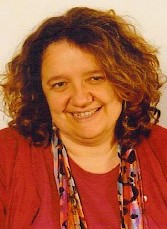
We've taken a couple of days out to celebrate my sister in law's fifitieth birthday. It's fun and restorative to spend time with family and we ate at a fun restaurant in Hoylake this evening before returning for desert to "chez Eileen" for strawberry gateau, devoured by those aged from 12 to 94 with great delight. It's been a good couple of days.
Back to Geneva tomorrow.
Wednesday, 13 May 2009
From Geneva to Hoylake
Monday, 11 May 2009
"I love you and there's nothing you can do about it" - Kagina's story
Off the cuff, our colleague Rogate Mshana told a wonderful story today as part of our chapel service this morning as we prayed for Tanzania and Kenya. We listened to the passage from John's gospel where Jesus calls his disciples to love one another and assures them that they are his friends if they fulfill his commandments.
Rogate reflected on this by saying it is by our doing rather than by our thinking that we fulfill the commandment to love. After telling us the story of Kagina he invited us to turn to our neighbours and say "I love you and there is nothing you can do about it". It made us all laugh and smile but it was a powerful way to begin the week at work, several of us were saying it to each other throughout the day.
I should add that Rogate didn't know he was going to be saying anything until I cornered him as he walked into chapel and said wouldn't you just like to say a few words ... I'm so glad I dared to ask.
Kagina’s passion to be loved
A long time ago when I was young in Tanzania we used to see a man who was living alone in our village. This was not normal. His name was Kagina and people knew him by only this one name because there was no other person with such a name in the village. Kagina worked on his small farm and cooked for himself. As children we never asked why he was not married and raising children like us. We were, however, curious to know how he could be happy without connecting himself with others. Then we realized that he was talking to someone in his house. He would prepare his food and then put it on the table. But instead of eating the food right away, he first stretched himself on his bamboo bed and then imitated a sound of another person calling Kagina to come and eat because the food was ready and would get cold. Kagina would reply to himself that he was a bit sleepy but then the other Kagina would say, “My friend even if you are tired and sleepy it is good to eat together, you know that I cannot eat without you, I love you, please come.” Kagina would then sit up and go to eat, pretending he was eating with someone. He did this every day till he was old with age and died.
The story of Kagina is about loving one another especially around sharing a meal together. He wanted passionately to be loved and share a meal with someone else as an expression of this love.
Sunday, 10 May 2009
Dirtying our hands with newsprint
 This wonderful quote from Charles Baudelaire has been cunningly stuck over some newspaper distribution points near the railway station in Geneva.
"I do not understand how a pure hand can touch a newspaper without a feeling of revulsion".
On the last morning of my week's holiday we felt no such disgust feasting on a veritable banquet of German, French and English newsprint. A real lazy morning holiday breakfast treat though it's true our hands were a little grubby by the end.
The real problem with the weekend papers is that they are full of reviews of yet more books to think about reading and buying, just after I've spent much of my week sorting ours out and discovering not to anyone's surprise that we still do not have enought space to shelve them all!
Saturday, 9 May 2009
Multiple identity - the faith(s) of Felix, Abraham and Moses Mendelssohn
You may be able listen again to a fascinating programme about faith, identity, integration and music made by Sheila Hayman, a descendant of Felix Mendelssohn's sister Fanny
I’d always known about the Mendelssohn connexion, and I’d always felt the sense of not quite belonging in our family – my father has been, in his life, a Jew, a Lutheran, an Anglican, a Quaker and a Moslem - but I’d never connected the two until a family gathering four years ago, when I heard about Moses Mendelssohn for the first time.The programme charts Felix's response to and promotion of Bach's music and also shows how his dual faith inheritance can also be traced in his music.
Hayman talks to conductor Kurt Masur, an Aryan boy in 1930s Berlin, forbidden to listen to Mendelssohn, and Claus Moser, a Jewish boy in Berlin at the same time, forbidden to listen to Beethoven and consoled by Mendelssohn. Steven Isserlis shows how Mendelssohn's own struggle between his two faiths can be heard in his music.The Moses, Abraham and Felix Mendelsohn story is of integration, translation, language learning, of taking the path of rationalism and then of conversion when this did not fully satisfy society of the time. It is also interesting to see something of a dual perspective coming out as his work progresses, one part of "Elijah" is regularly used in Orthodox Ashkenazi synagogues as the scrolls are returned after being read. Even though it is not Jewish music as such it sounds Jewish and so is sung.
The story is of course also one of anti-semitism, Wagner and Schumann's musical anti-semitism - no doubt fuelled by not a little professional jealousy - and wider anti-semitism in German society of the 19th and 20th centuries. Despite the last practising Jew in the family having died in 1870s, Mendelssohn's descendants in the 1930s including Sheila Hayman's father, either have to flee or to distance themselves completely from their Jewish roots in order to survive.
Meanwhile it struck me that the two pieces of music most chosen for traditional weddings in Britain are by Mendelssohn and Wagner.
The programme is a moving account of the struggles of a mixed identity, bringing together philosophy, religion and the arts, well worth a listen if you get the chance to hear a repeat. There is also an interesting personal account of how part of the family escaped the death camps here.
Taste the honey and change the world with the secret life of bees

How sweet are your words to my taste,I've spent this afternoon at the hairdresser's reading Sue Monk Kidd's lovely book The Secret Life of Bees. I've not seen the film released last year but it's great to read a book with a strong set of female characters. I also felt it more successfully incorporated the feminine into the notion of God than I felt the rather forced attempts in The Shack managed to.
sweeter than honey to my mouth! Psalm 119.103
Kidd's book has some great scenes with a Marian communion done with honey cakes and some quite strange annointing of a statue of Mary with honey. But essentially it is a story of searching for forgiveness and unconditional love. It is also about courage and adversity, daring to try and change the world rather than only search for personal fulfilment and understanding.
Friday, 8 May 2009
In memory of great aunt Milly


My great aunty Milly died last November and tomorrow morning her ashes will be scattered on mountains overlooking the Mawddach estuary in Wales. She was my maternal grandmother's last remaining sibling and was in her early nineties when she died. For several decades she owned a cottage half way up the hills overlooking the Mawddach estuary. We spent many very happy family holidays there, no running water, outside toilet facilities and no car access - it was wonderful. It is one of Europe's most beautiful estuaries but these images just speak to me of childhood, time out and holiday.
Aunty Mill never married but was "everyone's favourite aunt", she was also a good friend and a much trusted employee, ending as PA to the boss which was probably code for helping to run the business. She was generous with smiles, money and time at the cottage, and managed to combine being a shrewd business woman with being very unjudgemental of individuals. I suspect she was often the peace maker in various family upsets and she certainly seems to have been the one everyone was still talking to even when they weren't speaking to each other.
Quite a number of her nieces and nephews will travel to Wales tomorrow. She was a special lady.
A Friday five on insects or should that be bugs ...
So below is this week's Friday five from Revgalpals and because I am on holiday I can do this early in the day for once. I'm rather inspired that it is about insects. However the linguist in me does note (sorry I must have woken up in a prissy mood!) that the American term bug is not a complete synonym for insect as it includes other creepy crawlies that are not insects.
As I was walking the beach today, I was surprised and delighted to find it swarming with ladybugs. The sweet little red beetles are one of my favorite insects and also my daughter's blogname--though as of this morning she was thinking of changing it to Butterfly. I'll keep you posted.This got me thinking about spiritual insect trivia: Did you know that medieval mystics and theologians esteemed the bee for its dedicated work and transformation of ordinary ingredients into sweetness? That Spider Woman is an important creator Goddess to many Native American tribes? Or that Francis of Assisi was reminded of Jesus not only by lambs being led to slaughter, but also by worms (think "I am a worm and no man" from the Psalms)-- so he picked them up and took them out of stomping-vulnerable spots?!In that spirit, this week's Friday Five is a magical mystery tour through God's garden of creepy crawlies!
1. Ladybugs or ladybirds? Pillbugs or roly-polys? Jesus bugs or water skeeters? Any other interesting regional or familial name variations?
When I saw that today's five was about insects the first thing that came to mind were the chocolate May beetles (Maikäfer) that you can find in the shops in Germany at this time of the year - and flying in the silly youtube clip. Not to be confused with Marienkäfer - literally Marybeetles or ladybirds. Then I wondered why are they called ladybirds or beetles of our Lady, this is a gap in my knowledge of trivia that I must fill. So it seems that because ladybirds chomp their way through thousands of aphids and so protect crops peasant farmers saw them as a gift from the Virgin - our lady's beetles. They were also seen as giving protection from witches and the evil eye.
Meanwhile "avoir le cafard" - literally to have the cockroaches - means to have the blues.
I also love the French word libellule for dragonfly and remember learning it at school, it has an interesting etymology too.
2. Stomp on spiders, carry them outside, or peacefully co-exist?
I love spider's webs - though not when tacky and full of house dust. In my more merciful moments I have been known to carry spiders outside or trap them in jars. In our household it would be me who would catch or kill them, my partner is not fond of creepy crawlies but doesn't enjoy the crunchy sound of killing them either.
I'm not so squeamish, must be growing up in the country. When I lived in the south of France our student kitchen had an invasion of cockroaches and I would go in regularly to squash them with the bread knives, it was quite satisfying but didn't have much impact on their numbers!
3. Favorite insect?
I'm not so squeamish, must be growing up in the country. When I lived in the south of France our student kitchen had an invasion of cockroaches and I would go in regularly to squash them with the bread knives, it was quite satisfying but didn't have much impact on their numbers!
3. Favorite insect?
Now I understand more about their importance to the whole of life on our planet it has to be the bee. This week I was walking along a path and saw an enormous bumble bee which seemed to be trying to get at the polen in the fallen blossom cases on the path. What fascinated and impressed me was the mini huricane of air its helicopter wings were generating. The tiny blossom cases were literally being lifted off the ground. It made me think about the so-called butterfly effect - the idea that a butterfly flapping its wings in South America could create storms on the other side of the world. Watching that energetic bumble bee I could really believe it capable of causing quite a storm.
More seriously though I am planning to put bee and butterfly friendly plants into my new garden.
4. Least favorite?
More seriously though I am planning to put bee and butterfly friendly plants into my new garden.
4. Least favorite?
No contest here. Definitely the mosquito. Not only does it bite and transmit disease it also makes one heck of an irritating noise depriving me of sleep. I am fairly convinced that it is not part of God's good creation.
5. Got any good bug stories to share?
5. Got any good bug stories to share?
A friend who is a bit of an entomologist went through a phase of mounting a large and a small weevil in tiny museum-like cases. Under the first large one in careful script it would say "a weevil" under the second it would say "the lesser of two weevils". With the same friend and my brother in law I climbed up to my parents loft on my wedding day (in my wedding dress!) to show them the long-eared bats that nest there. The friend however was more interested in the special bat-dung eating beetles he found there!
Bonus question: share a poem, song, quotation, etc. about insects.
Bonus question: share a poem, song, quotation, etc. about insects.
This has to be Gerard Manley Hopkins
My good friend Rowenna Reamonn, whose funeral I took nearly seven years ago, made a very beautiful series of prize-winning quilts based on the first line of this poem.
My good friend Rowenna Reamonn, whose funeral I took nearly seven years ago, made a very beautiful series of prize-winning quilts based on the first line of this poem.
As kingfishers catch fire, dragonflies draw flame;
As tumbled over rim in roundy wells
Stones ring; like each tucked string tells, each hung bell's
Bow swung finds tongue to fling out broad its name;
Each mortal thing does one thing and the same:
Deals out that being indoors each one dwells;
Selves — goes itself; myself it speaks and spells,
Crying, What I do is me: for that I came.

I say more: the just man justices;
Keeps grace: that keeps all his goings graces;
Acts in God's eye what in God's eye he is —
Christ. For Christ plays in ten thousand places,
Lovely in limbs, and lovely in eyes not his
To the Father through the features of men's faces.Thursday, 7 May 2009
gaps, inbetweens and fragments ...
 "The love of God and for God resides in a gap"
Julia Kristeva, Tales of Love
This short quote came to mind as I read Maggi Dawn's post cited below about Jeanette Winterson saying that creativity is in the space inbetween the interior and exterior struggles. It also reminded me of Simone's Maundy Thursday sermon and the theology of fragments.
Bits and pieces, fragments, gaps, inbetween ... sooner or later perhaps I shall perhaps craft some kind of narrative drawing this together, or maybe just tell parables instead.
To risk or not to risk ...
Earlier this week Maggi Dawn, in a reflection on the Good Shepherd lectionary readings from last Sunday, gave a number of examples of how risk taking is essential to life and very much part of the gospel. I particularly appreciated her citing of Jeanette Winterson
Winterson ... talked about the light between two darks - the dark of interior struggle and exterior struggle. The Light is the creative space in between.Risk is quite interesting as a value. On the one hand we try to encourage "young people" not to engage in risky behaviour yet on the other hand something that is at least packaged as risk is sold to us sometimes as the sexy, new alternative. Does giving things a more, at least supposedly, "risky" veneer make them more attractive? Maggi wrote a really good second post on the subject, relating risk to the good shepherd values in a different way, was the community John was writing for one so frightened of persecution that the call to risk going outside the fold would have been very real for them?
I remain in two minds about risk - the gospel has a double message of absolute grace and security at the same time as a real call to go beyond, to leave the comfort zone and set out in trust. As I try to discern what the call to leave comfort and trust in grace may mean for me I begin to see that the greatest risk may be in getting too comfortable and assuming that this comfort is grace. Reflecting on what Maggi has written helps me to see that I need to take the risk to trust in grace.
Wednesday, 6 May 2009
Brotherhood at feminist theology with a God who breaks the rules of primogeniture
We had a brilliant time at our feminist theology group last night with professor Lévi Ngangura who is dean of the faculty of theology at Goma in Congo. Levi has been on two months study leave at the Institut Protestant de Théologie in Montpellier and was in Geneva to speak to our group which he was part of while studying for his doctorate in Geneva. His book on Esau and Jacob is due to published by Labor et Fides later this year. La fraternité de Jacob et d'Esaü (Gn 25-36) Quel frère aîné pour Jacob? Lévi Ngangura Manyanya, Préface d'Albert de Pury.
Lévi began his presentation of the story of Jacob and Esau by talking about the situation around Goma in the months before Christmas last year, as conflict led to the town's population being cut off from the source of staple foods in the surrounding rural areas. He began by talking about Goma and the terrible situation that people in Congo have lived through in the past 15 years as a way of countering the silence and international indifference th that seems to accompany the fact that in those 15 years more than 5 million people have lost their lives in conflict.
In many ways it was also living as a theologian and pastor in this context that pushed him to research the relationship between Jacob and Esau. His guiding question was "how do we manage conflict in a way that it doesn't turn to into a bloodbath?" What models of being "brotherly" does the Bible offer and in particular what can be learned from what takes place between Esau and Jacob?(Anglophone readers should note that "fraternité" means of course brotherhood but if you look up "sisterhood" in an English-French dictionary you will also find the word "fraternité"!)
Lévi entitled last night's reflection "Jacob wins the whole blessing, yet Esau does not lose anything - respect and separation, a different model of the experience of being brothers". In one of his opening convictions he pointed to the way that the Hebrew term 'âh for brother or 'âhôt for sister is not only used to refer to blood relations but also for the relationship between members of the same community. One of the key questions is the juxtaposition between "having" a brother or sister and "being" a brother or sister - not just to our blood relatives but also within the wider community.
As we studied the text in depth and got into our usual questions and answers it was interesting to see how Rebecca began by having a rather bad press amongst many of the women present - the machinating mother manipulating events. Yet as our quite heated discussions continued we came to see how much Rebecca loses, she has to send away the son she would seem to prefer - perhaps in order to protect both of her sons from one another. After she encourages Jacob to steal his brother's blessing will she ever be able to reestablish a relationship with her son Esau? Interestingly Levi kept on defending Rebecca while many of we women were rather down on and judgemental of her, another interesting dynamic that the story gives rise to!
Throughout these stories in the Hebrew scriptures God does not act in the way society expects, God breaks many of society's laws and expectations. The law of primogeniture is broken by choosing not the manly hunter but the more home-loving Jacob. Yet it is this choice that also sends the home-lover out into the wilderness to seek his future elsewhere. Don't expect getting a blessing to give you what you want or expect!
We ended with Lévi telling us about that 10% of the people training for ministry in Goma are women, but that the churches still have problems calling women to positions of pastoral charge. It is much more usual for women to work in church run health or social work institutions.
Anne Coïdan ended our evening by saying how much we wanted to ask for God's blessing on Levi, his family, church and continuing research. A sisterly blessing for our brother.
Tuesday, 5 May 2009
Hubertine Auclert and emancipation by language
Later this evening I am off to the feminist theology group, we have had such an interesting series of presentations this year around the theme of Dieu est belle.
Although in Switzerland both church and state take feminisation of language seriously, such concerns about inclusive language have not yet really made it to the Academie Française ... no surprise there.
So I was surprised and not exactly heartened to read once more these words by the redoutable Hubertine Auclert from over 100 years ago:
L'omission du féminin dans le dictionnaire contribue plus qu'on ne croit à l'omission du féminin dans le code. L'émancipation par le langage ne doit pas être dédaignée. N'est ce pas à force de prononcer certains mots qu'on finit par en accepter le sens qui tout d'abord nous heurtait?
La féminisation de la langue est urgente puisque, pour exprimer la qualité que quelques droits conquis donnent à la femme, il n'y a pas de mots.
Ainsi, dans cette dernière législature, la femme a été admise à être témoin au civil, éléecteur pour la nomination des tribunaux de commerce; elle va pouvoir être avocat.
Eh bien, on ne sait pas si on doit dire: une témoin? une électrice? une avocat ou une avocate? ...
En mettant au point la langue, on rectifierait les usages dans le sens de l'égalité des deux sexes.
Quand on aura révisé le dictionnaire et féminisé la langue, chacun de ses mots sera, pour l'égoisme mâle, un expressif rappel à l'ordre.
Monday, 4 May 2009
Think local, act global for a spirituality of resistance
Dr B blogged at Holy Disorder all last week while travelling around central Germany to various events marking the 20th anniversary of some of the events that led to the peaceful revolution in the GDR. It's fun for me to see his doctorate reduced to blog posts in this way but it is also in many ways a spiritual journey. Visiting the past in this way is quite a challenge, it also moves me in ways beyond words.
One of the posts last week reported on Heino Falcke's reflections on the ongoing relevance of the conciliar process for justice, peace and the integrity of creation in building up civil society today as it did 20 years ago.
The post ends with this:
If 20 years ago what made the texts of the Ecumenical Assembly in the GDR so powerful was the local relevance of the global issues, maybe now it's necesary to look at things the other way round - not so much "Think Globally, Act Locally" - but "Think locally, Act Globally."
Since reading that I've been trying to reflect on how this can feed in to a spirituality for people working at the international level, we who are so often torn out of our local contexts and rather rootless. And of course one of the problems in the post modern world is that we are all keen to tell our stories of what works "chez nous" at the local or national level, but these stories of local success or failure are often difficult to translate to other contexts. In my cynical difficult European way I get a little wary of some stories that seem too pre-packaged and home-spun. Then I thought of the Brazilian bishop who went on hunger strike to raise his deep concern about government plans to divert a river and how he managed to mobilise opinion and support far away from the context, though vigilance and resistance is still very much needed. So perhaps the paradigm for international spirituality and engagement has changed - or perhaps the paradigm for an internationally engaged spirituality was always in the backwards and forwards interplay between local and global - (I think that is what those German philosophers call a dialectic!).
As the year progresses Holy Disorder will also carry more about Heino Falcke, his theology was in so many ways the underpinning for the GDR's peaceful revolution.
In the meantime what are you doing to think locally and act globally?
Finding words and liturgy for our time
 Steve Taylor has posted some good notes from a liturgy workshop with Dorothy McRae- McMahon. I particularly liked this:
Liturgy needs to ask hard questions. Then those on margins of church will trust us. Don’t pretend to have answers. Everyone has hard questions. To ask them shows our humanity. Our faith in midst of hard questions shows we are people of faith.
You can find a number of McMahon's books of liturgies listed here. I hadn't come across her work before but look forward to reading and using it.
I like Steve's own reflections on his conversation with McMahon saying that he felt "encouraged to go on writing words and creating spaces". Sounds good to me.
The sixth lamentation helps with meaning ...
 I am on holiday this week and today have begun the somewhat daunting task of trying to sort out our books and bookshelves. But at least the books give me much pause for thought and remembering. So far I have finished biography and begun to tackle the letter B in the fiction section and got lost in thinking about our friend Hugh McCullum who died last year. On one of his trips through Geneva he left William Brodrick's book The Sixth Lamentation with me, a really worthwhile read and not one that is going into the recycling bag. The "detective" in the book is Father Anselm, a monk. Here are some tasters:
Anselm's first surprise on entering religious life was to discover the monastery contained ordinary human beings alarmingly similar to one or two villains he had represented at the criminal Bar". Right at the start he had been warned by a monk who'd been a Tyneside docker, "You'll find out as you go along, the good guys always leave and only the so and sos remain". But 12 years later, Anselm is still there: "The elements of living a fulfilled life were broadly in position. A planetary motion of doubt, certainty, joy, anguish, loneliness and boredom, each on their own trajectory, encircled an evolving contentment. And, very occasionally, when he wasn't looking, the Lord of the Dance brushed past.
...You must appreciate that with an institution like the Church one cannot always allow the complete truth to meet the stream of public enquiry ... We are bidding for a manageable form of truth. It is a most delicate exercise, for I am trying to protect the future from the past.
... Towards the end of the book Anselm say to the Prior "Millions died from hatred, beneath a blue sky like the one over Larkwood this afternoon ... I just can't make sense out of it, other than to cry." The Prior replied, "You never will understand, fully, and in a way, you mustn't. If you do, you'll be trotting out formulas ... Out there, in the world it can be very cold. It seems to be about luck, good and bad, and the distribution is absurd. We have to be candles, burning between hope and despair, faith and doubt, life and death, all the opposites. That is the disquietening place where people must always find us ... Somehow, by being here at peace, we help the world cope with what it cannot understand".
Sunday, 3 May 2009
The Republic of Ideas for re-inventing democracy - re-enchanting civil society
 There have been a number of books on varied subjects in recent years with the words "re-inventing" or "re-enchanting" in the title (Re-enchanting Christianity by Dave Tomlinson, Réechanter le ministère pastoral by Raphaël Picon).
Next weekend in Grenoble the Republic of Ideas will hold discussions, lectures and round tables on ideas around "reinventing democracy". You can read the programme here and follow reports on France Culture. I rather like the idea of going to one of the three "democratic laboratories" or to listen to the round table on issues to do with immigration where someone from the CIMADE will be speaking.
As Europe prepares to go to the polls next month, re-thinking, re-invigourating and re-inventing the various democracies which make up the European Union is an important and ongoing task. Disaffection with politics is not easy to combat in the post-modern era. Using that disaffection to bring about positive change in our politics and the culture of our civil society is the challenge.
Now I just have to decide whether I shall overcome my own inertia and go to Grenoble next weekend ...
Ed Stourton on the history of Catholics and Jews
Edward Stourton himself a Roman Catholic has produced two programmes for BBC Radio 4 on the history of the troubled relationship between Catholics and Jews. The first programme offered a good international perspective, starting with the Council of Jerusalem via the theology of St Paul and St Augustine, to England being the first European country to expel the Jews in the 12th centrury and the little recognised extraordinary flowering of Judaism in 16th and 17th century Poland. The first programme drew to a close by looking a the infamous Dreyfus case in France, how the Roman Catholic Church in France, Italy and Austria felt itself to be under attack from liberalism, which was seen as being the work of "the Jews". This was the Catholic Church in which the future Pope Pius XII grew up. Programme 2 next Sunday will look in more detail at the role of the Pope and the Catholic Church during the second world war.
For the next seven days you can listen again to programme one.
Saturday, 2 May 2009
One thousand posts
This is my 1,000th post on this blog. I'm not sure which day it will be posted on nor what other posts it will appear alongside. But I thought I should use the occasion to reflect a little on this strange reflective, expansive activity that blogging has become for me.
I do not find writing easy at all. I find writing to order and sticking to deadlines painful - though of course deeply necessary! Yet I find blogging easy, motivating and simply "my sort of thing". I am truly surprised that I have made it to 1000 posts on this blog and amazed that I seem to be blogging elsewhere as well - though for how much longer I'm not sure.
For me I think that the biggest change that blogging makes is somehow awakening the desire to write and showing me that I can write - at least to some extent. Blogging has also though made me more anglophone in my focus and I regret that. I must make more effort with the two French blogs I'm also involved in.
In the next week I shall be trying to help a friend set up a wordpress blog to house all of her original music and hymn translations. So far however my greatest success has been to get Dr B to start blogging. Now I can enjoy reading his blog output too.
Anyway enough of this self-indulgent reflection, thanks to all of you who read these jottings and leave the occasional comment.
Abraham ibn Ezra and community

Ruth Gledhill has written about a book launch with a difference. The book is Irene Lancaster's Deconstructing the Bible: Abraham Ibn Ezra's "Introduction to the Torah"
It's launch took place in a library at the Sedgely Park Community Library at the heart of a community where Jewish, Christian and Muslim people live peacefully alongside each other.
The books is about the life, work and thought of Abraham ibn Ezra one of the most distinguished Jewish men of letters of the middle ages.
Follwo the links to find out more and here's a bit from an Amazon review of the book:
At the heart of the book is a translation of ibn Ezra’s ‘Introduction to the Torah’, which, with the help of a detailed commentary, allows us to see ibn Ezra at work as a creative interpreter and user of language. Ibn Ezra’s concern with the open-endedness of language has postmodern resonances, but as Lancaster points out, his aim ‘was to reach the centre of the circle, not to keep going round in circles’.
Subscribe to:
Posts (Atom)

 Posts
Posts